Reconnecting With Our Indigeneity: We Are All Ancestral
The Story of Our Return to Culture through Land, Lineage, Food, and Story.
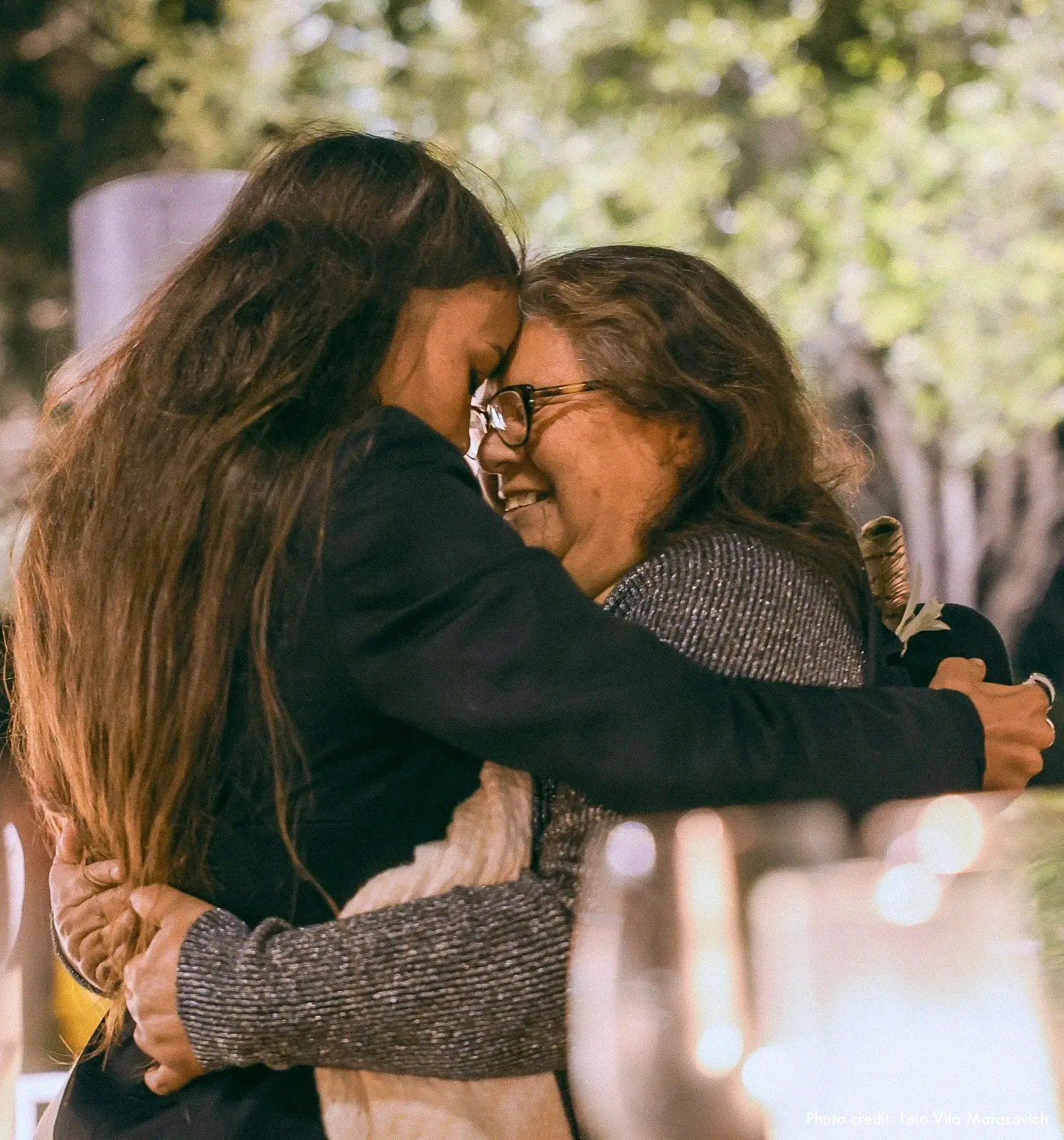
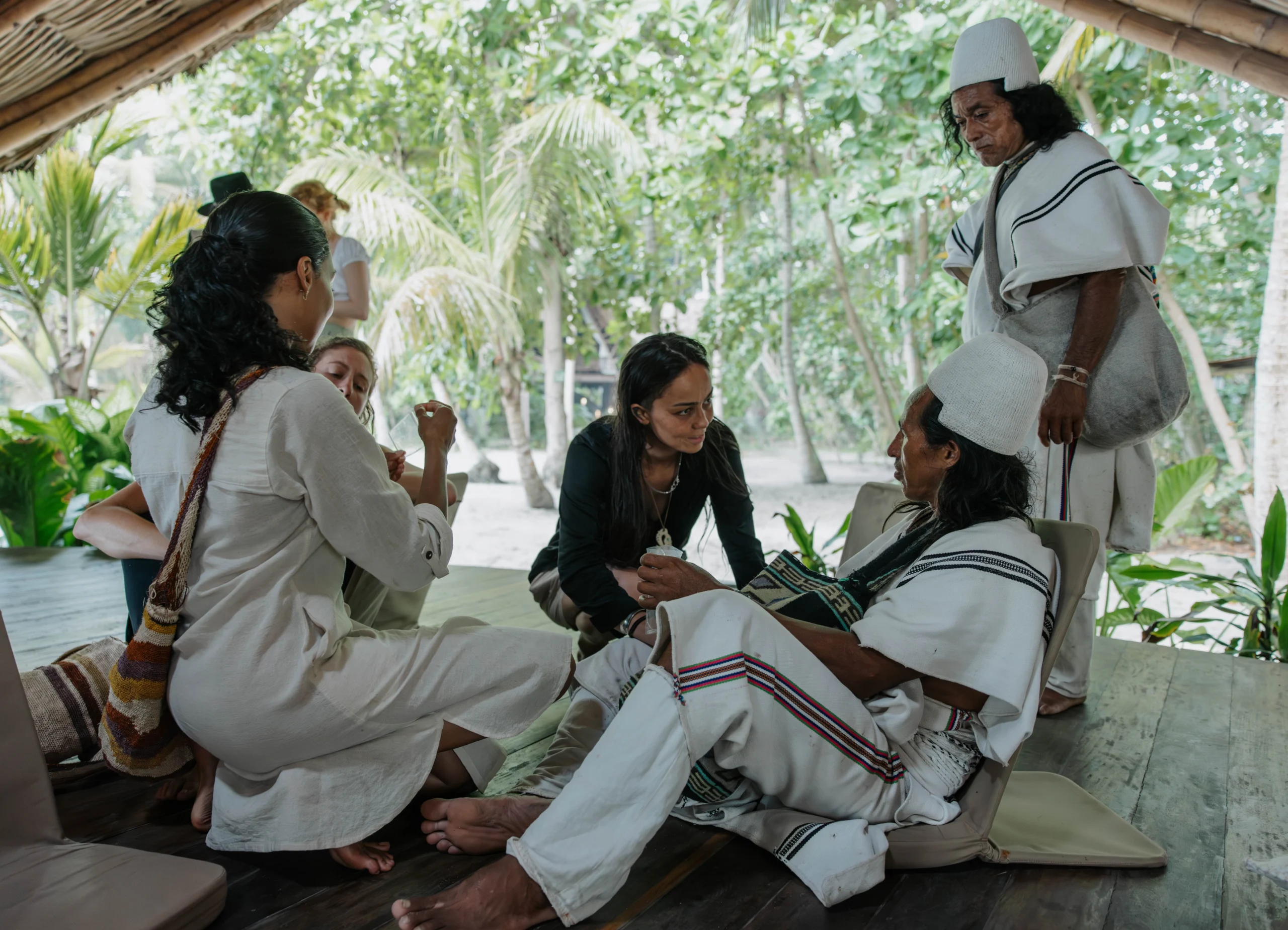
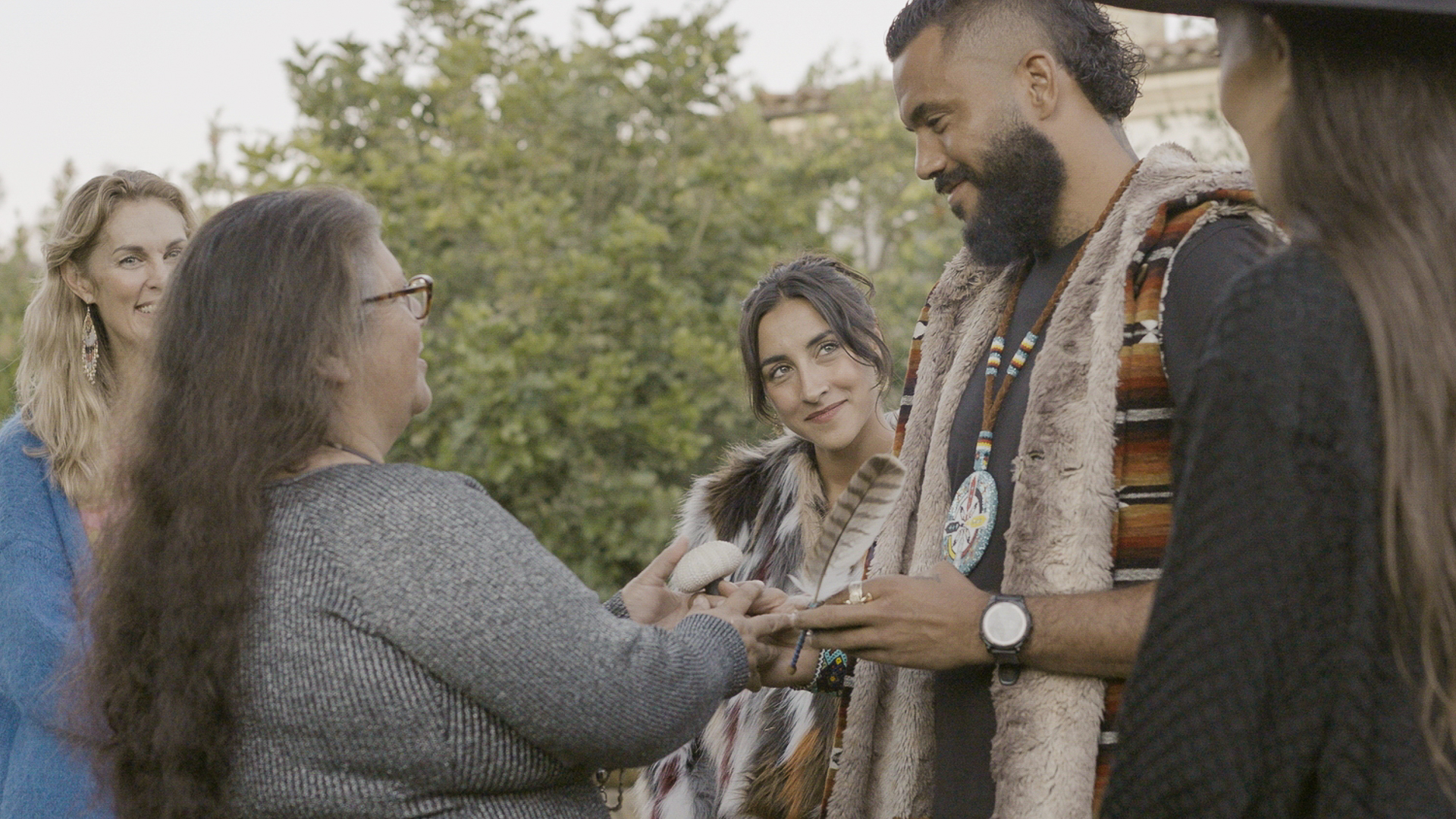
The history of our ancestors was not written in books. It was spoken, sung, and carved into the landscapes and spaces that held their lives. Stories lived in the words of our elders, in ceremonial songs that were carried through generations—in oral traditions that told us of creation stories and lessons of the lands that sustained us. Across cultures, storytelling binds us to place, to people, and to purpose. These stories tether us — to the earth, to one another, and to the eternal wisdom that reminds us we are a part of the living world. They are not just memories of the past; they are living instructions for how to move forward in reciprocity and respect.
To tell a story is to plant a seed — one that may grow into understanding, into action, into remembrance. Through stories of our lands, we carry the knowledge of our ancestors into the future, ensuring that the roots of our culture remain unbroken. And like seeds in the soil, stories are always waiting — for the right moment, the right listener, the right heart — to listen, to learn, and to grow once more.
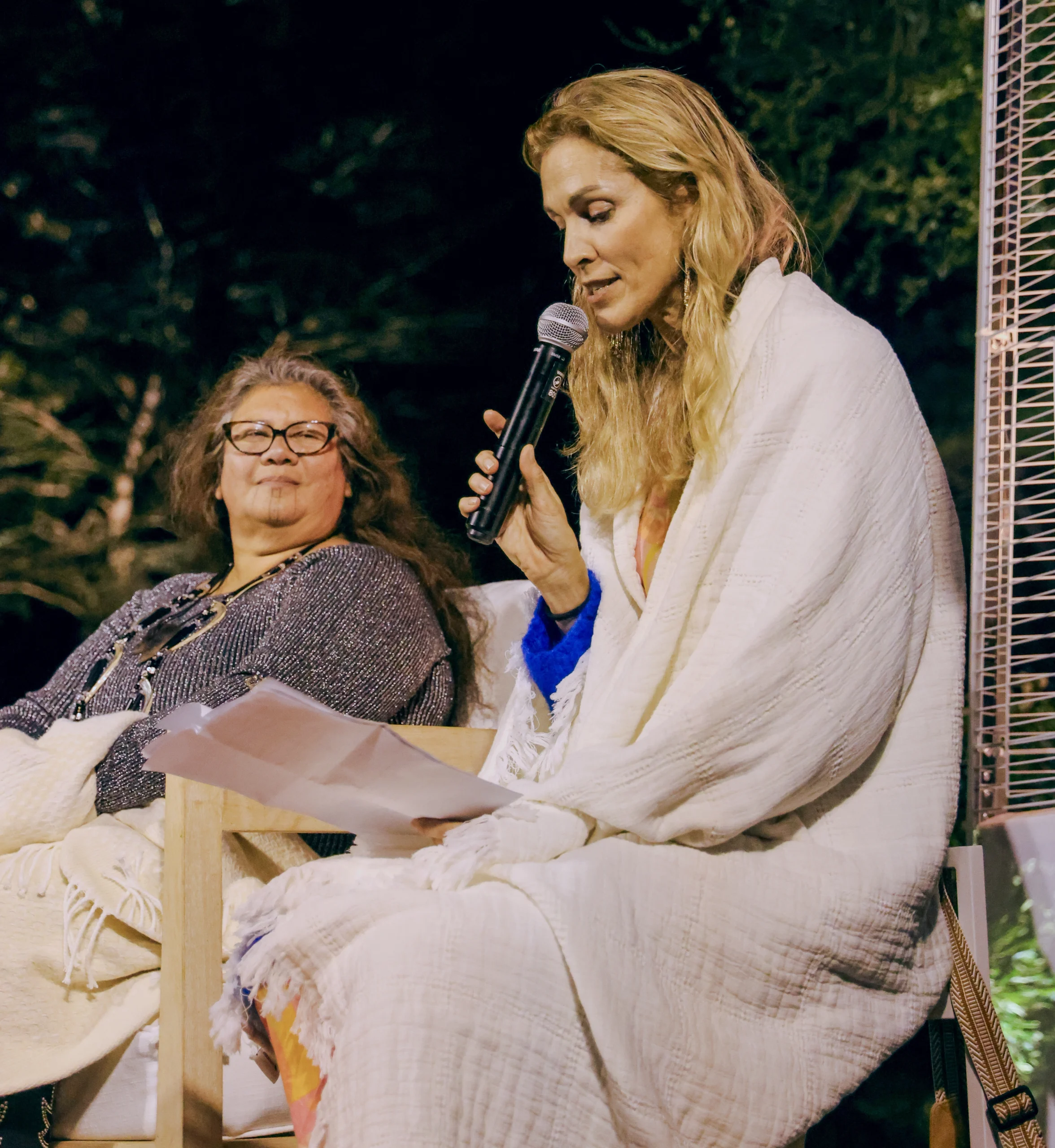
Maria Elena ‘Mia’ Lopez, a Chumash Elder, university professor and wisdom keeper, speaks to this sacred remembering. She reminds us that we are all indigenous to somewhere, that our roots are not lost but waiting to be remembered. ‘A lot of people say we are all indigenous to somewhere, and we are,’ she says. ‘If you know about that place, that’s how you reconnect. If you know deeper about who you are, who your parents are, your grandparents and so forth — know your lineage, know where you came from — it’s the same as knowing history. We know history, why? Not because we can change it, but if we don’t know it, we can’t move forward in a better way. And so if you know your history, your people, your lineage then collectively, we can move forward together in a good way.’
“I don’t want you to go home, because we are all now home together,” she says, her voice steady as the earth itself. “But I do want you to know where your ancestral home was. I want you to know why your people thrived there, why they loved it, what was in that land that brought them health and family and community.”
This is an invitation—not to retreat, but to return. Not to claim, but to remember. The land does not ask us to possess it. It asks us to be in relationship with it, to understand that where we stand now is woven with the places our ancestors once called home.
I have spoken with elders from many indigenous traditions, and every single one of them has told me the same thing: The time is now. The time to remember that we are all indigenous is now. Every human being is indigenous to this earth, yet many have been severed from the knowledge of their origins. If we do not know where we come from, how can we ever know how to truly belong? But if we trace our lineage, if we seek out the lands that nurtured our ancestors, the food they ate, the ways they spoke to the earth, we will find that indigeneity is not exclusive—it is our birthright.
As a Māori woman, I carry the understanding that my people, like all peoples, have been gifted the wisdom of those who came before. Our ancestors left us knowledge, practices, and principles so that we may come together and move forward in unity. The more I delve into Regenerative Agriculture, the deeper I am reminded of our ancestral food systems. This wisdom was not given to be hoarded or lost; it was meant to be lived, shared, and remembered. Our tūpuna (ancestors) understood reciprocity, how to listen to the land, how to cultivate abundance in a way that sustained generations.
Many of us today are disconnected, not just from our ancestral lands, but from the very understanding that we belong to the earth, not the other way around. Colonization and industrialization have pulled us from the cycles that once sustained our people. The knowledge that once passed from grandparent to grandchild, through hands in the soil and songs in the air, has been severed. And yet, as Mia reminds us, the memory of that relationship still exists—it is waiting for us to listen.
She speaks of Syuxtun, now renamed Santa Barbara, and how her people lived in deep harmony with the land. “Our landscape here was abundant because we allowed our plants to live together. The Three Sisters—corn, beans, and squash—grew as companions, supporting and nourishing one another. But colonization brought monocropping, and in severing those relationships, the land suffered.”
This severance is not just agricultural; it is cultural, spiritual, and systemic. The shift to extractive farming mirrored a broader shift in human consciousness—a mindset of control, ownership, and dominance over the natural world. But the land has not forgotten. Regenerative agriculture is not a trend, not a new solution, but an old knowing. It is the remembering of what has always been true: when we farm with the land, rather than against it, abundance follows.
Dr. Zach Bush calls this moment one of profound imbalance—where chaos stretches from the cellular to the societal to the planetary. Yet within the disorder is a promise of renewal. “We live in a universe that practices centropy—the emergence of order from chaos. What will bring us back into balance is the moment we just give witness to beauty. He reminds us that for 10,000 years, human economies have been built on scarcity. Nature has never operated this way—and we must return human economies to the value systems of the earth itself.”
Zach also speaks of a deeper cultural shift that must take place. “If we’re really going to change everything, it’s going to be the culture of food. NANA is our description of this culture of food that will be birthed. It is going to be the culture of food that makes the regenerative story become relevant and palpable in every single home in this world—where we start to eat the future that we want to live in.”
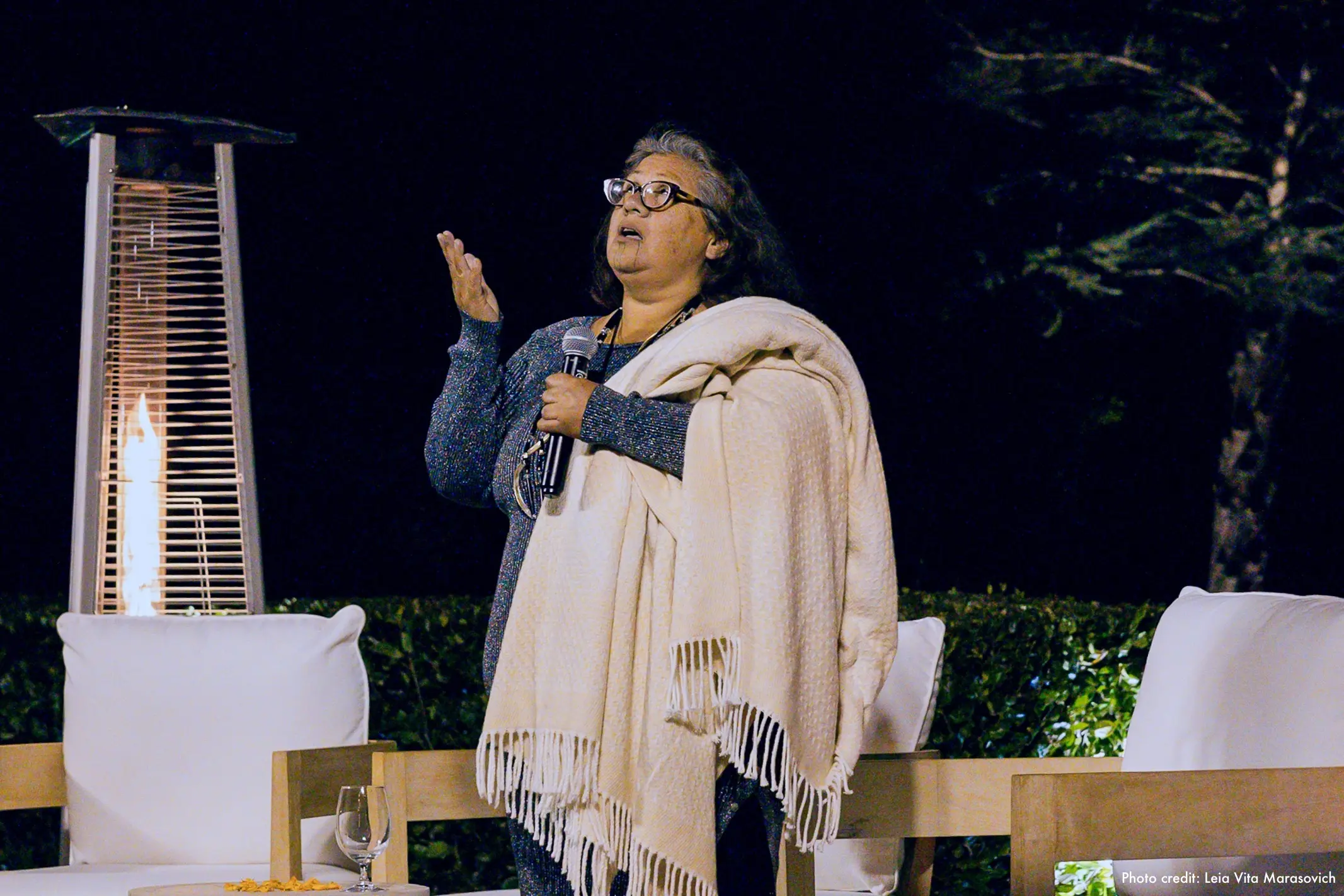
Storytelling, then, is not merely a tool—it is a path. It is how we remember, how we re-story ourselves back into balance. As Oliver English puts it, “We have the solutions already. This is not about inventing something new; it is about a realignment. This is going back to ancient and indigenous wisdom, to the practices that have sustained life for generations.”
We must embrace our ancestral wisdom, and those that hold it, and bridge our current science with ancient truths. This is not about discovering new technologies but reclaiming ancient principles that have been disregarded by the industrial mind and movement.
Mia listens to these words and reminds us of the power of community. “We are not alone. If everything we do, we do with ten others in mind, we will do better. And we must choose to move forward with positivity. No more narratives of despair—we turn that story around. We start small, but we start. Even if it’s 5%, even if it’s 1%, it is something. And we do it together.” As the human species indigenous to this earth, we are truly in this together.
Beginning, after all, is everything. The first seed planted, the first story told, the first step taken back toward reciprocity.
This is what re-story-ation looks like. A remembering. A return. A seed planted deep in the soil of our collective knowing, waiting for us to witness it, to learn from it, and to let it grow for future generations to come.
It is time to remember the culture in agriculture, through food, story, and ancestral wisdom.
Written By: Briar Rose, Director of Storytelling