Matt's work focuses on bioregional economics, policy reform, and the growth of ecological agricultural movements to enable grassroots participation in the agricultural economy
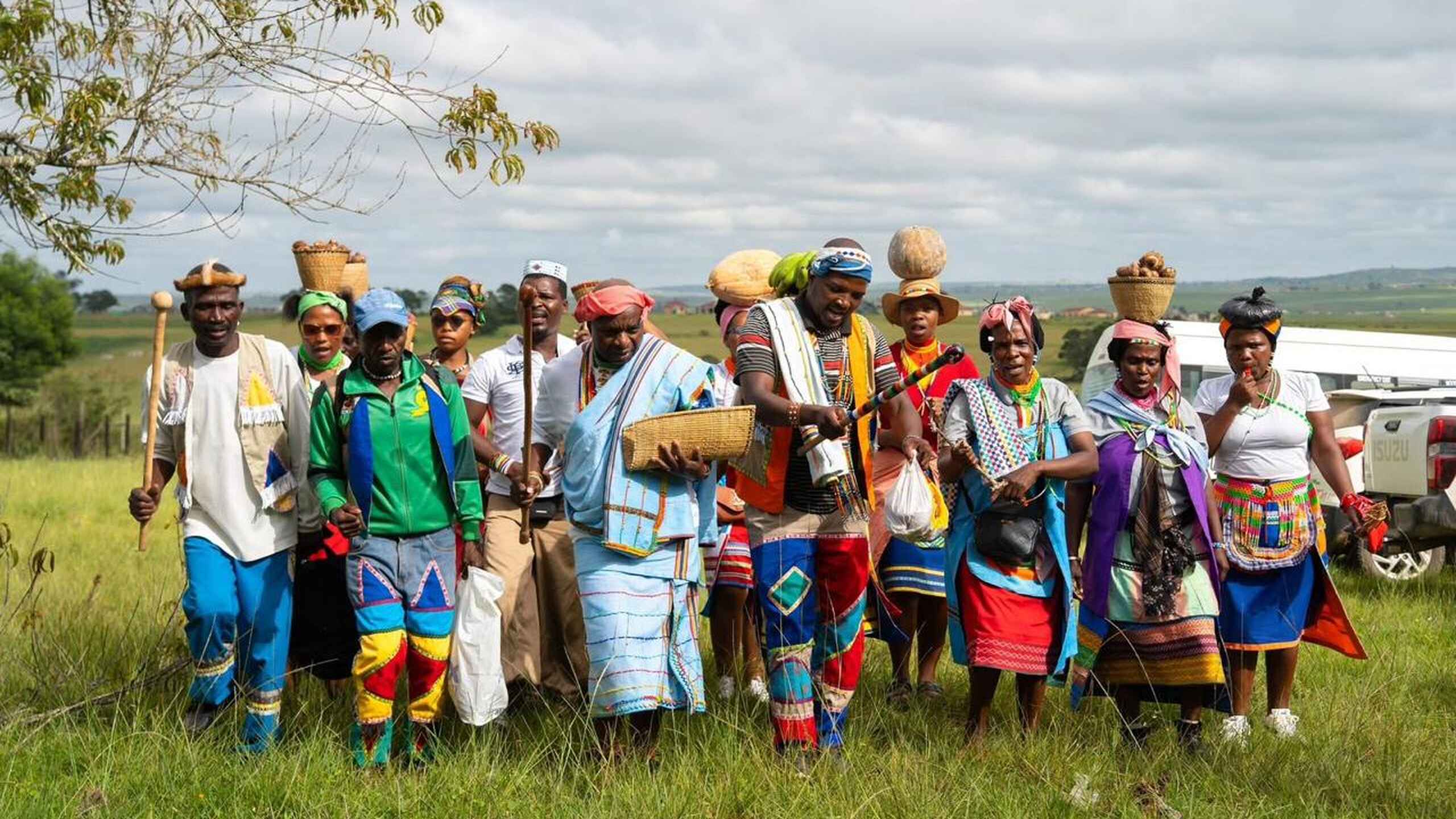
Agroecology and the Future of Food Sovereignty
Regenerative agriculture often asks how we restore the land. Agroecology also asks who controls the land, the seed, the knowledge, the markets and the future of food.
A Framework For Transforming Food Systems
Agroecology is one of the clearest frameworks we have for transforming food systems because it connects the restoration of land with the restoration of power. It asks us to look beyond practices alone and consider the whole system: soil, seed, water, farmer knowledge, local economies, culture, governance and the right of communities to feed themselves on their own terms.
This paper does not set agroecology against regenerative agriculture, organic farming, biodynamics or permaculture. These approaches are part of the same wider ecological agriculture family. Each has its own history, language and strengths. The work now is not to divide the movement around terminology, but to build enough shared understanding and collective power to shift food and farming away from extractive industrial systems and toward living, local, farmer-led systems.
Why Agroecology Matters Now
The future of food will not be secured by a single method, certification or label. It will be shaped by a movement capable of restoring ecosystems, strengthening local economies and returning power to farmers and communities.
Across the world, the cracks in the industrial food system are becoming harder to ignore. Soil degradation, biodiversity loss, climate instability, chemical dependency, fragile supply chains and corporate concentration are not separate problems. They are symptoms of a deeper design failure. The dominant model has treated soil, water, seed, labour and community as inputs into a globalised commodity system. It has produced volume, but too often at the expense of resilience, nourishment, autonomy and place.
As regenerative practitioners and movement builders, we know that healthy land is foundational. We also know that land does not regenerate in isolation from people. Farmers need viable livelihoods. Communities need access to good food. Seed needs to remain in the hands of those who grow with it. Knowledge needs to move farmer to farmer, not only institution to farmer. Agroecology gives language to that wider transformation
What is Agroecology
The Food and Agriculture Organization of the United Nations describes agroecology as a holistic and integrated approach that combines ecological and social principles in the design and redesign of sustainable agrifood systems (1) In practice, agroecology can be understood in three connected ways: as a science, as a set of practices and as a movement.
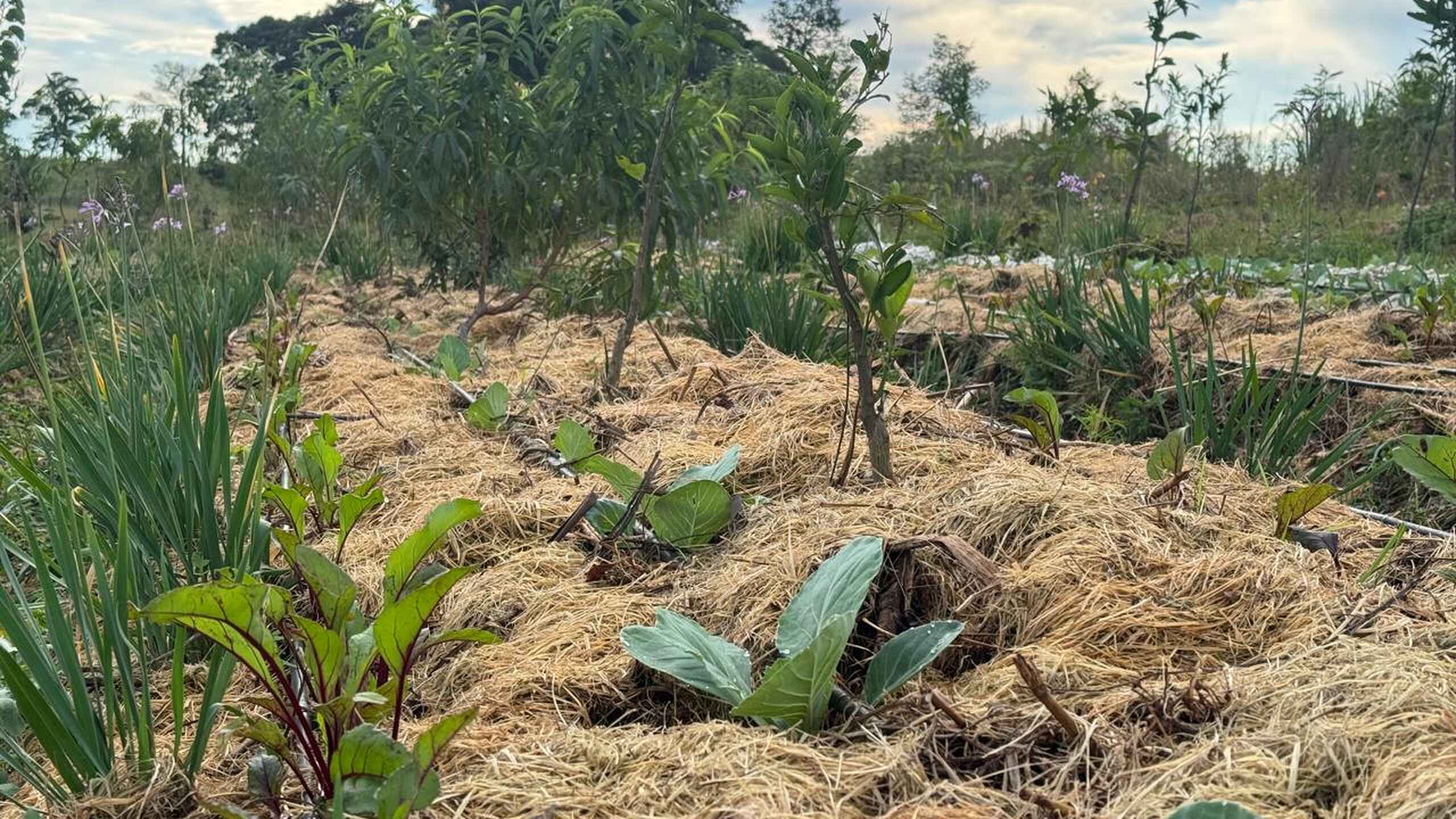
As a science, agroecology studies farming systems through ecological principles. It asks how plants, animals, soils, water, climate and human communities interact as living systems. As a set of practices, it includes crop diversity, agroforestry, composting, nutrient cycling, livestock integration, water stewardship, reduced dependency on external inputs and the rebuilding of biodiversity. As a movement, it goes further again. It connects ecological farming with food sovereignty, seed sovereignty, farmer rights, local markets, cultural knowledge and social justice.
This is why agroecology is such an important frame. It refuses to reduce farming to a technical question. It recognises that the way we farm is inseparable from who controls the land, the seed, the knowledge, the markets and the future of food.
Agroecology is also older than much of the contemporary regenerative agriculture conversation. Its roots are found in Indigenous knowledge, peasant agriculture, traditional farming systems, farmer-led innovation and ecological science. The word may be formal, but the wisdom is ancient
The Ten Elements of Agroecology
The FAO's 10 Elements of Agroecology offer a useful global framework. They were developed through a multi-stakeholder process and later supported by FAO members as a guide for agroecological transitions toward sustainable agriculture and food systems (2)
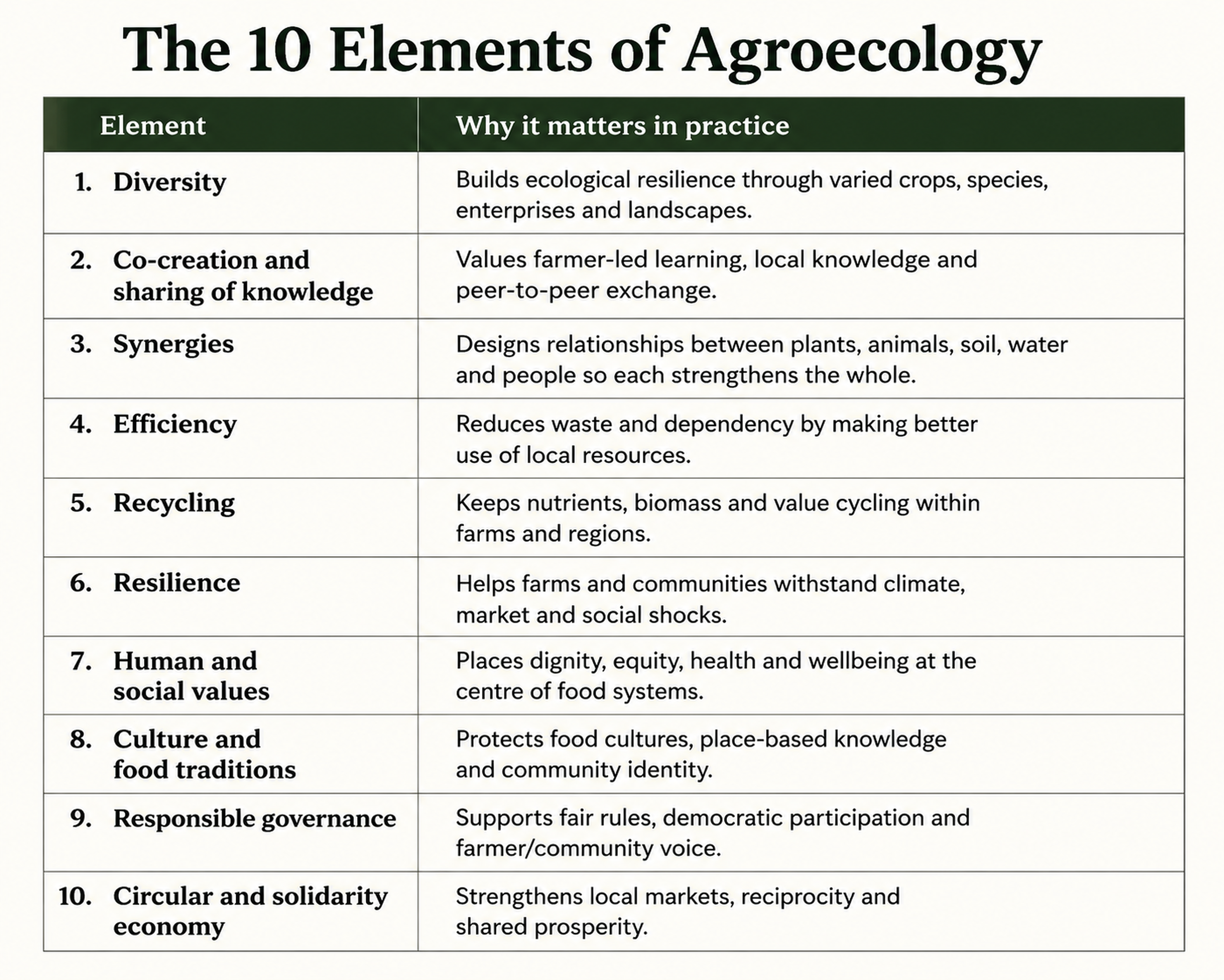
These elements show that agroecology is not just about farming techniques. It is about redesigning food systems so they are ecological, resilient, culturally grounded and socially just.
Agroecology and Regenerative Agriculture
Regenerative agriculture has become a powerful term in the Global North, particularly in Australia, the United States, the United Kingdom and parts of Europe. It has helped bring soil health, biodiversity, water cycles, carbon cycles and landscape repair into mainstream conversation. That is a major contribution.
At its best, regenerative agriculture is not simply a checklist of practices. It is a way of seeing the farm as a living system and asking whether our management is increasing life, function and resilience. This has opened doors for farmers, brands, educators and communities who may not have found their way into ecological farming through older language. The risk is that regenerative agriculture can be narrowed into a technical or practice-based framework. If regeneration becomes only about soil carbon, grazing plans, input substitution or biodiversity metrics, then it can be absorbed back into the same extractive system it was meant to challenge. Practices matter deeply, but they are not the whole story.
Agroecology includes many regenerative principles, but it carries a broader political and cultural memory. It asks not only, how do we restore the land? It also asks, who controls the land, the seed, the knowledge, the markets and the future of food? That question matters. Without it, we may regenerate paddocks while leaving farmers trapped in unfair markets. We may build soil while losing seed sovereignty. We may improve ecosystem function while allowing food systems to remain centralised, fragile and disconnected from community need.
The position of Project Biome is that regenerative agriculture and agroecology should be treated as allies. Regenerative agriculture has helped awaken mainstream attention to ecological repair. Agroecology helps connect that repair to food sovereignty, seed sovereignty, farmer dignity and community-led systems.
The Wider Ecological Agriculture Family
The movement is weakened when it becomes trapped in language battles. The distinctions between organic, biodynamic, permaculture, regenerative and agroecological approaches are real and worth understanding. But the common ground matters more than the competition.
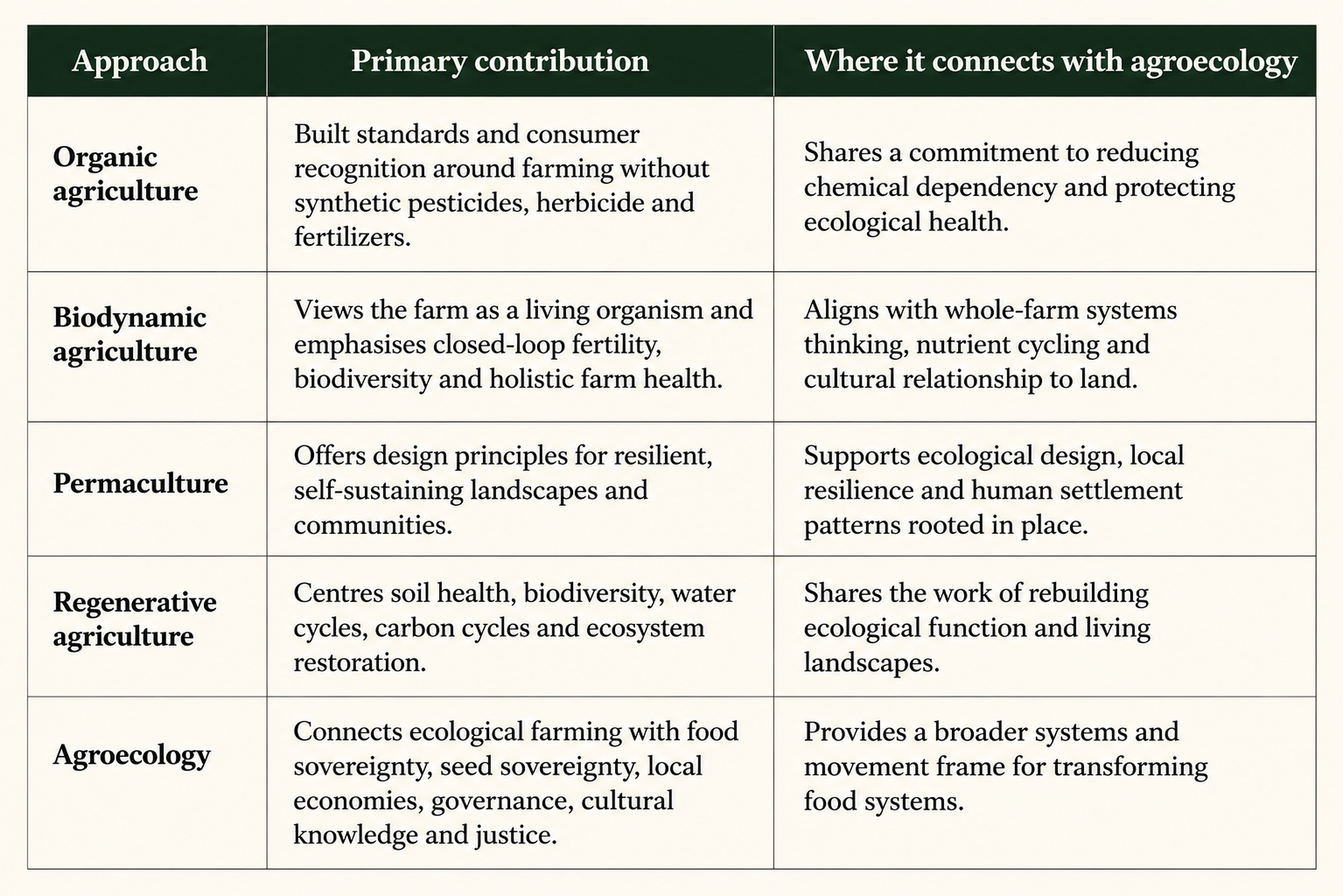
The future of ecological agriculture does not depend on everyone using the same language. It depends on whether we can recognise our shared direction. Cleaner food systems, living soils, shorter supply chains, reduced chemical dependency, farmer autonomy, seed sovereignty, local markets and community power are not separate agendas. They are different doors into the same house.
Global North and Global South Narratives
One of the most important distinctions in this conversation is the difference between the way regenerative agriculture has risen in the Global North and the way agroecology has been advanced through many Global South movements.
In many wealthy countries, ecological farming is often framed through soil health, carbon, biodiversity and farm profitability. These are important. But in many parts of the Global South, the questions are also about land access, farmer debt, seed privatisation, corporate dependency, market exploitation, food insecurity and the defence of cultural identity.
For peasant movements, Indigenous communities, smallholder farmers and food sovereignty movements, social justice is not an add-on to ecological farming. It is central. La Via Campesina's work around peasant agroecology and food sovereignty reflects this deeper movement logic, and the Alliance for Food Sovereignty in Africa describes its work as transforming African food systems through agroecology and food sovereignty, rooted in grassroots leadership and community decision-making (3,4).
‘In much of the Global South, the question is not simply how to regenerate soil. It is how to defend land, seed, livelihood, culture and the right of communities to feed themselves on their own terms’
This is where agroecology is especially strong. It addresses both production and power. It understands that the seed system, the land system, the market system and the knowledge system all shape what is possible on the farm. A farmer cannot be truly autonomous if they are locked into debt, dependent on patented seed, priced out of land, excluded from markets or treated as a contractor in someone else's supply chain.
For Project Biome and Farmers Footprint, this matters because movement building must be globally literate. We cannot build a serious food systems movement if our language only reflects the concerns of the Global North. We need a frame wide enough to hold soil health and land justice, farmer profitability and seed sovereignty, ecological function and cultural survival.
The Problem We Are Responding To
Industrial agriculture is not simply a collection of bad practices. It is an extractive model. It simplifies landscapes, lengthens supply chains, concentrates decision-making and makes farmers dependent on external inputs, distant markets and volatile prices. It separates people from the origins of their food and often treats nourishment as a commodity rather than a relationship. The result is a food system that can appear efficient while being deeply fragile. It can produce abundance in one place and hunger in another. It can deliver cheap calories while undermining nutrition. It can increase yield while degrading the ecological foundations that make future production possible.
The issue is not farmers. Farmers are often the first to carry the cost of a system designed elsewhere. The issue is a model that has pushed farmers toward debt, chemical dependency, land consolidation and narrow commodity pathways. If we want different outcomes, we need a different design. Agroecology offers that design because it starts with life, relationship and place. It does not ‹ farms to become isolated islands of sustainability. It asks regions to rebuild food systems that are circular, diverse, fair and rooted in the needs of communities.
Our Position as Project Biome and Farmers Footprint
Our position is that agroecology should be understood as a vital framework within the wider ecological agriculture movement. It does not replace regenerative, organic, biodynamic or permaculture approaches. Rather, it helps connect them to a broader struggle for food sovereignty, seed sovereignty, farmer dignity, ecological regeneration and community-led food systems.
We believe the future of food must be grounded in living soils, diverse landscapes, local and territorial markets, cultural knowledge and democratic control over the systems that feed us.
We believe ecological regeneration and social justice are inseparable. We believe farmers must be treated not as input managers or commodity producers, but as land stewards, knowledge holders, entrepreneurs, cultural actors and leaders in the transition.
For this collaboration between Farmers Footprint and Project Biome, agroecology gives us a bridge. It helps us speak across movements, regions and traditions. It helps the regenerative conversation grow wider and deeper. It reminds us that restoring soil is essential, but not sufficient, unless we are also restoring autonomy, dignity and community power.
Toward Food and Seed Sovereignty
The task ahead is alignment. Organic, biodynamic, permaculture, regenerative and agroecological communities do not need to collapse into one identity. But they do need to recognise the scale of the system they are working to transform. Industrial agriculture benefits when ecological movements remain divided, niche or overly technical. The future of food systems transformation depends less on defending the boundaries of individual labels and more on building enough collective power to challenge extractive, centralised and corporate-controlled models of agriculture.
Agroecology is not only a way of farming. It is a way of rebuilding our relationship with land, food, seed, culture and each other. It gives us a language for a future that is decentralised, resilient, farmer-led, culturally grounded and ecologically alive.
That is the future Project Biome and Farmers Footprint stands for. That is the movement we are here to build.
(1) Food and Agriculture Organization of the United Nations, "Agroecology Knowledge Hub".
(2) Food and Agriculture Organization of the United Nations, "The 10 Elements of Agroecology"
(3) La Via Campesina, official website and agroecology resources.
(4) Alliance for Food Sovereignty in Africa, "Building Food Sovereignty Across Africa".
More Education Articles





Support our work
Stay Connected
You’ll receive our monthly Field Notes newsletter, project updates, and free resources, plus you’ll get first access to new stories.

Make a Donation
Your tax-deductible gift fuels the storytelling that shifts culture, the organizing that turns awareness into collective action, and the relationships that make long-term systems change possible.