Meet a Farmer: Maria Catalán
Meet María Catalán: How the first Latina migrant farmworker to own a certified organic farm is fighting for an equitable food system.
Food Writer, Chef, and Graduate of Environmental Justice
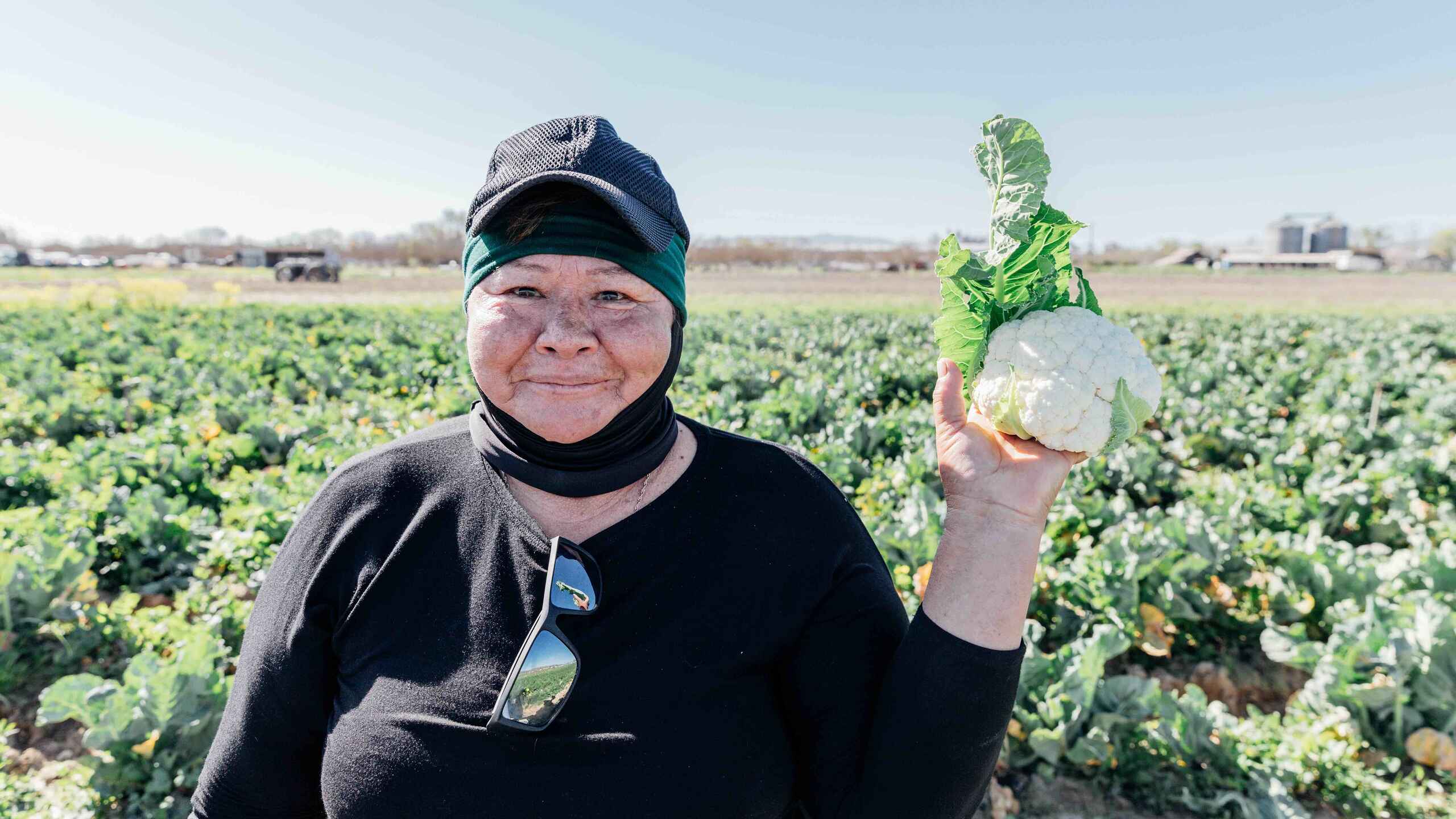
Hollister, California - This land was originally inhabited by the Popeloutchom Tribe
"Here in the United States they call it organic agriculture, but for us Latinos, it is the only way we know how to farm, it is the agriculture of our culture."
Mountains of maíz towered over the young Maria Catalán as she played on her grandfather’s farm. She ran through tomato patches and found solace in the soil underneath her feet. Little did she know this abundance of food and family would later feed her dream of creating a new reality for immigrant farmworkers in the United States.
For Maria Catalán, stewarding land is ancestral. Her grandfather was a successful farmer and cattle rancher from Guerrero, Mexico, and migrated to Texas under the Bracero Program in the 1960s. The Bracero Program’s birth was due to a fear of food labor shortages during World War II. On August 4, 1942, the United States concluded a temporary intergovernmental agreement to use Mexican agricultural labor on US farms (officially referred to as the Mexican Farm Labor Program) and hired over 4 million Mexican farmworkers. This influx and exploitation of farmworkers not only saved the US food system from collapsing during the crisis but fueled the agriculture boom for generations after WW2. The Bracero Program set the precedent of the US food system relying on Mexican farm labor and the unethical exploitation of immigrant workers.
One by one, Maria’s family members migrated to the United States; she found herself alone with four children, yearning for her family and the desire to give her niños similar memories of food and familia. “More than looking for work, I came to America to be reunited with my family. I was searching for the memories of my childhood."
At first, Maria was hesitant to move to the United States. Her mother warned her of the harsh truths of migrant work in a country that deems you invisible.
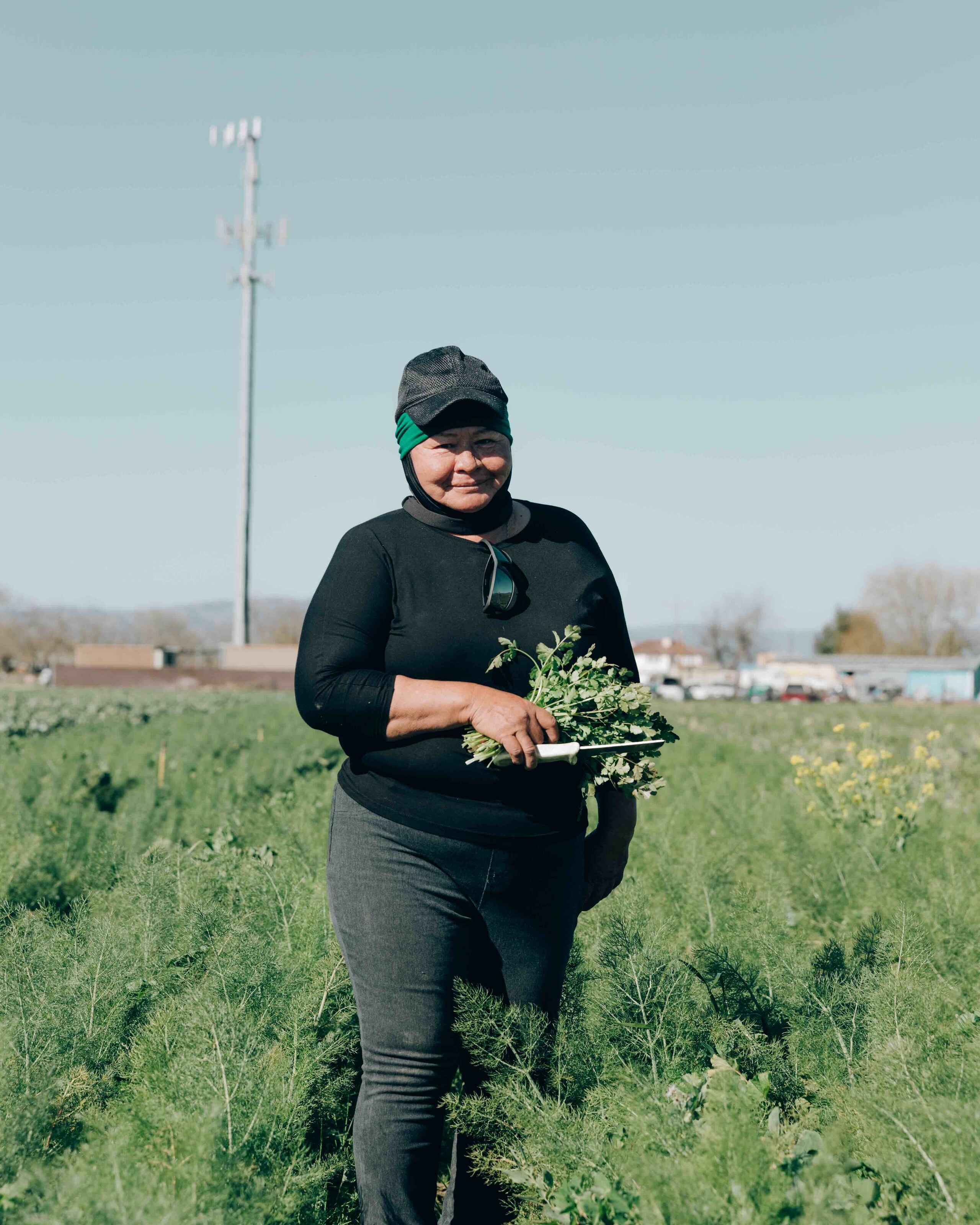
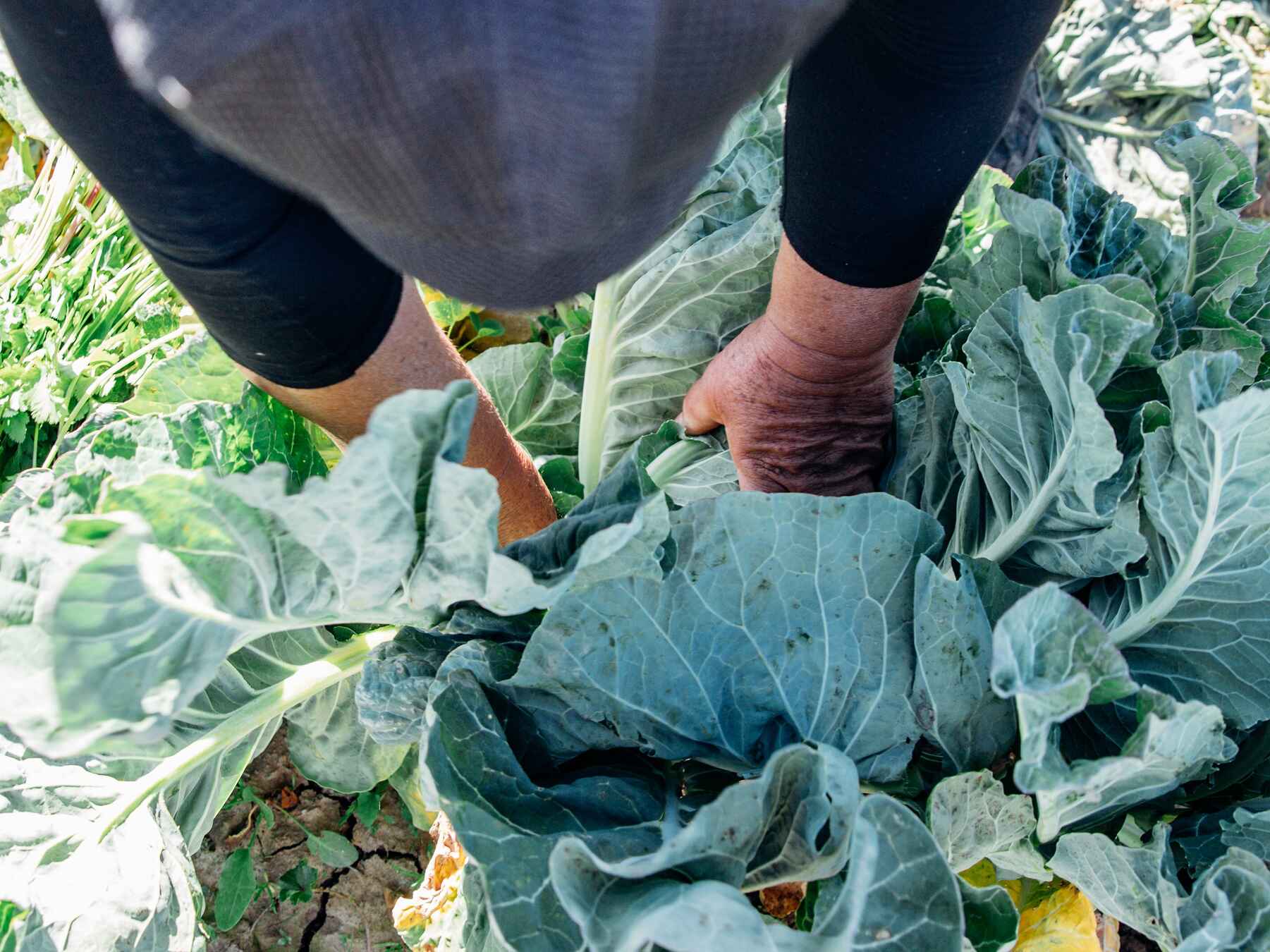
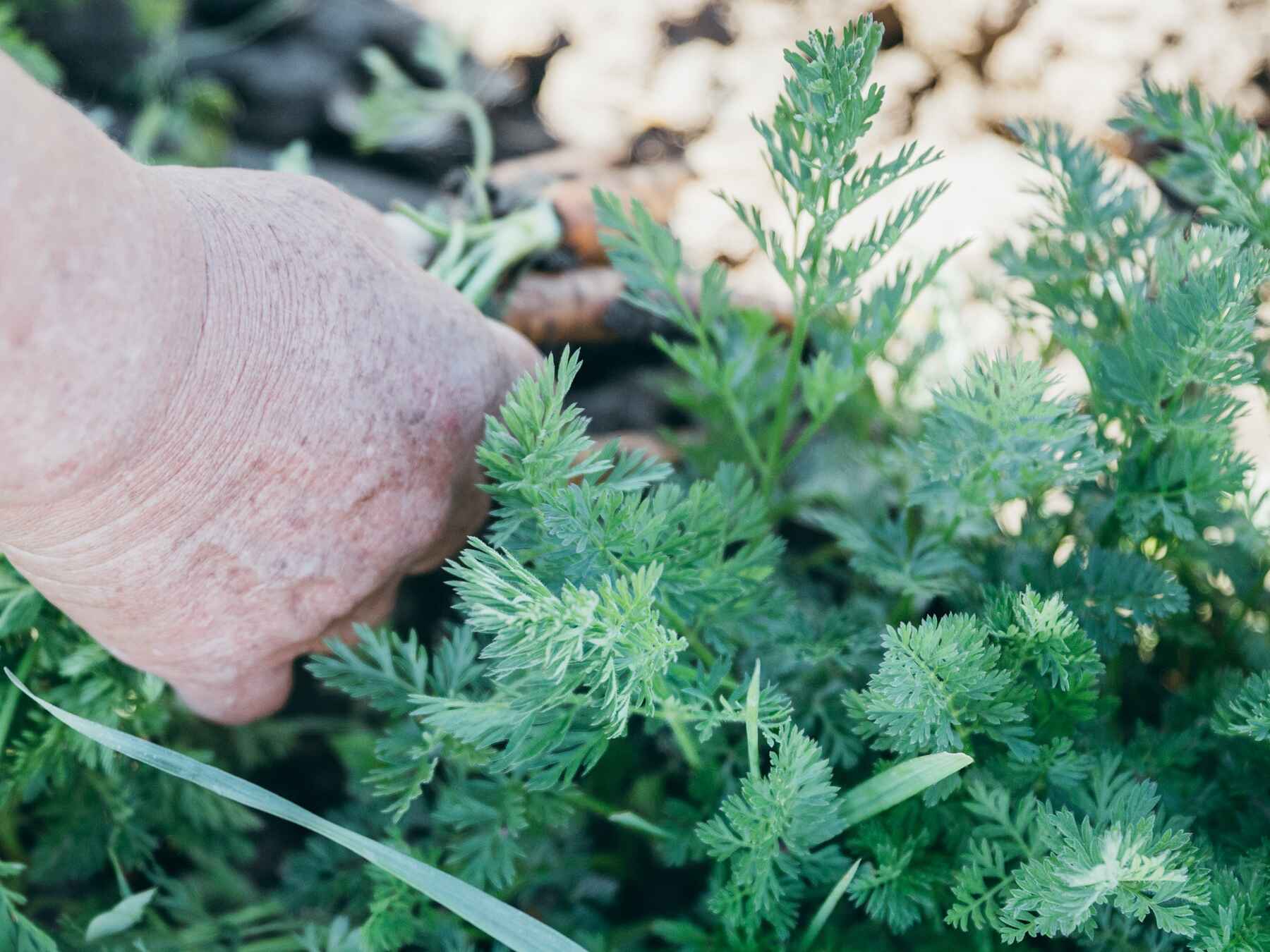
"My mother told me the realities of being a migrant worker and how badly they treated our people.That they yelled at us, overworked our bodies, and woke us up at 3 am to start our shifts. I swore I would never go to the United States, but at the end of the day, I had no choice. I had to be with my family.”
Maria moved to Salinas Valley, California, when she was 25 years old with four children, farm work experience, and a future of opportunity waiting to be harvested. For the next seven years, Maria worked as a field laborer for large-scale vegetable farms and lived the gruesome reality of industrial agriculture’s demand and dehumanization. “I cried a lot. We would work in the most extreme weather conditions: pouring rain, extreme heat, freezing winters. No matter what the weather looked like, they put us to work. They looked at us like we were machines, not humans. I had to harvest a box of broccoli per minute. Time was money for them, and it still is. I had to ask myself, if America was the place of opportunity, where was mine?”
According to the USDA, approximately half of all farmworkers in the United States, more than one million, are undocumented immigrants.
Growers and labor contractors estimate an even higher number of 75 percent. The foundation of our food system relies on migrant workers. “We have a life that you wouldn’t want to believe. We are not recognized. We are invisible. Yet, if we didn’t exist. The food on your table wouldn’t exist.”
In 1994, Maria’s career took a turn when her mother’s knee was irreversibly injured from years of working in the fields. An organization aiding in the legal process of her mother’s injury invited Maria’s family to a 6-year organic farming training program at the Rural Development Center in Salinas. “I decided to commit to the education program out of my curiosity of organic farming. I thought that everything that grew out of the ground was organic. In the beginning, all of my siblings were part of the program but one by one, they dropped out. I stayed because I loved organic agriculture; this was how my ancestors farmed and I wanted to continue that tradition.”
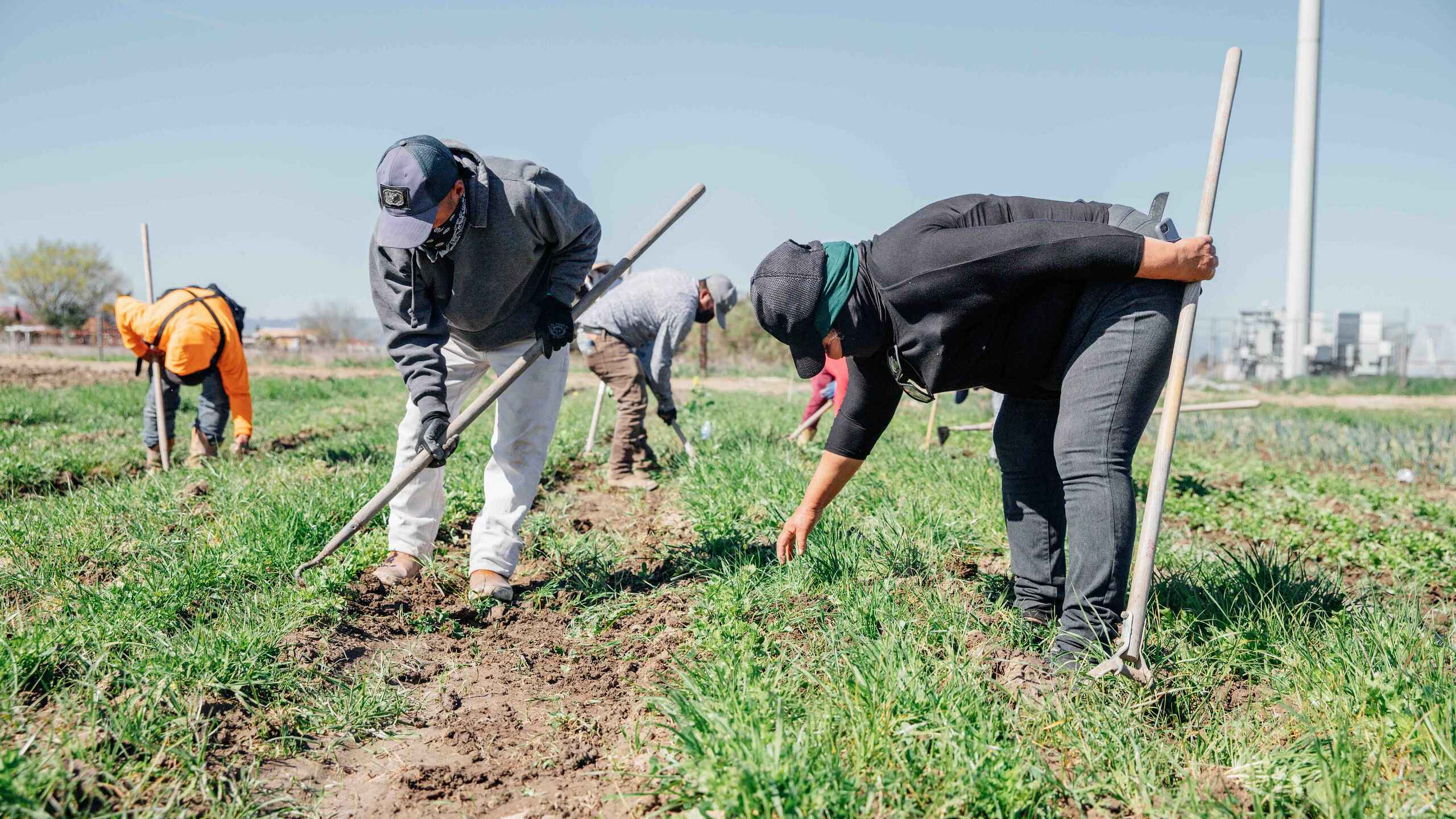
Throughout the organic certification program, Maria’s knowledge grew with the seasons; she learned how to drive and operate a tractor, grow organic produce, and cultivate the skills to manage a farm. Once it was time to lease an acre of farmland, Maria continued to face the obstacles of being a migrant worker. “There were so many barriers: I didn’t speak English, I was a single mother, and I didn’t have any money. I told my director that I couldn’t pay for the rent, the water, or the resources to sustain the land. Although I didn’t have money, I had time. I had the time to work, cook, clean, and most importantly, the knowledge to take care of the land.”
We cannot talk about an equitable food system without talking about land access. Migrant farmworkers in the U.S. do not have the opportunity, resources, or support to purchase and own land. Thus, they stay in the vicious cycle of industrial agriculture and its abusive field labor practices. Because the USDA is a federal organization, migrant workers are not eligible for federal money and grants.
"Many fear there is not a next generation of farmers. You know why? Because there is no opportunity for us (migrant workers) to grow and own land to farm."
Another significant limitation is language. In 2016, a research report concluded that 77% of hired farmworkers stated that Spanish was their most comfortable and preferred language. 30% did not speak any English, and 41% could only speak “a little” English. This study also disregards the indigenous languages that are the native tongue of many migrant workers. “The USDA has no interest in learning Spanish, let alone the native languages of immigrant field workers. There are many farmers from Oaxaca and other parts of Mexico that speak indigenous languages such as Trique and Mixteco.”
Rain or shine, or even global pandemic, migrant workers are in the fields sustaining our food systems. For many migrant workers, the fact that they are both essential and illegal during COVID-19 is an irony that exemplifies our oppressive food system. “We can’t “stay home” like everyone else in the pandemic. We cannot protect ourselves, and we are dying feeding America’s people.”
"We are on the frontlines of this battle and are the reason why the U.S. has food during this crisis."
Maria’s younger brother, who worked in vegetable transportation, lost his life to COVID-19. “My brother died from coronavirus. He gave his life to provide food for this country. It’s tragic. He was my younger brother and I always thought that I would be the first to go. This is the reality of my people during COVID-19, we are dying to sustain this system.”
According to the New York Times, “In California, food and farmworkers are more likely to die from COVID-19 than in any other industry.” UC Berkeley conducted a study with Clinica de Salud del Valle De Salinas (CSVS) to highlight how COVID-19 affects Salinas Valley, also known as “America’s Salad Bowl.” Salinas Valley is home to over 500,000 farmworkers, many of whom are Mexican immigrants and undocumented workers. Food insecurity, low wages, crowded living quarters, and fear of deportation result in resistance to seeking medical care. These communities are more likely to have compounding medical conditions such as obesity, hypertension, and diabetes which all heighten the contraction of COVID-19. According to UC Berkeley’s study, “A total of 140, or 13%, tested positive for COVID-19 using polymerase chain reaction (PCR) testing. The positivity rate was 28% for symptomatic individuals and 8% for asymptomatic individuals. Alarmingly, more than half or 58%, of individuals who were both symptomatic and infected said that they continued to go to work while sick.”
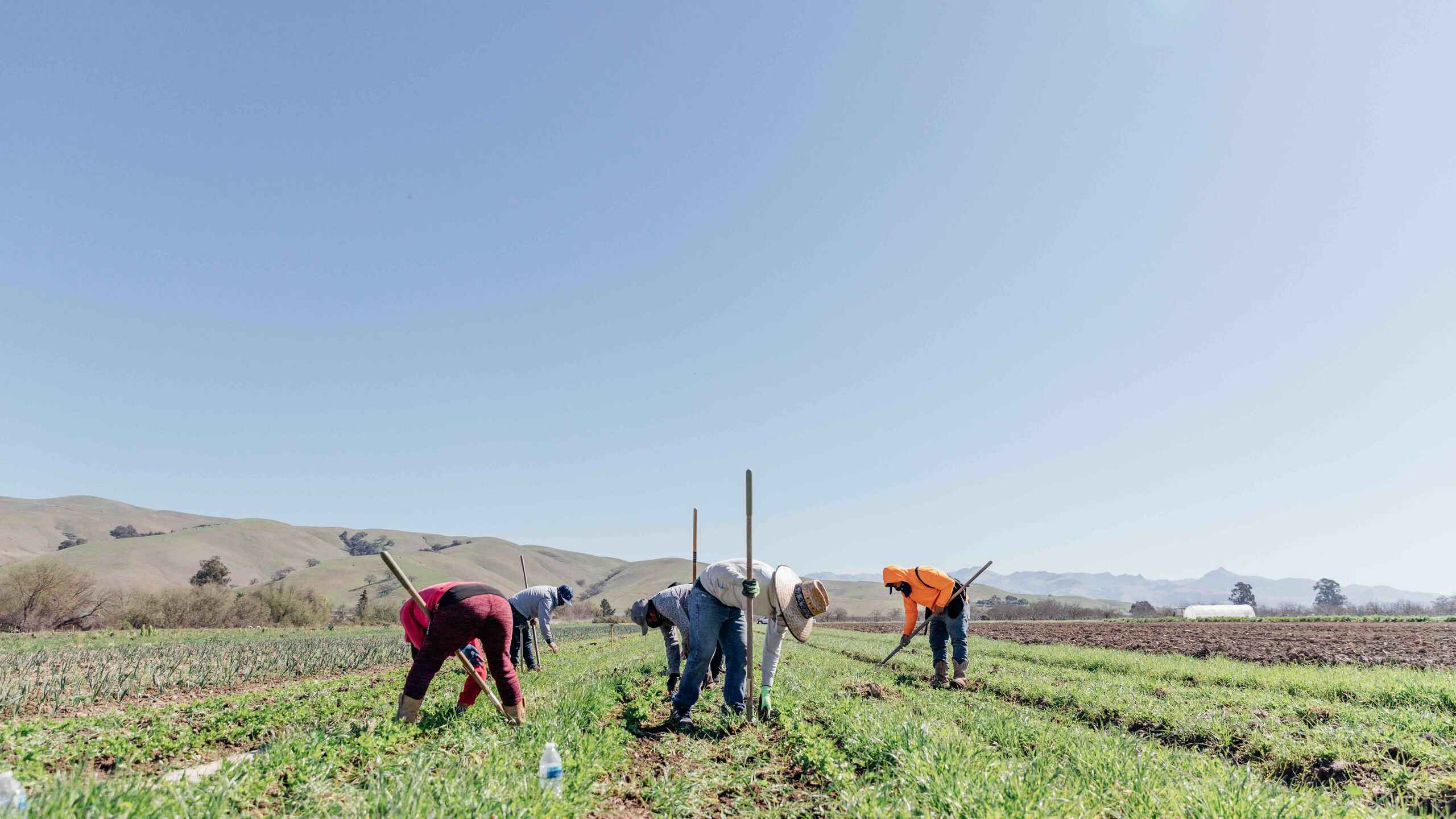
"My dream was nothing but a dream, but with time, work, and knowledge, it slowly turned into reality."
Maria Catálan was also awarded national recognition from the USDA for her organic farm and community outreach programs. The irony of Maria receiving a national award for her dedication and hard work, yet still not being recognized as a contributing citizen to this country, further highlights our food system’s inequality and dehumanization towards migrant workers. Maria is an activist fighting for migrant worker’s rights and the development of an equitable food system where access to fresh produce should be a right, not a privilege. She worked with a non-profit group called PODER (People Organizing to Demand Environmental and Economic Rights) to deliver CSA shares to marginalized communities in San Francisco’s Mission District. Her CSA programs have also collaborated with schools, churches, and homeless garden projects in Santa Cruz to feed her community and spread the bounty of fresh produce. Maria also founded her own non-profit, Pequeños Agricultores en California (PAC), to help migrant farmers acquire their organic certification and assist farmers when applying for grants and loans for owning their own land. “This is my life mission. To feed my family and my community while helping bridge the gap of an unequal food system.”
"This is my life mission. To feed my family and my community while helping bridge the gap of an unequal food system.
In 2008 Maria Catalán was honored by the Center for Latino Farmers for “her tireless work in advocating for organic farming and assisting limited resource producers using her own funds.”
Since 2001, Maria and her family have run Catalán Family Farms on fifteen acres of land in Hollister, California. Maria still feels that her most outstanding achievement is feeding and providing prosperity for her children and grandchildren. “My grandchildren all grew up on the ranch, eating plenty of good food, running along the tomatoes and eating strawberries from the vines. They grew up learning how to love the land and take care of her; they know how to take care of the air, the water, the soil. For me, that was my dream and I achieved it.”
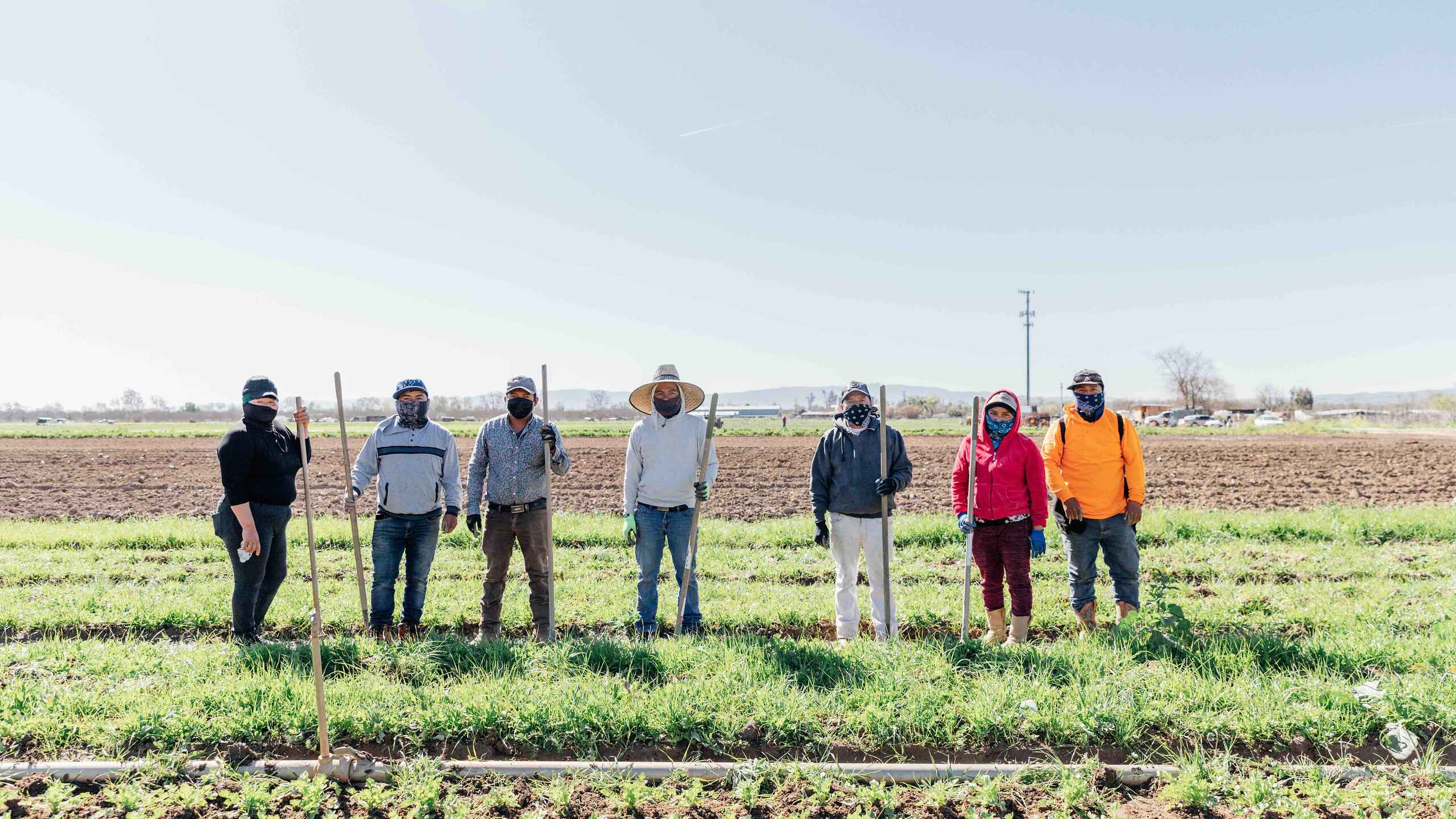
This feature was written by Maya Harrison, contributing member of the Farmer’s Footprint Writer’s Circle.
Video and photography by Leia Marasovich.
Support MARIA CATALÁN & Her Efforts:
Website: catalanfarm.com
Instagram: @catalanfamilyfarms
Email: CONTACT NOW
Donate: SUPPORT MARIA NOW
TO DONATE:
Pesticide Protection for Farm Workers:
Amazon Wishlist for Pesticide Farm Worker Protection:
Donate to Farmer Food Bank:
Donate to Mommy and Baby Care for Farmworkers:
Solidarity Fund: Wash Supply Workers:
TAKE ACTION, SUPPORT + LEARN ABOUT FARMWORKER RIGHTS:
Lideres Campesinas
United Farm Workers of America
National Farm Worker Ministry
Food Chain Workers Alliance
A Growing Culture
Immokalee Workers
International Labor Rights Forum
Más Historias

Apoya nuestro trabajo
Mantente conectado
Recibirás nuestro boletín mensual Field Notes, actualizaciones de proyectos y recursos gratuitos, además de acceso prioritario a nuevas historias.
Haz una donación
Tu donativo deducible de impuestos impulsa las historias que transforman la cultura, la organización que convierte la conciencia en acción colectiva y las relaciones que hacen posible el cambio sistémico a largo plazo.