Briar Rose is an indigenous storyteller and the Director of Storytelling at Farmer’s Footprint, where she leads narrative across film, editorial, and creative production.
The Practice and Purpose of Seed Saving
Seed saving preserves biodiversity, cultural memory, and community food independence. Here's why the practice matters, and what's at risk if we lose it.
Seed Saving: The Foundation of Resilient Food Systems
What is seed saving?
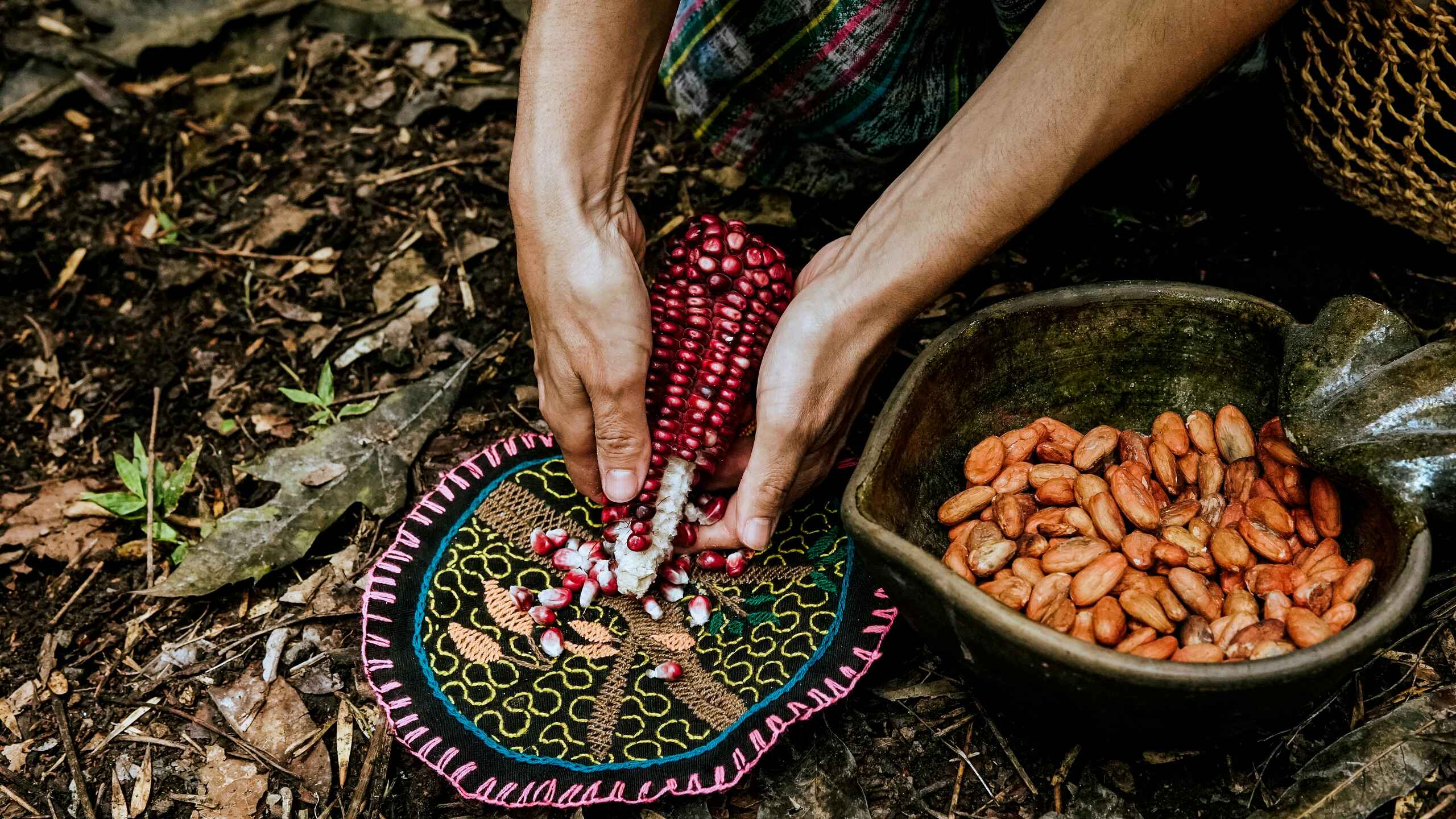
Seed saving is the practice of collecting, storing, and replanting seeds from one growing season to the next. It is one of the oldest agricultural practices, forming the foundation of how humans have cultivated food for thousands of years (FAO, 2021).
At its simplest, seed saving allows plants to be grown again. Through careful selection, farmers and growers choose seeds based on traits such as flavor, resilience, yield, and adaptability to local conditions. Over time, this process shapes crops that are uniquely suited to specific environments (FAO, 2021; IPBES, 2019).
Seed saving is not separate from food systems; it is foundational to their continuity and function. Without the ability to save and replant seeds, communities lose the capacity to sustain and adapt their food sources over time. For this reason, seed saving sits at the foundation of both seed sovereignty and food sovereignty (Shiva, 2000; FAO, 2021).
The origins of seed saving
For most of human history, seed saving has been a natural process within agriculture. Communities grew food, selected seeds from their best crops, and passed those seeds down through generations. This process allowed crops to evolve alongside the ecosystems and cultures that sustained them (FAO, 2021; IPBES, 2019).
Indigenous communities in particular, developed highly sophisticated seed stewardship practices. Seeds were selected not only for productivity, but for their relationship to climate, soil, water, and cultural use. Over time, this created diverse food systems deeply adapted to specific landscapes (Berkes, 2018; FAO, 2021).
As Hopi dryland farmer and researcher, Dr. Michael Kotutwa Johnson explains, agriculture must respond to the conditions of place, and crops are shaped by the environment and land in which they are grown, rather than forcing the environment to adapt to the crop. (Johnson, 2021)
This long history of seed saving reflects the fundamental principle that food systems are not static, they are living systems that evolve through relationships between people, plants, and place.
The role of seed saving in agriculture
Seed saving plays a critical role in maintaining agricultural adaptation, biodiversity and strengthening the resilience of food systems.
Modern industrial agriculture often relies on a narrow range of genetically uniform crops, which can increase vulnerability to pests, disease, and environmental change. In contrast, seed saving supports genetic diversity by allowing crops to adapt over time to specific ecological conditions (FAO, 2021; IPBES, 2019).
Research shows that diverse seed systems improve resilience by increasing a crop’s ability to withstand climate variability, resist disease, and maintain productivity across changing conditions (FAO, 2021; Kennedy et al., 2022). This diversity is essential for long-term food system resilience, especially as environmental conditions continue to change.
Seed saving also supports soil health and ecosystem stability. Crops that are locally adapted tend to require fewer external inputs such as fertilizers and pesticides, contributing to more balanced, natural and sustainable agricultural systems (FAO, 2021).
Scholars and environmental advocates, including Vandana Shiva, have long emphasized that protecting seed diversity is essential for both ecological resilience and the future of food systems. Diverse seeds allow agriculture to remain flexible, responsive, and grounded in the ecosystems in which it exists (Shiva, 2000).
The role of seed saving in culture, memory, and continuity
Seeds carry more than the biological potential for future harvests, they also embody ecological, cultural, and historical knowledge accumulated over generations. Each seed reflects the environmental conditions in which it has been cultivated, as well as the practices and decisions of the communities who have selected and stewarded it over time.
Within many Indigenous knowledge systems, seeds are not understood solely as agricultural inputs, but as living entities embedded within relationships between people, land, and ancestry. As Māori researcher Jessica Hutchings explains,
“Seed is not just a resource. It is a living ancestor, carrying memory across generations.”
This perspective situates seed saving as both a practical and cultural practice. Beyond ensuring future crop production, it enables the transmission of knowledge, identity, and values across generations. As Hutchings further notes,
“When we save seed, we are saving our stories, our whakapapa (lineage), and our future.”
Within many cultures, seeds are deeply tied to food traditions, seasonal rhythms, and ways of living shaped by place. Crops are chosen not only for how they grow, but for how they taste, what they carry, and the role they hold within a community. Seed saving becomes a way of continuing these relationships, allowing them to live on across generations.
Seed keepers
The individuals and communities who carry this knowledge are often referred to as seed keepers. These knowledge holders are often Indigenous communities, elders, and farmers who have maintained seed stewardship practices over generations. Seed keepers function as custodians of both biological and cultural diversity. Their work involves the careful selection, harvesting, storage, and exchange of seeds, guided by detailed knowledge of local ecosystems, seasonal patterns, and agricultural practices.
In many contexts, this knowledge has been sustained through oral traditions and experiential learning, rather than formal scientific systems. The intergenerational transmission of knowledge within indigenous cultures has allowed the continuity of seed keeping for all of human history. They understand how seeds respond to specific environmental conditions, and how to select for traits that support resilience, adaptability, and cultural use.
As Hopi dryland farmer and researcher Michael Kotutwa Johnson emphasizes, indigenous agricultural knowledge is inherently place-based. It cannot be separated from the ecological conditions and cultural frameworks within which it developed, therefore the seeds being kept are in constant adaptation to the land, the community, and the climate. (Johnson, n.d.)
Within today's agricultural landscape, seed keepers continue to play a critical role in maintaining biodiversity and supporting resilient food systems. As global industrial agriculture becomes increasingly standardized, the work of seed keepers preserves locally adapted crops, sustaining cultural knowledge, and maintaining the diversity necessary for long-term ecological stability.
Seed saving, therefore, should be understood not only as a method of preserving plant material, but as a process of sustaining relationships between people, land, and knowledge systems across generations.
Threats
Seed saving practices have declined significantly in many parts of the world due to the expansion of industrial agriculture and the consolidation of the global seed industry. Over the past century, agricultural systems have shifted from locally managed, diverse seed systems toward centralized models characterized by standardized, high-yield crop varieties and commercial seed distribution (FAO, 2021; IPBES, 2019).
One of the primary drivers of this shift has been the increasing privatization and commodification of seeds. In many countries, intellectual property laws and seed patents restrict the ability of farmers to save, exchange, and replant seeds. As a result, farmers are often required to purchase seeds each season, limiting autonomy and increasing dependence on commercial seed systems (Shiva, 2000; FAO, 2021).
Scholar and environmental activist Vandana Shiva has long spoken to the deeper implications of this shift. At its core, it is not only about agriculture, but about power. As she states,
“When you control food, you control society… when you control seeds, you control life on Earth.”
When seed systems become centralized, decision-making moves further away from the people who grow food and into the hands of a small number of institutions. What is grown, how it is grown, and what remains available to communities is no longer shaped by place, culture, or need, but by external control. Over time, this reduces the ability of communities to shape their own food systems, weakening both autonomy and resilience.
This transition from local communities to global corporations has also contributed to a significant loss of agricultural biodiversity. The widespread adoption of monoculture systems and uniform crop varieties has reduced the diversity of seeds in cultivation, increasing vulnerability to pests, disease, and environmental variability (IPBES, 2019; FAO, 2021). The erosion of seed diversity not only affects ecological resilience, but also limits the range of crops available within local food systems.
Beyond ecological impacts, the decline of seed saving practices also has profound cultural consequences. As seed systems become increasingly centralized and standardized, the intergenerational knowledge associated with seed selection, storage, and cultivation is gradually lost. This includes place-based knowledge, food traditions, and cultural practices that have been developed and sustained over generations.
As Māori researcher Jessica Hutchings notes,
“To lose control of seed is to lose control of our food systems and our autonomy.”
This loss extends beyond agriculture, affecting the ability of communities to maintain relationships with land, culture, and knowledge systems. (Hutchings, J. 2015).
The erosion of seed sovereignty represents not only a shift in agricultural practice, but a deeper transformation in how food systems are governed. It reflects a move away from decentralized, relationship-based systems toward centralized systems shaped by control, uniformity, and scale.
These shifts carry significant consequences. The loss of seed saving practices is not only a loss of biodiversity, but also a loss of cultural continuity, ecological knowledge, and community autonomy.
Why seed saving matters today
In the present day, food systems are increasingly shaped by global supply chains, standardized crop varieties, and centralized seed distribution. While these systems have increased efficiency and scale, they have also introduced new vulnerabilities. Disruptions to supply chains, shifts in environmental conditions, and declining agricultural diversity have exposed the fragility of highly centralized food systems (FAO, 2021; IPBES, 2019).
Further, seed saving offers an alternative approach grounded in resilience, adaptability, and local knowledge. By maintaining diverse, locally adapted seed varieties, communities are better equipped to respond to changing environmental conditions, shifting growing seasons, and region-specific challenges. These systems support flexibility and long-term stability by enabling crops to evolve alongside the ecosystems in which they are grown (FAO, 2021).
Seed saving also plays a critical role in restoring autonomy and resilience within food systems. When communities are able to save and exchange seeds, dependence on external inputs is reduced and control is regained over how food is grown and sustained. This decentralization strengthens local food systems and supports more equitable and self-determined forms of agriculture.
At the same time, seed saving plays a critical role in preserving cultural knowledge and food traditions. As standardized and uniform crop varieties replace locally adapted foods, biodiversity declines alongside the cultural practices, identities, and relationships tied to those foods. Maintaining seed diversity is therefore essential for sustaining the connections between people, land, and food across generations.
As Jessica Hutchings reminds us, seed saving is not only a technical practice, but a cultural one. It is a way of maintaining relationships with land, knowledge, and whakapapa (lineage) across generations.
For these reasons, seed saving is increasingly understood as essential to resilient food systems. It supports biodiversity, restores local knowledge systems, and brings communities back into relationship with how their food is grown.
In this context, seed saving is not simply about preserving seeds. It is about maintaining the capacity to adapt, to respond, and to sustain life within changing conditions.
Seed saving is not a practice of the past, it is a condition for the future. The resilience of any system lies in its diversity, and to lose seed is to lose options. Without the ability to save seed, there is no true sovereignty, no real resilience, and no lasting food system.
In a world of increasing uncertainty, the ability to save, adapt, and share seed is the ability to continue.
Sources:
Berkes, F. (2018). Sacred ecology (4th ed.). Routledge.
Food and Agriculture Organization of the United Nations (FAO). (2021). Indigenous peoples’ food systems: Insights on sustainability and resilience from the front line of climate change. FAO.
Hutchings, J. (2015). Te mahi māra hua parakore: A Māori food sovereignty handbook. Papawhakaritorito Charitable Trust.
Intergovernmental Science-Policy Platform on Biodiversity and Ecosystem Services (IPBES). (2019). Global assessment report on biodiversity and ecosystem services. IPBES Secretariat.
Johnson, M. K. (2021). Indigenous resilience and food sovereignty on the Hopi Nation. University of Arizona Press. https://uapress.arizona.edu/book/indigenous-resilience-and-food-sovereignty-on-the-hopi-nation
Kennedy, G., et al. (2022). Food biodiversity and sustainable diets. Journal of Environmental Management. https://www.sciencedirect.com/science/article/abs/pii/S0924224422003909
Shiva, V. (2000). Stolen harvest: The hijacking of the global food supply. South End Press.
More Education Articles




Support our work
Stay Connected
You’ll receive our monthly Field Notes newsletter, project updates, and free resources, plus you’ll get first access to new stories.

Make a Donation
Your tax-deductible gift fuels the storytelling that shifts culture, the organizing that turns awareness into collective action, and the relationships that make long-term systems change possible.