Elle is a communications leader with 15 years experience in audience engagement and mission-led storytelling, who translates food system topics into clear, human education
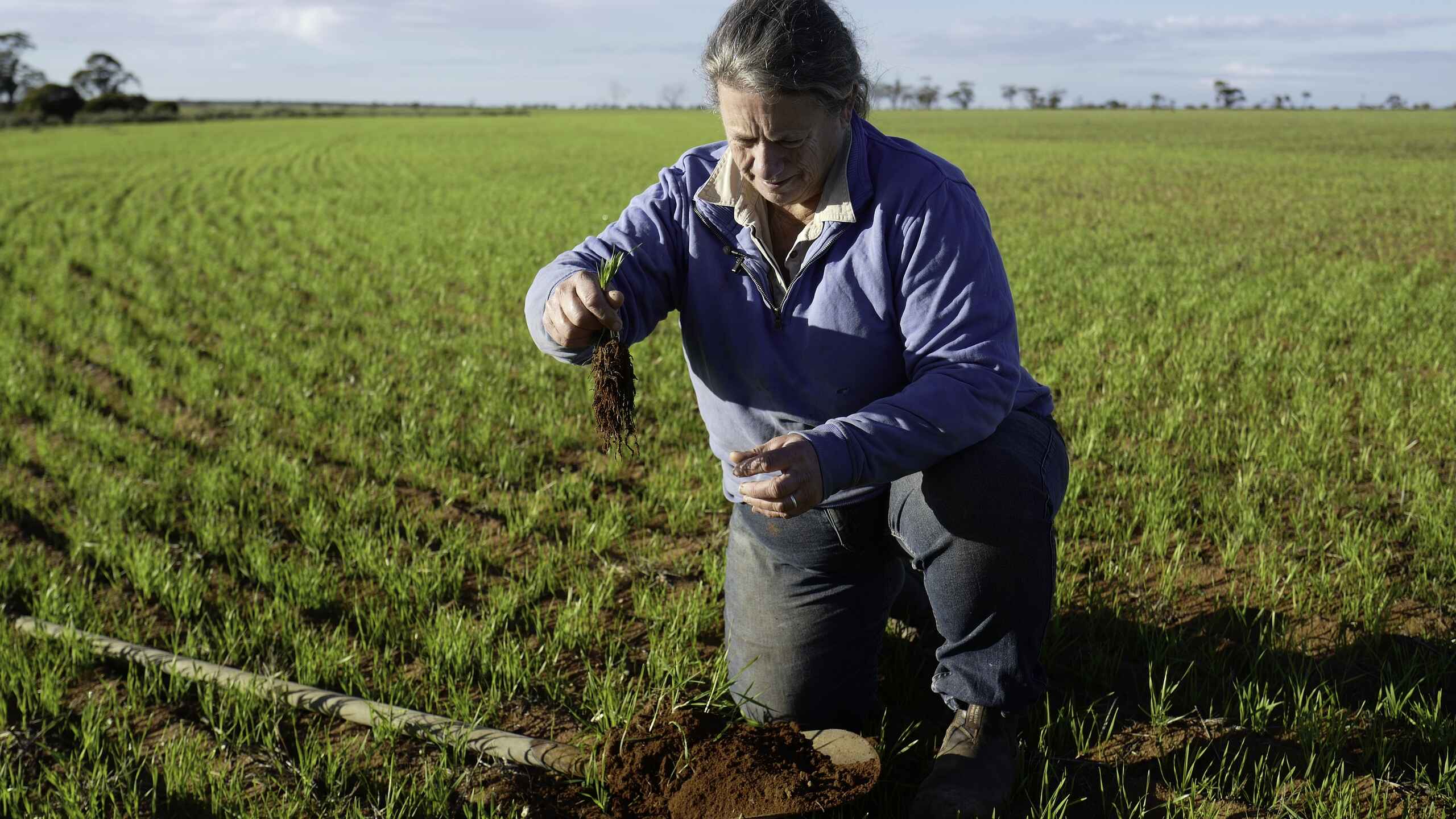
Soil Health - Where Healthy Food Begins
Healthy soil is not just a farming concern. It touches our food, our water, our climate, and our health. Here's what soil health really means, and why it belongs in every conversation about our future
“If the soil is not healthy, our food is not healthy and subsequently our families will not be healthy.”
What is Soil?
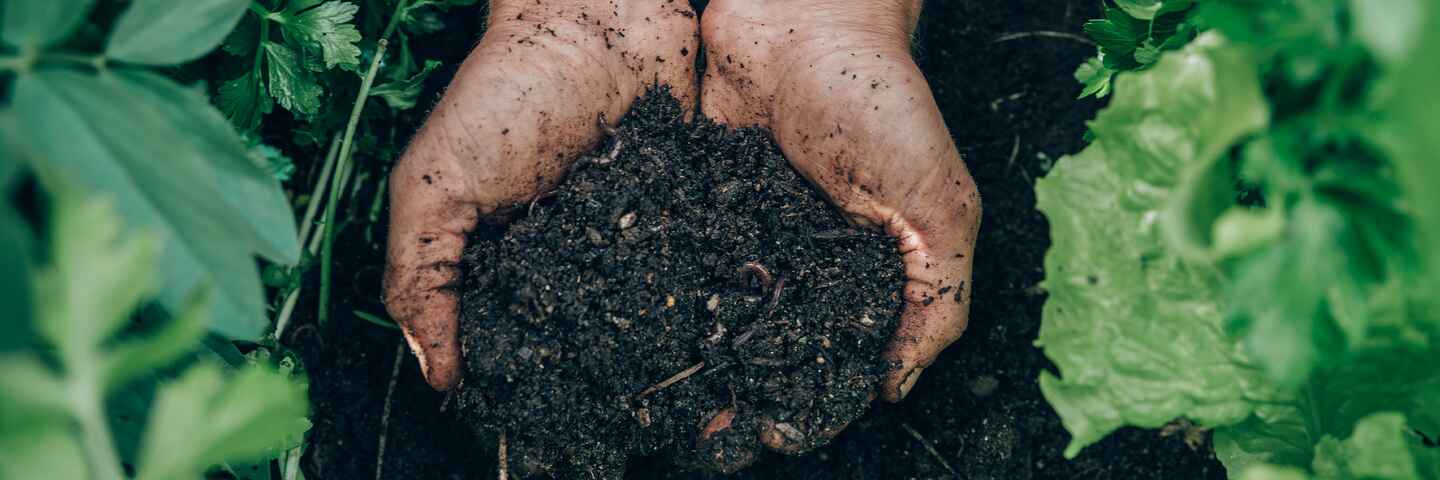
Soil, often called topsoil, is the upper layer of the Earth’s crust, though that description only scratches the surface. Soil is a living system made up of minerals, organic matter, microbes, fungi, insects, and countless other organisms, all interacting in relationship. It forms the foundation that life on land depends on.
Through our work with farmers across different landscapes, climates, and farming systems, one understanding comes through clearly: soil is not an inert material. It is alive, and the way it is treated shapes everything that follows.
Unlike dirt, which is simply displaced and lifeless material, soil is very much alive. It is one of the most intricate ecosystems on the planet, and likely the most biodiverse. In fact, A 2023 study published in PNAS estimated that around 59% of all life on Earth lives in soil. (PNAS, 2023). It is filled with living organisms such as bacteria, fungi, archaea, and insects like worms and beetles. Most of this life cannot be seen with the naked eye, but each plays a role in creating the conditions for life to flourish. In fact, a single teaspoon of healthy soil contains more microbes than there are humans on Earth (Natural Resources Conservation Service, N.d,).
It is easy to overlook what lies beneath us, but soil is one of the most extraordinary living systems we have.
Why Soil Health Matters
Soil provides a living foundation for the systems that sustain life. It is where geology, biology, water, and atmosphere meet and interact. Within a handful of living soil, minerals weather from rock, microbes break down organic matter, roots exchange nutrients with fungi, and water moves through networks of pore spaces that sustain plant life. These processes are quiet and often invisible, yet they create the conditions that allow life on land to flourish.
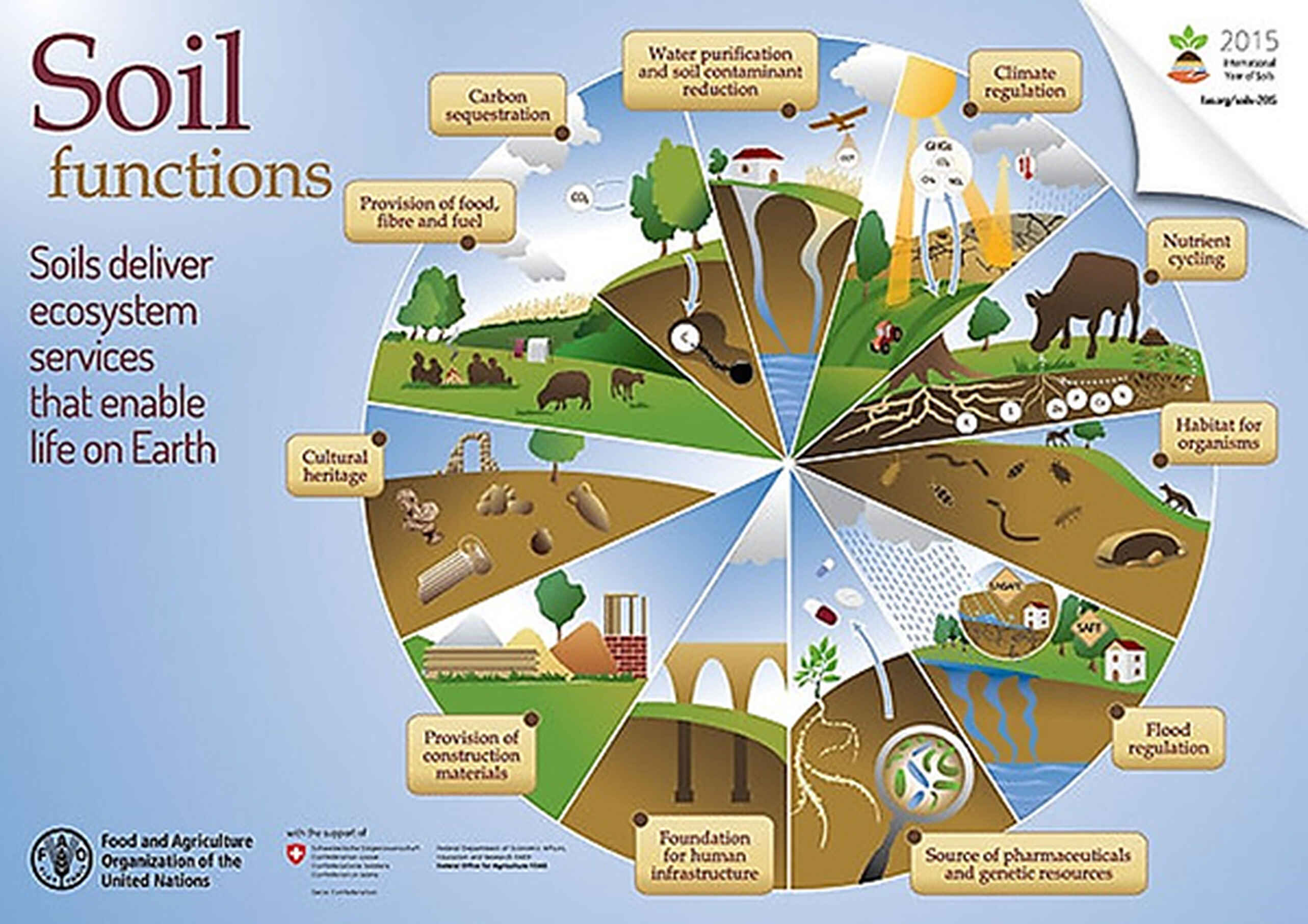
When soil is functioning well, the effects are far-reaching. It supports plant growth by making nutrients available and building the structure that roots depend on. It regulates water by absorbing rainfall and releasing it gradually, helping to buffer both drought and flooding. It also plays an important role in climate processes by storing significant amounts of carbon within the ground.
Scientists often describe these functions as ecosystem services. Put simply, these are the essential roles healthy soil plays in sustaining life on Earth (Murphy & Giménez, 2024). They include:
Plant growth including supply of food, fibre, and fuel
Plants rely on living soil to access water and nutrients. Microbes and fungi help unlock minerals that plants cannot access on their own, supporting growth and productivity.
Environmental filtration for air and water
As water moves through soil, particles and microbes help filter contaminants and regulate the flow of water into streams, rivers, and aquifers. Healthy soils also help reduce airborne dust and pollutants by stabilising the ground surface.
Atmospheric benefits through carbon sequestration
Soils store vast amounts of carbon through plant roots and microbial activity. When managed well, they can act as an important ‘carbon sink’, helping to moderate atmospheric carbon levels.
Nutrient cycling for animals and ecosystems
Microorganisms break down plant and animal material, returning nutrients to forms that can be used again by plants and other organisms. This cycling sustains the fertility of landscapes over time.
Climate regulation
Through their ability to store carbon, retain water, and support vegetation, soils help stabilise local and global climate patterns.
Medicinal provisions
Many antibiotics and pharmaceutical compounds have been discovered in soil microorganisms. Healthy soil ecosystems continue to be a source of scientific discovery and potential medical breakthroughs.
Together, these functions show that soil is not inert. It is an active system that supports food production, water cycles, climate processes, and biodiversity. When soil is degraded, these functions begin to weaken, with consequences that extend beyond the farm.
So What Does Soil Health Look Like?
Healthy soil is alive. That is one of the clearest truths we have heard time and again from farmers working closely with the land. Beyond what can be seen, healthy soil is something that can be felt. It holds structure, moisture, and biological activity that reflect the strength of the system beneath the surface.
At the heart of that living system is the soil microbiome, a vast community of bacteria, fungi, protozoa, nematodes, arthropods, and other microscopic organisms living within the soil. Together, they drive many of the processes that define soil health.
Much of this work happens beyond our sight. Bacteria break down organic matter, releasing nutrients in forms plants can absorb. Mycorrhizal fungi extend plant root systems, increasing access to water and minerals. Other soil organisms regulate microbial populations and contribute to the continuous cycling of nutrients.
The diversity of this living community matters deeply. A rich and varied soil microbiome brings stability to the system, giving land a greater capacity to respond to stress such as drought, heat, and disease pressure. When that diversity declines, soil structure can begin to break down, nutrient availability can decrease, and the soil’s ability to retain water and store carbon is reduced.
Healthy soil is shaped by more than its mineral content. It reflects the life it supports and the relationships that sustain it. The greater the diversity within the soil microbiome, the greater the land’s capacity to remain fertile, resilient, and productive over time.
Soil and Its Connection to Human Health
“Soil teeming with organic matter is the basis for healthy, nutrient-dense crops.”
Soil health is directly linked to human health. The nourishment we receive from plants depends in part on their nutrient density, and that nutrient density is shaped by the condition of the soil they grow in.
For plants to access minerals such as zinc, magnesium, and iron, those nutrients need to be biologically available. This is where the soil microbiome becomes essential. Microorganisms help break down organic matter, unlock minerals, and convert nutrients into forms plants can absorb. Without that living exchange, nutrients may still be present in the soil, but far less available to the crops growing there.
Organic matter also plays an important role in a soil’s ability to hold and exchange nutrients. As soil biology declines, nutrient cycling becomes less effective, and the nutritional quality of food can decline alongside it. This is one of the key differences between food grown in depleted soil and food grown in living soil.
There is also a deeper connection between the health of the soil and the health of our bodies. Just as soil contains a microbiome made up of vast communities of living organisms, the human gut is home to its own microbial ecosystem. Both depend on diversity, balance, and the conditions that allow life to thrive. When soil is healthy, it helps produce food that better supports the microbial life within us. In this way, soil vitality shapes the quality of what we eat and influences the internal ecosystems that help sustain our health.
Soils and its Relationship to Water Cycles
That same biological activity also shapes how water moves through the land. Soil structure plays a vital role in how water moves through a landscape. Healthy soil contains organic matter and a thriving community of living organisms that help bind soil particles into aggregates. These aggregates create pore spaces throughout the soil, allowing water to move downward, settle into the ground, and be stored there, rather than running off the surface.
Organic matter helps make this possible. It has a remarkable capacity to absorb and hold water, making that moisture available to plant roots over time. When soil biology is active and organic matter levels are strong, soil becomes better able to capture rainfall, retain moisture, and release it gradually as plants need it.
When soil is degraded, that structure begins to collapse. Without the roots, microbes, and organic material that help hold it together, water is far more likely to run across the surface than infiltrate the ground. This increases the risk of erosion, flooding, and the loss of valuable topsoil.
For farmers, this is becoming increasingly important. Strong soil structure helps protect fields during heavy rainfall and flood events, which are becoming more common in many regions. Weakened soils are more vulnerable to being washed away during intense storms, creating lasting challenges for the growing seasons that follow.
Healthy soil also offers protection during dry periods. Because it can hold more water within its structure, land with living soil is better able to sustain crops between rain events. This can reduce the need for irrigation and help farms remain productive as drought becomes more frequent.
In this way, water retention is closely tied to the resilience of both farms and ecosystems.
What Role Does Soil play in Carbon Sequestration and Climate Regulation?
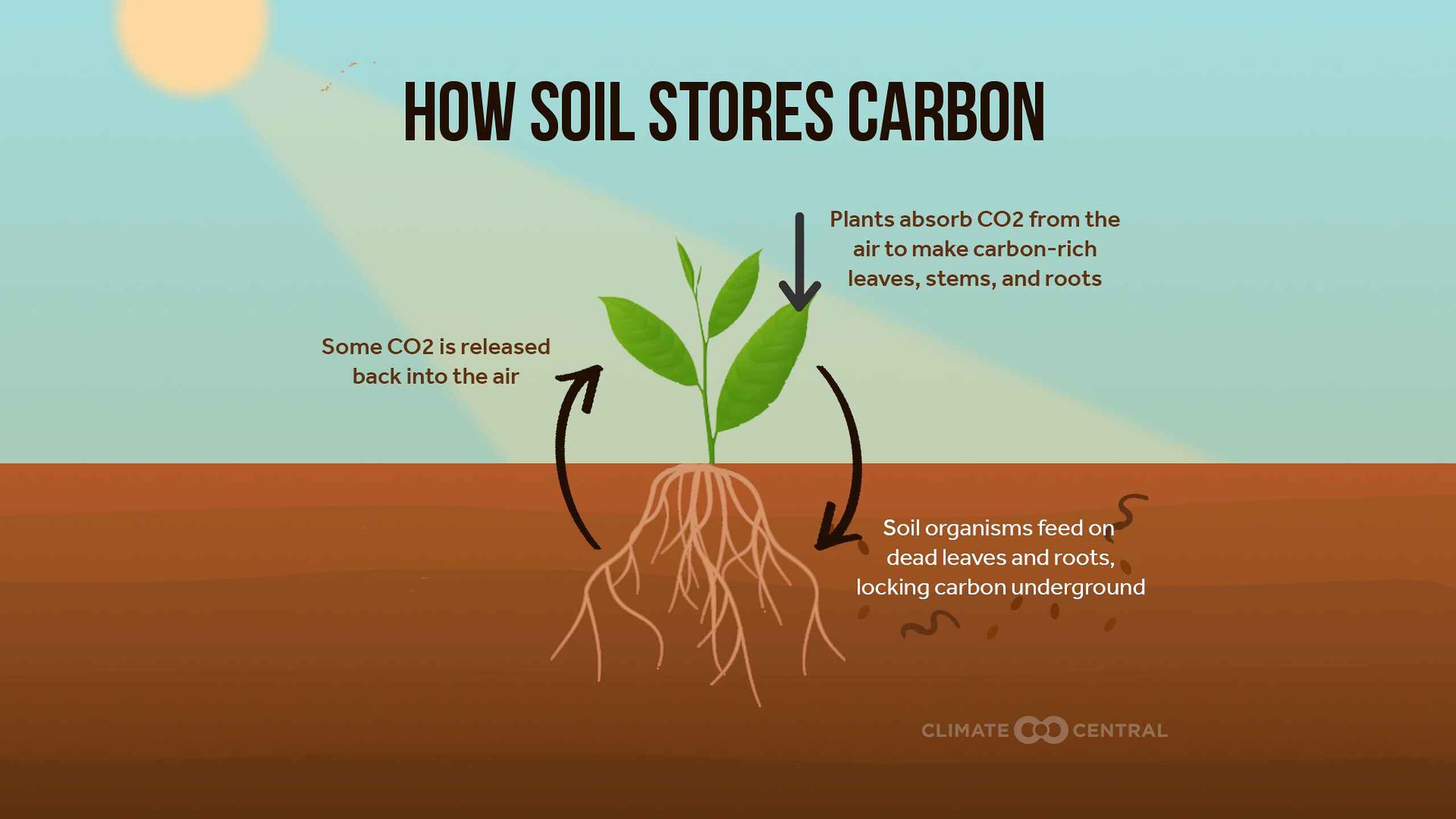
These processes extend beyond the soil itself and into the atmosphere. Soil holds vast quantities of carbon beneath our feet, making it one of the planet’s most important natural systems for climate regulation (Soils, Carbon Sinks and Climate Players, N.d,).
The process begins with photosynthesis. Plants draw carbon dioxide from the air and turn it into energy. Some of that carbon travels through their roots and into the soil, where it is released as compounds that feed microbial life (Fig.2, Buntain & Hardie, 2024). As microbes process and cycle this material, a portion of the carbon becomes stored within the soil itself, woven into its structure instead of returning to the atmosphere.
This depends on living systems functioning well. Carbon sequestration arises from the ongoing exchange between roots, microbes, and organic matter. When these relationships are disrupted - of farms by intensive tillage or repeated chemical disturbance for example - soil structure weakens and stored carbon can be lost back to the atmosphere.
Regenerative agriculture embodies an approach to land management that rebuilds soil biology and maintains living plant cover to help strengthen this natural cycle. By creating the conditions for roots and soil organisms to thrive, regenerative practices can support greater carbon storage while also improving fertility, water-holding capacity, and resilience.
Soil, then, is deeply connected to climate stability. When its biological integrity begins to erode, the effects reach far beyond the boundaries of a single farm.
What Causes Soil Health to Decline?
Soil begins to decline when the biological relationships and structure that sustain it are repeatedly disturbed. Several common land management practices cause these disturbances:
Intensive tillage is one of the most damaging. It breaks apart the aggregates that give soil its structure and create the pore spaces water and air move through. As this structure is disturbed, soil becomes more vulnerable to erosion and less able to absorb and retain water. Tillage also exposes organic matter to rapid decomposition, reducing carbon levels and disrupting the microbial communities that help sustain fertility.
Monoculture farming can also weaken soil over time. When the same crop is grown repeatedly across large areas, the diversity of root systems, microbial relationships, and organic inputs becomes limited. This reduction in diversity affects the biological networks that help cycle nutrients, support plant health, and build resilience within the soil.
Synthetic fertilisers and pesticides can place further strain on these systems. While often used to increase yields or manage pests in the short term, repeated chemical use can alter microbial communities and reduce the diversity of life in the soil. Because these organisms play such a central role in nutrient availability, soil structure, and water retention, the effects can spread through the whole system.
Deforestation and land clearing also contribute to soil degradation. Vegetation protects soil from wind and rainfall while providing the organic matter that feeds soil life. When this cover is removed, soil becomes exposed to erosion and loses a vital source of biological inputs.
Poorly managed grazing can place additional pressure on soil systems. When grazing animals remove plant cover faster than it can regenerate, soil may become compacted and exposed. Without living roots and ground cover to stabilise the soil, wind and water erosion can accelerate.
Poor water management can deepen these problems. n soils where structure has already been weakened, rainfall is more likely to run off the surface than soak into the ground. This runoff can carry away nutrients and topsoil, further reducing the land’s ability to support healthy plant growth.
As these pressures build, soil gradually loses organic matter, microbial diversity, and structural stability. Nutrient cycling slows, water retention declines, and the soil’s capacity to store carbon is reduced. Over time, the living systems that keep soil fertile and resilient begin to break down.
If this process continues, the consequences can become more severe, leading to topsoil erosion and, in some regions, desertification.
Desertification and the Loss of Topsoil
“Soil erosion is the biggest problem confronting the farmers of the Nation over a tremendous part of its agricultural lands.”
Desertification is the gradual process through which fertile land loses its biological productivity, eventually becoming less able to support vegetation and productive agriculture.
At the heart of this process is the loss of topsoil. Topsoil is the uppermost layer of soil and the most biologically active part of the soil profile. It holds the highest concentrations of organic matter, microbial life, and nutrients, and it is where most plant roots grow. When topsoil is lost, the foundation for healthy plant growth and food production is lost with it.
As topsoil disappears, landscapes begin to change. Farmland becomes harder to cultivate. Soils that once held moisture begin to dry more quickly, increasing the risk of drought stress. Reduced infiltration can also increase flooding during heavy rainfall events. In some regions, exposed soil can turn to dust and be carried off by wind, creating dust storms that further strip the land of its fertility.
These changes reach beyond the farm itself. As soils lose their capacity to support healthy plant growth, food systems become more fragile. Farmers may face declining yields and rising input costs as they try to maintain productivity. In many parts of the world, the loss of fertile land has also been linked to economic hardship, migration, and social instability.
Topsoil forms slowly through the accumulation of organic matter and the work of living organisms within the soil. In many landscapes, it can take hundreds of years to build just a few centimetres. Under conditions of erosion and repeated disturbance, that same layer can be lost in a single season.
Protecting and rebuilding topsoil is one of the most urgent tasks facing our agricultural systems today.
How Do We Support Soil Health?
“We all come from the soil.”
Across many landscapes, farmers are working to reverse these patterns.
At Farmer’s Footprint, we have spent time with farmers across many kinds of landscapes, climates, and operations. The details may differ from one farm to the next, but one thing comes up again and again: a deep respect for soil life.
Around half of the Earth’s habitable land is used for agriculture, which means the way farmland is managed matters enormously (Our World in Data, 2019). It shapes whether soil ecosystems are built over time or steadily degraded.
Many conventional farming systems were developed to maximise yield and efficiency. While they have supported food production at scale, they have also normalized repeated disturbance with practices that we know to deliver short-term outputs at the detriment to soil biology. This trade-off has been treated as acceptable for far too long.
Regenerative agriculture offers a different path.
It begins with a simple but profound understanding: if soil is alive, it must be treated as such. Nurtured. Prioritized. Cared for. Instead of forcing productivity from a depleted system, regenerative practices aim to rebuild the biological processes that give soil its structure, fertility, and resilience.
“Soil teeming with organic matter is the basis for healthy, nutrient-dense crops.”
Whether it’s a cattle ranch, market garden or mixed cropping system, we have come to understand that several consistent principles tend to guide this kind of land management.
Keeping living roots in the soil is universally recognized as being one of the most effective ways to help feed the microbial communities that cycle nutrients and support plant health. Increasing plant diversity also strengthens microbial relationships and ecosystem stability. Minimizing soil disturbance protects structure and preserves habitat for soil organisms. And returning organic matter to the land helps feed soil life and build fertility over time.
Many regenerative farmers also incorporate carefully managed grazing where appropriate. When livestock are moved in ways that reflect natural grazing patterns, they can help stimulate plant growth, cycle nutrients, and return organic matter to the soil. On healthy land, animals play an important role in the wider living system.
Supporting soil health is not a formula, and it is never one-size-fits-all. It is shaped by region, climate, and landscape. But across all of that variation, the principle remains the same: when we support the life in the soil, we strengthen the systems that nourish life above it.
Caring for soil is not optional if we are serious about the future of food, farming, and planetary health. It is one of the most practical and necessary forms of stewardship we have.
Buntain, M., & Hardie, r. M. (2024). Homegrown soil carbon – soil carbon basics. APAL. https://apal.org.au/homegrown-soil-carbon-soil-carbon-basics/
Leeper Girgis, C. (N.d). The Fundamental Principles of Regenerative Agriculture and Soil Health. Noble Research Institute. https://www.noble.org/regenerative-agriculture/soil/the-fundamental-principles-of-regenerative-agriculture-and-soil-health/
M.A. Anthony, S.F. Bender, & M.G.A. van der Heijden, Enumerating soil biodiversity, Proc. Natl. Acad. Sci. U.S.A. 120 (33) e2304663120, https://doi.org/10.1073/pnas.2304663120 (2023).
Murphy, S., Giménez, D., & White, M. (2024). Homegrown soil carbon – soil carbon basics. APAL. https://apal.org.au/homegrown-soil-carbon-soil-carbon-basics/
Natural Resources Conservation Service. (N.d). Healthy Soils Are Full Of Life. Natural Resources Conservation Service. chrome-extension://efaidnbmnnnibpcajpcglclefindmkaj/https://www.nrcs.usda.gov/sites/default/files/2023-01/Healthy-Soils-Are-full-of-life.pdf
Ritchie, H., & Roser, M. (2019). Land Use How is humanity using the Earth’s land? And how can we decrease our land use so that more land is left for wildlife? https://ourworldindata.org/land-use
More Education Articles





Support our work
Stay Connected
You’ll receive our monthly Field Notes newsletter, project updates, and free resources, plus you’ll get first access to new stories.

Make a Donation
Your tax-deductible gift fuels the storytelling that shifts culture, the organizing that turns awareness into collective action, and the relationships that make long-term systems change possible.