Meet a Farmer: Red Tail Farms
Working With Nature, Feeding a Community: Meet Matt & Gabby, young farmers paving the way for the new generation by restoring barren land into a regenerative farm.
Liam Pickhardt is a documentary storyteller with a focus on agriculture. Through commercial photography and videography, he crafts stories of adventure and rad humans.
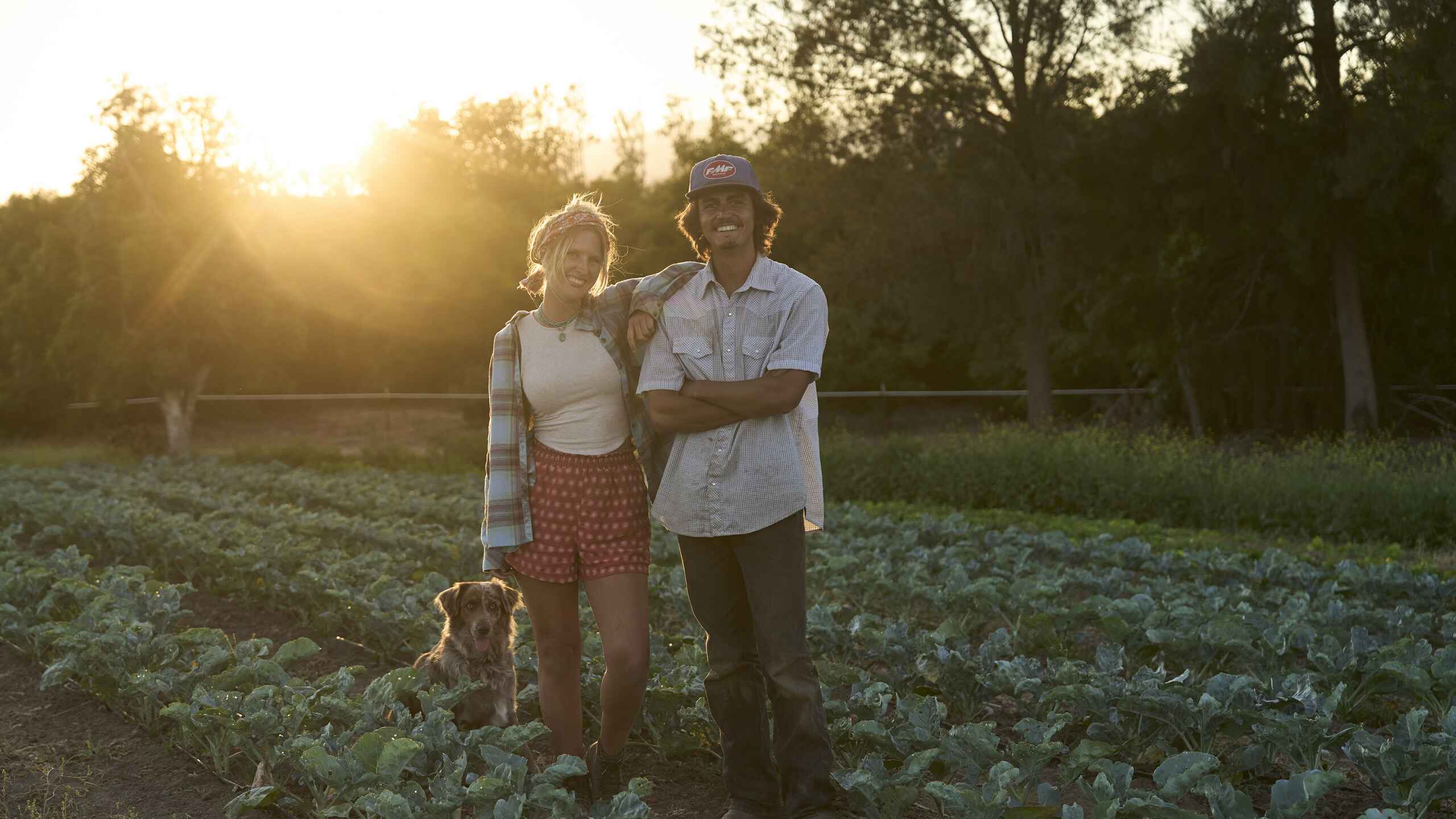
On fire-scarred ground, two young farmers choose patience and care
The hissing sound comes first. Then a sharp pop, followed by a rapidly growing stream of water.
Matt May starts running. A few hundred yards later he slams a valve shut, cutting the main water line.
“I knew I didn’t fix that irrigation line well-enough,” Matt says while shaking his head with frustration. “The seedlings in the greenhouse need water today. I have to fix this busted line immediately. Can we do this interview later?”
It’s just another day of constantly assessing and shifting priorities at Red Tail Farms in Moorpark, California.
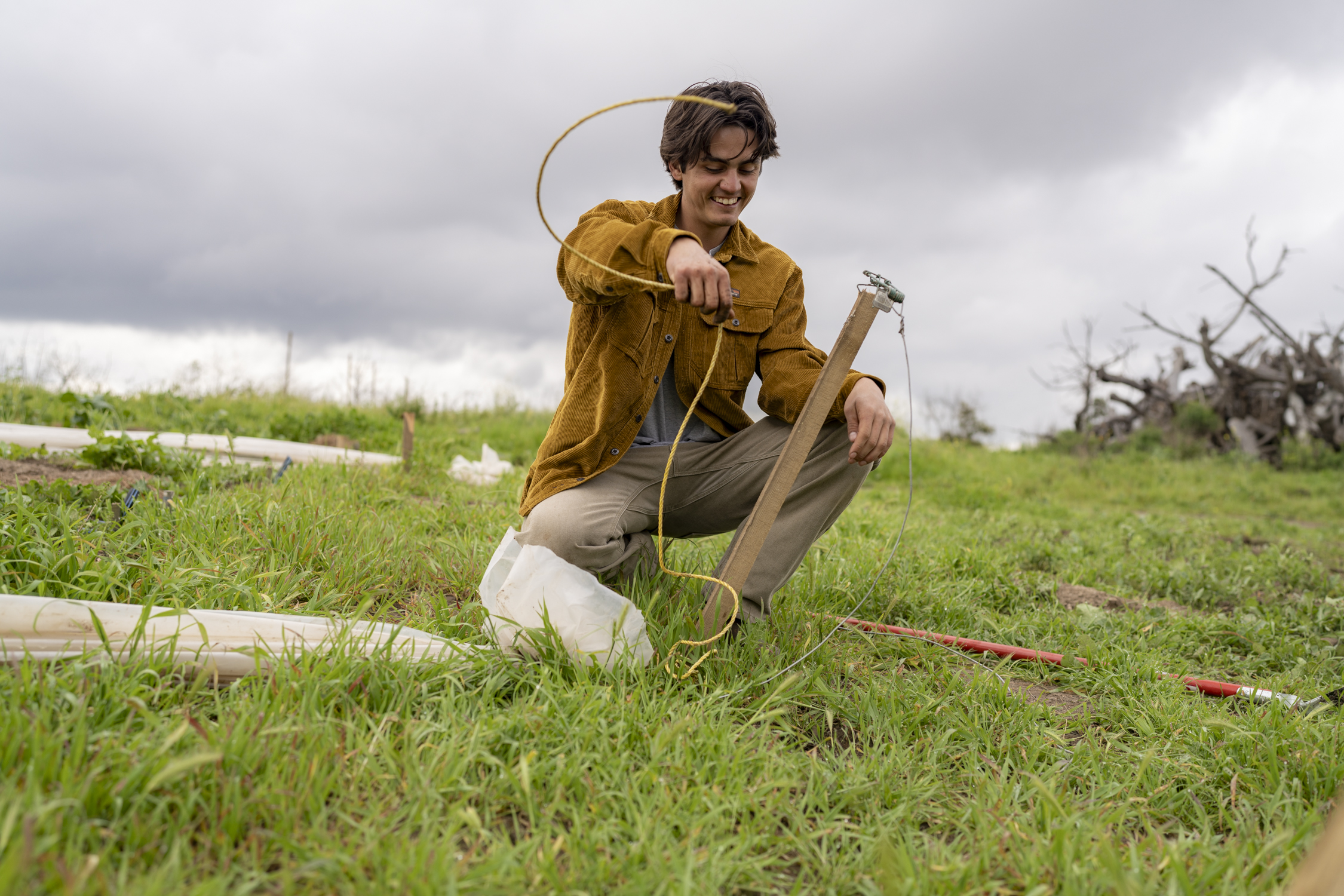
Born and raised in Moorpark — a community shaped by agriculture — Matt spent his childhood running between avocado and citrus orchards. He made some of his earliest friends through his local 4-H club (4-H is the youth organization that teaches agriculture and animal husbandry to young people across the United States). The world of agriculture heavily shaped the first 18 years of Matt’s life. But, like most 18-year-olds, he sought change. In the fall of 2019, Matt left for college in Montana. He waved goodbye to his home, believing any life or career in agriculture was now in his past.
That changed quickly, “I realized pretty fast that I’m not someone who’s meant to sit in a classroom," Matt says.
After just one semester in Montana, he returned home and started working on a regenerative organic farm less than a mile from the house he grew up in.
Over the next couple of years, Matt immersed himself in organic farming while quietly restoring a long-neglected piece of land his grandparents had purchased nearly two decades prior. The plot, once an old-growth avocado orchard, had been burned in a 2005 wildfire and left untouched since. When Matt’s grandparents acquired the land in 2014, it was in disarray. Charred irrigation lines and neglected trees filled the 23-acre plot. Matt’s family had a vision to restore the property. But, after nine years of owning it, it still sat idle.
While learning about organic vegetable production at the farm where he worked nearby, Matt started dreaming of a way to build his own operation. Opportunity struck when Matt was able to take some leftover tomato plant starts from work and proceeded to plant them on his grandparents’ property.
“I had like six tomato plants growing in straw... the irrigation setup I built was so janky. My family was just curious what I had in mind. There were extra transplants at the farm I was working at, and I was like, ‘I'm gonna try my hand at this. All by myself.’ I planted two beds of tomatoes, and I had a ridiculous amount, so I just gave them away to family. It was just an experiment, but that was the first new planting on this ground.”
At the time, it was just an experiment but on this day in 2023, Red Tail Farms was officially born.
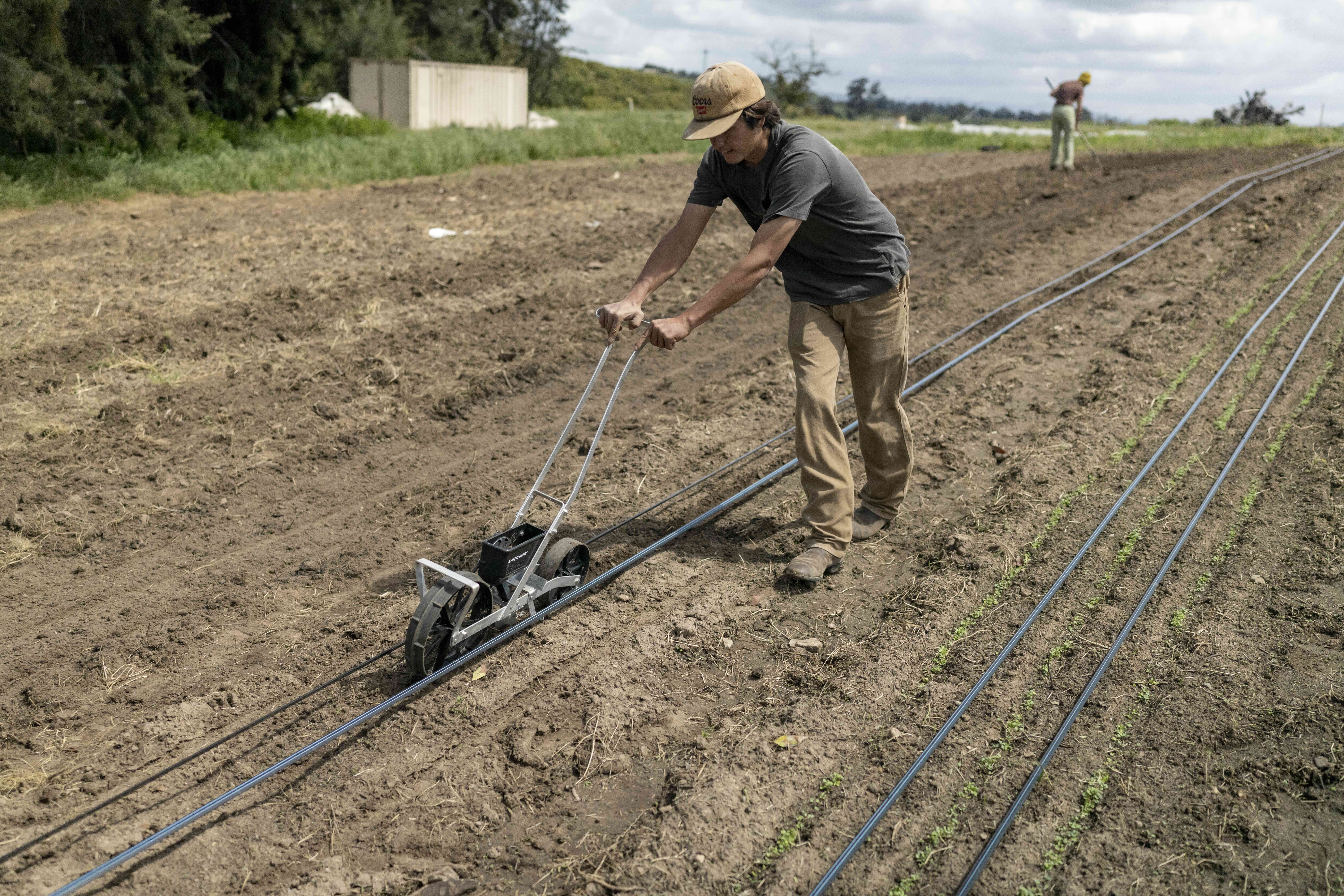
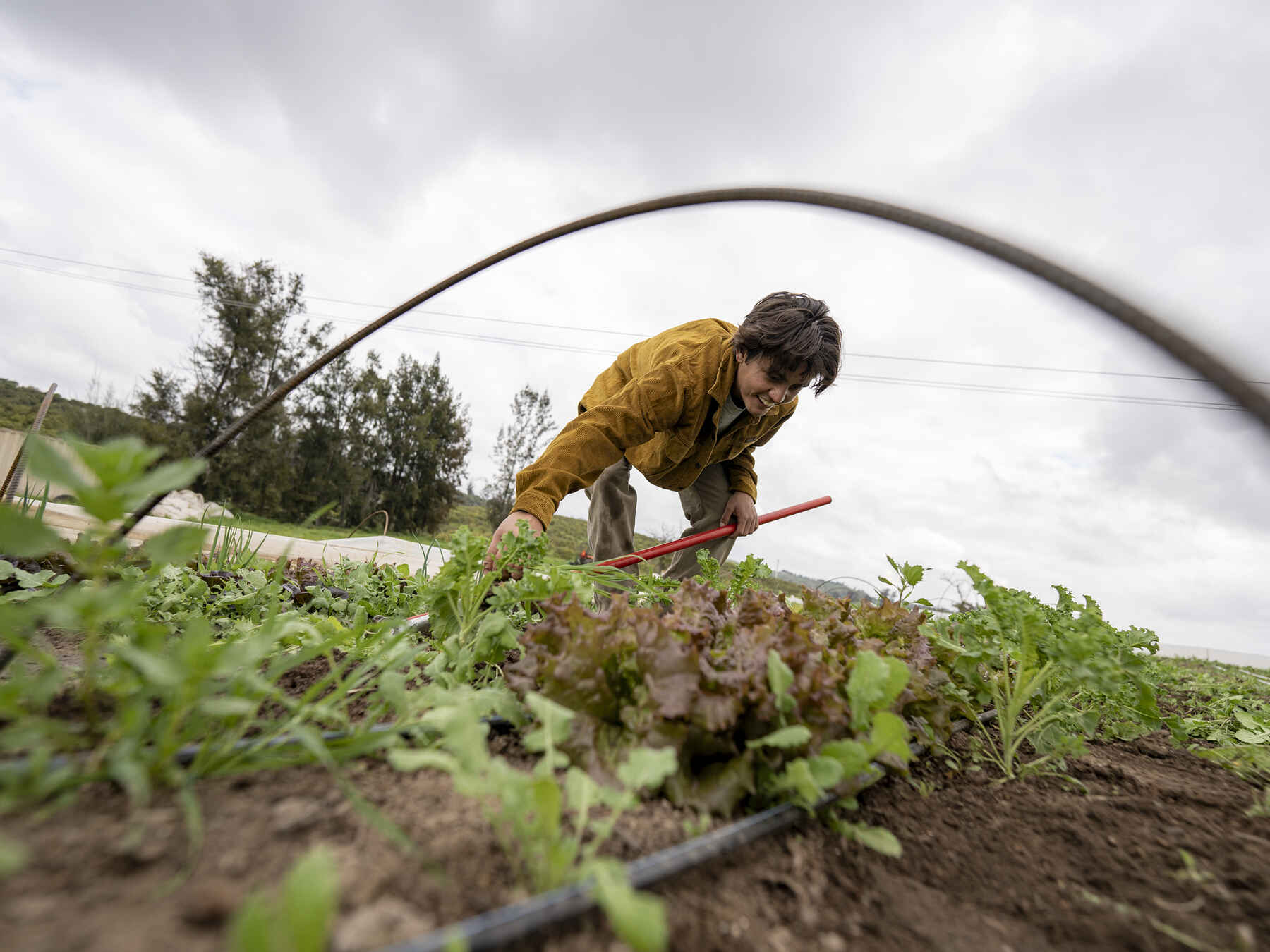
This led to a pitch to his grandparents about using some of the land to build out a small farming operation. At the time, Matt was 23-years-old. Considering the average age of the U.S. farmer is 58.1 years old, according to the 2022 ag census (USDA, 2022), Matt was much younger than the peers farming around him. Beaming with confidence, and with access to grow space, Matt was unflappable as he built the plan to create the small-scale farming operation he had been dreaming of.
First, though, came a pitch to his partner, Gabrielle Shipley, who recalls:
“As soon as he told me he was going to start a farm, I said, ‘Yes! That’s a great idea. And that sounds hard — you are going to need help with that.”
Gabrielle was finishing up school at UC Santa Barbara but decided to balance both school and the rigors of a start-up farm operation. “At first, it was just us here 24/7,” Gabrielle notes. “Upon graduating, I was on the farm just about every day for about a year. I now balance this with another job, but there was a while where it was just us, doing this every day.”
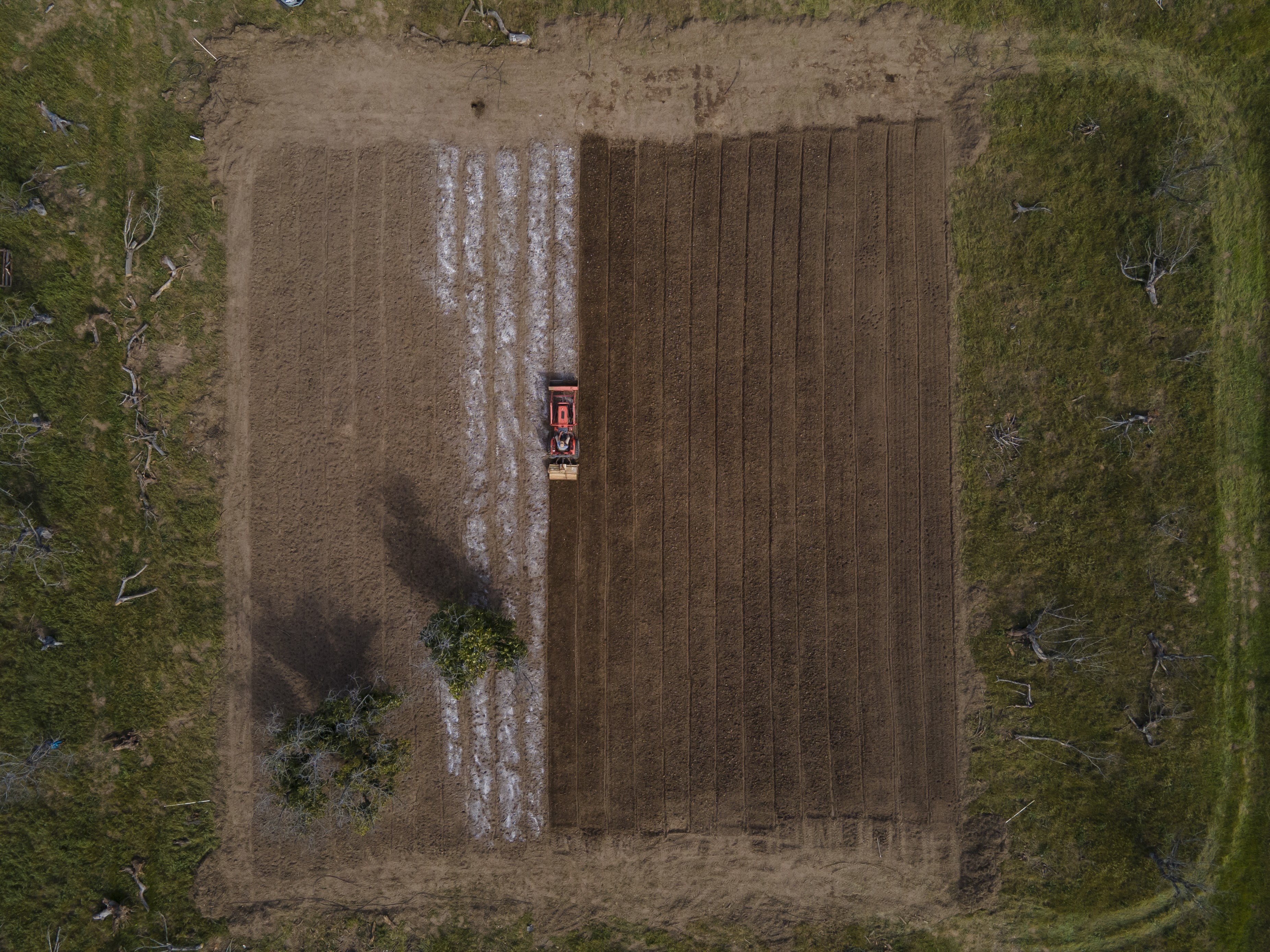
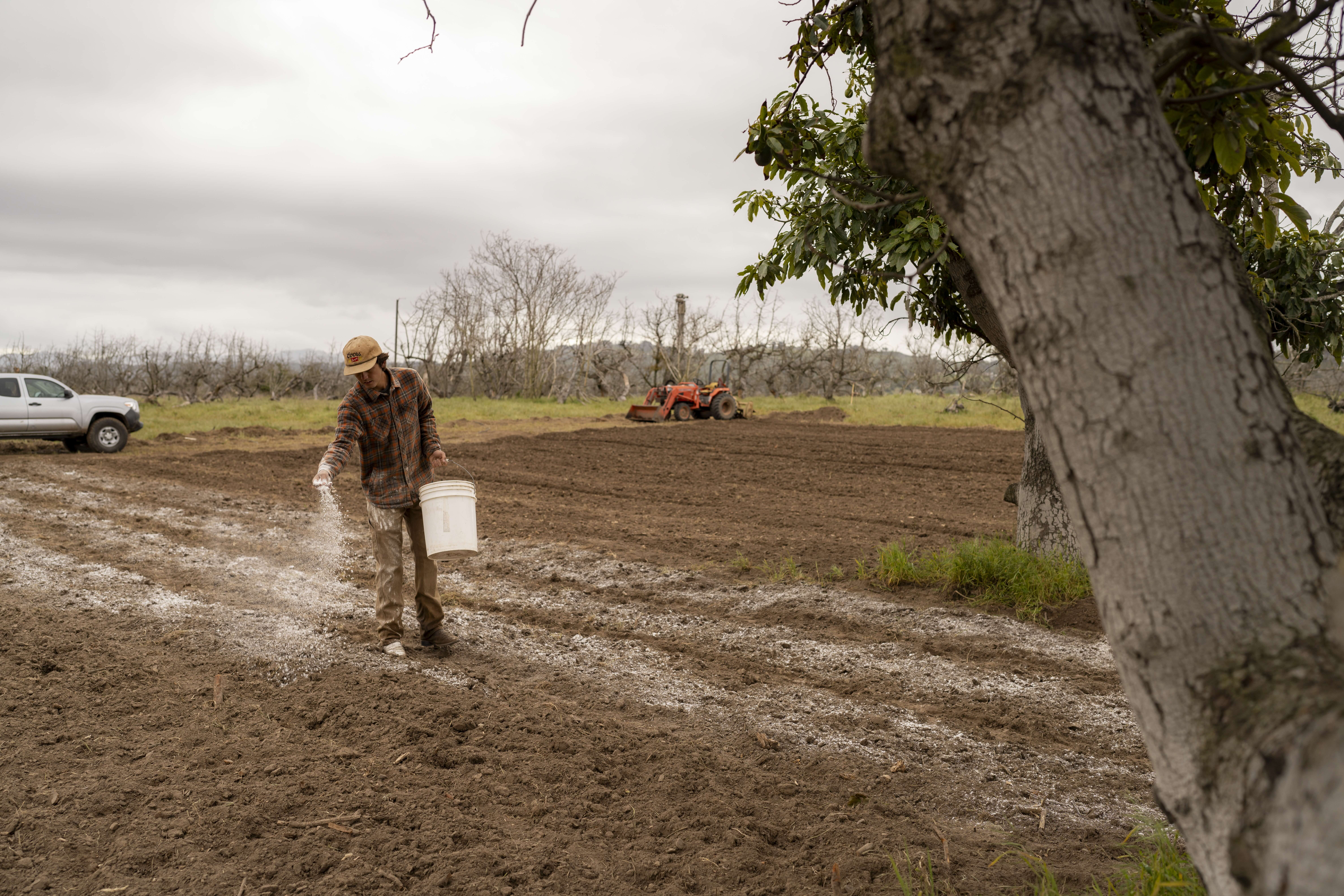
When the pair were in the infancy stages of building the farm, the land needed to be made usable. It had sat, mostly unused, for the bulk of two decades. The good news was that the land had nearly two decades to rest, free from the harmful pesticides prevalent in conventional farming throughout the United States. The bad news was that several acres of trees had to be removed just to create usable growing space.
With the help of neighbors and heavy machinery, Matt and Gabrielle cleared about four acres of land.
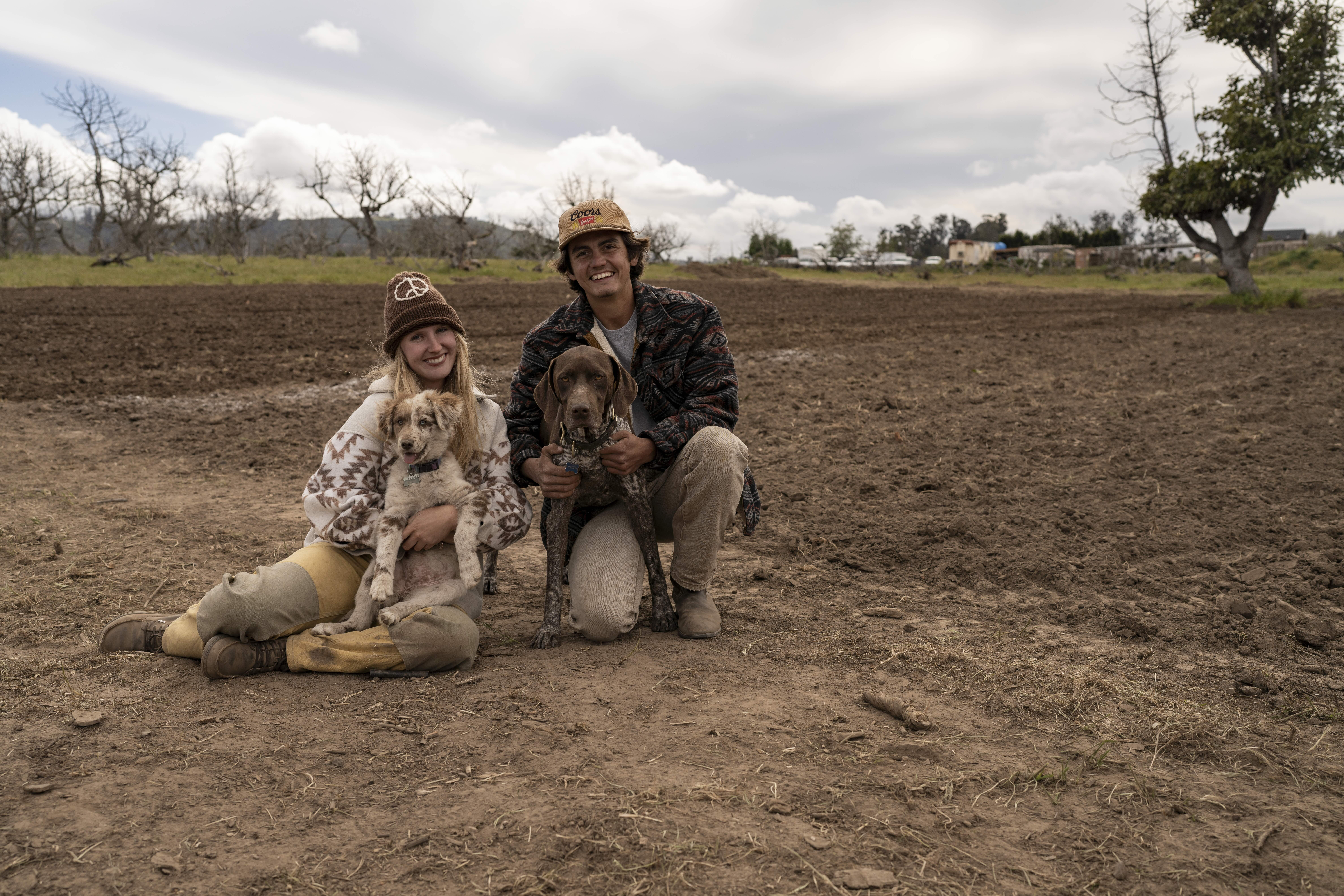
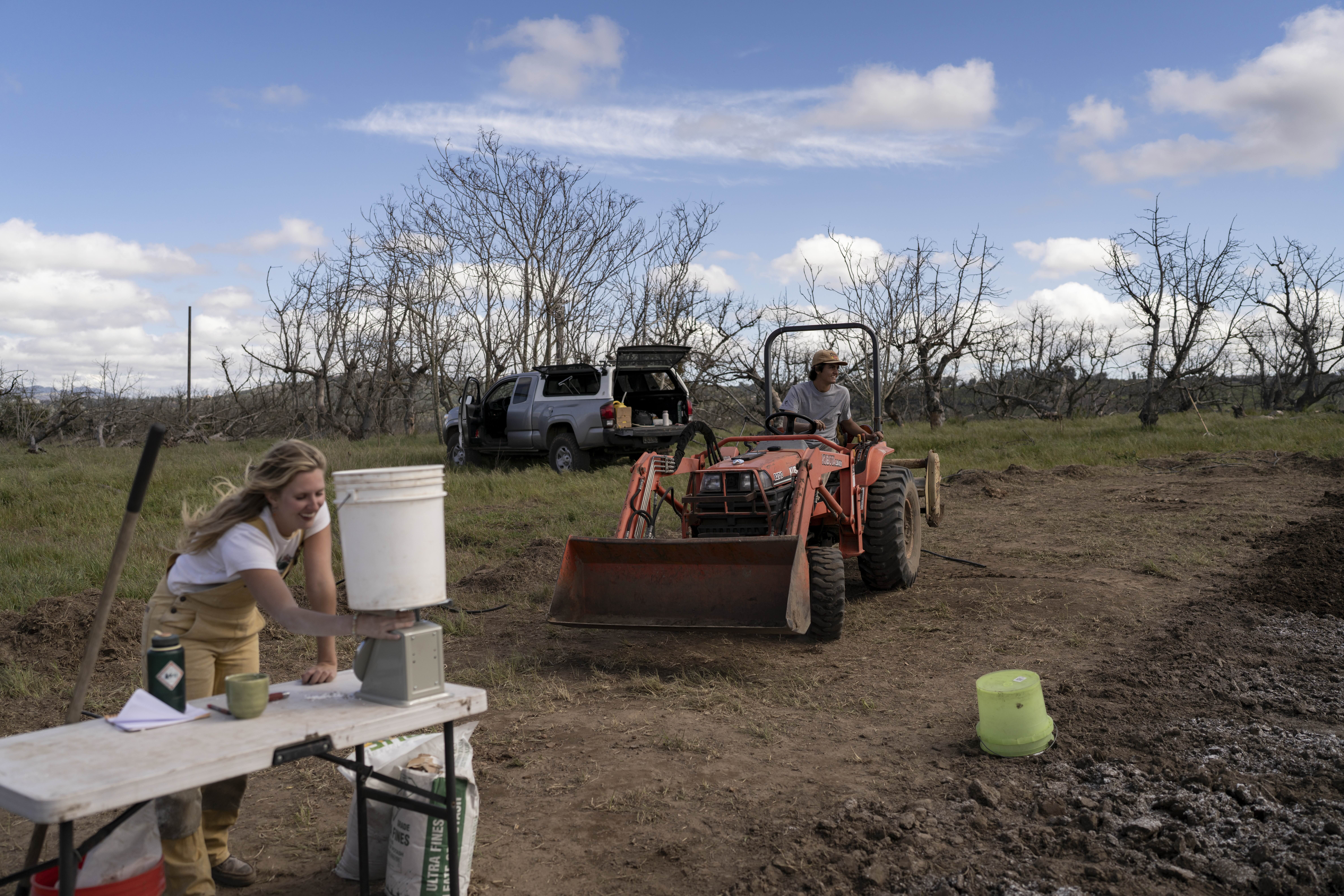
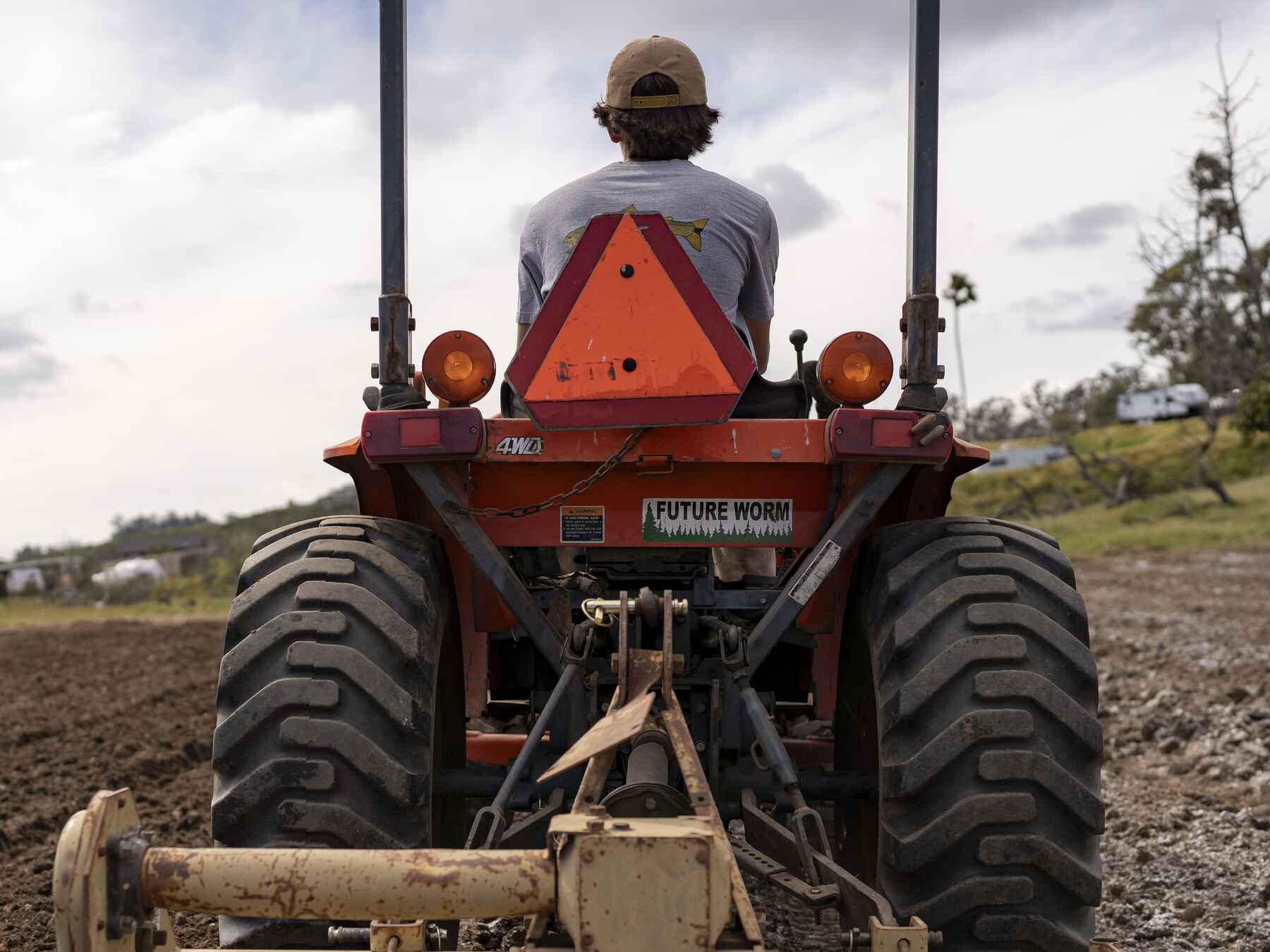
“There is nothing better than being able to make a meal with your own food. You almost feel like a snob when you get something from the grocery store, you’re like, ‘Ahh, this just isn’t the same.’ That is addicting — to continually eat something that you made yourself; your own energy is in it, and I think that is pretty amazing.”
Farming organically has its challenges. Pests, insects and animals, like gophers and squirrels, are a constant battle. The balance of keeping edible crops without the presence of chemicals that ward off the challengers is often a losing battle. No organic farmer (or even non-organic farmer) will tell you this is an easy task. All of the challenges have been amplified at Red Tail Farms because while the land was left dormant, the wildlife had an opportunity to reclaim the land. Instead of destroying the space that the wildlife had called home, Matt and Gabrielle decided to try and work in tandem with nature. This idealistic approach sometimes meant lower yields. The gophers and squirrels enjoy a seemingly endless supply of seasonal berries and vegetables.
“Farming here has been a constant battle with the surrounding creatures and the weeds, alike,” Gabrielle notes. Matt adds about the early days of the farm, "As soon as we would put something in the ground, it would be gone. Squirrels and gophers were demolishing the crop.”
In regenerative agriculture, many farmers aim to build a symbiotic relationship with the land that helps keep things naturally in balance. For example, a gopher problem can be aided by increased activity from coyotes and birds of prey that keep the gopher population more manageable. The symbiotic ecosystem that many regenerative farmers spend years trying to build was largely in place at Red Tail Farms. So, instead of fighting their challenges in a more traditional way, they have doubled down on working with the environment they have.
The two have built refuge for predators while creating more habitat spaces for the wildlife and pollinators that frequent the area.
“We ask a lot of our grow space, so you have to give back to it.”
Matt goes on to explain how putting out something seemingly simple, like rat poison, can destroy an ecosystem. When a hawk or coyote eats a rat that has been poisoned, the predator is poisoned, too. It’s a vicious cycle that leaves no positive outcome.
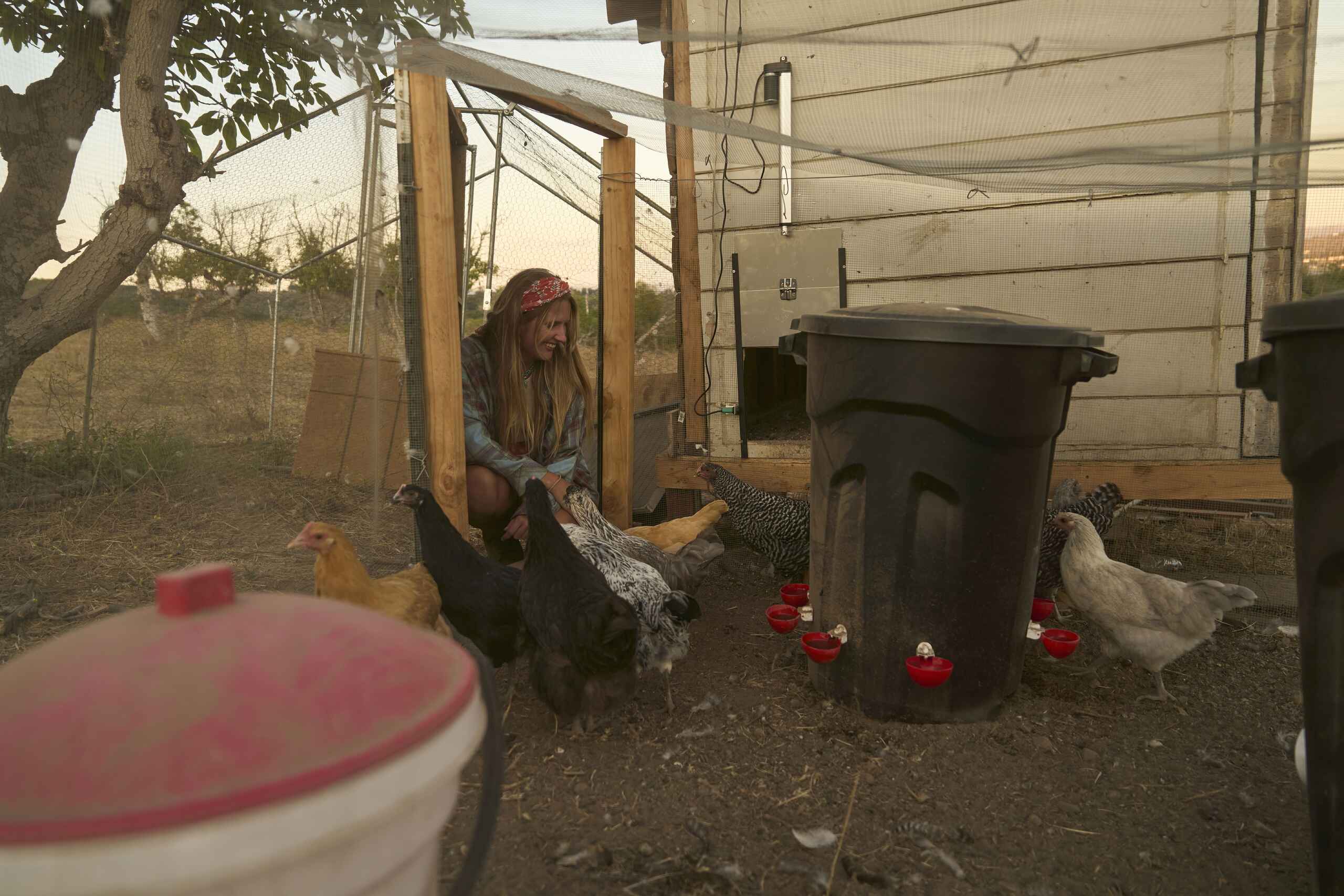
“It has been pretty all-consuming,” Matt recalls. “It took over a year to finally get to a place where we kind of feel like we know what we are doing and we can actually deal with the land we are on.”
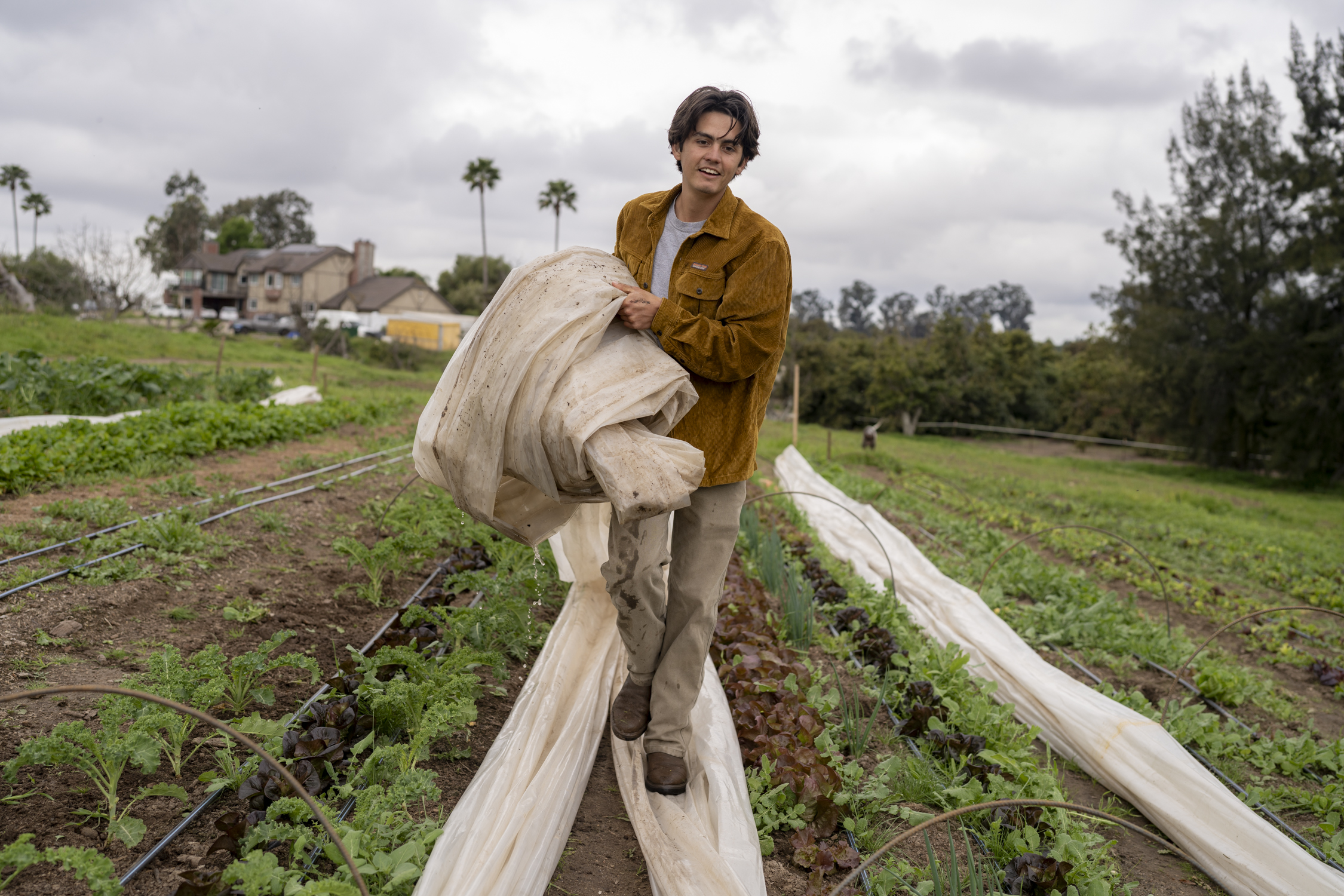
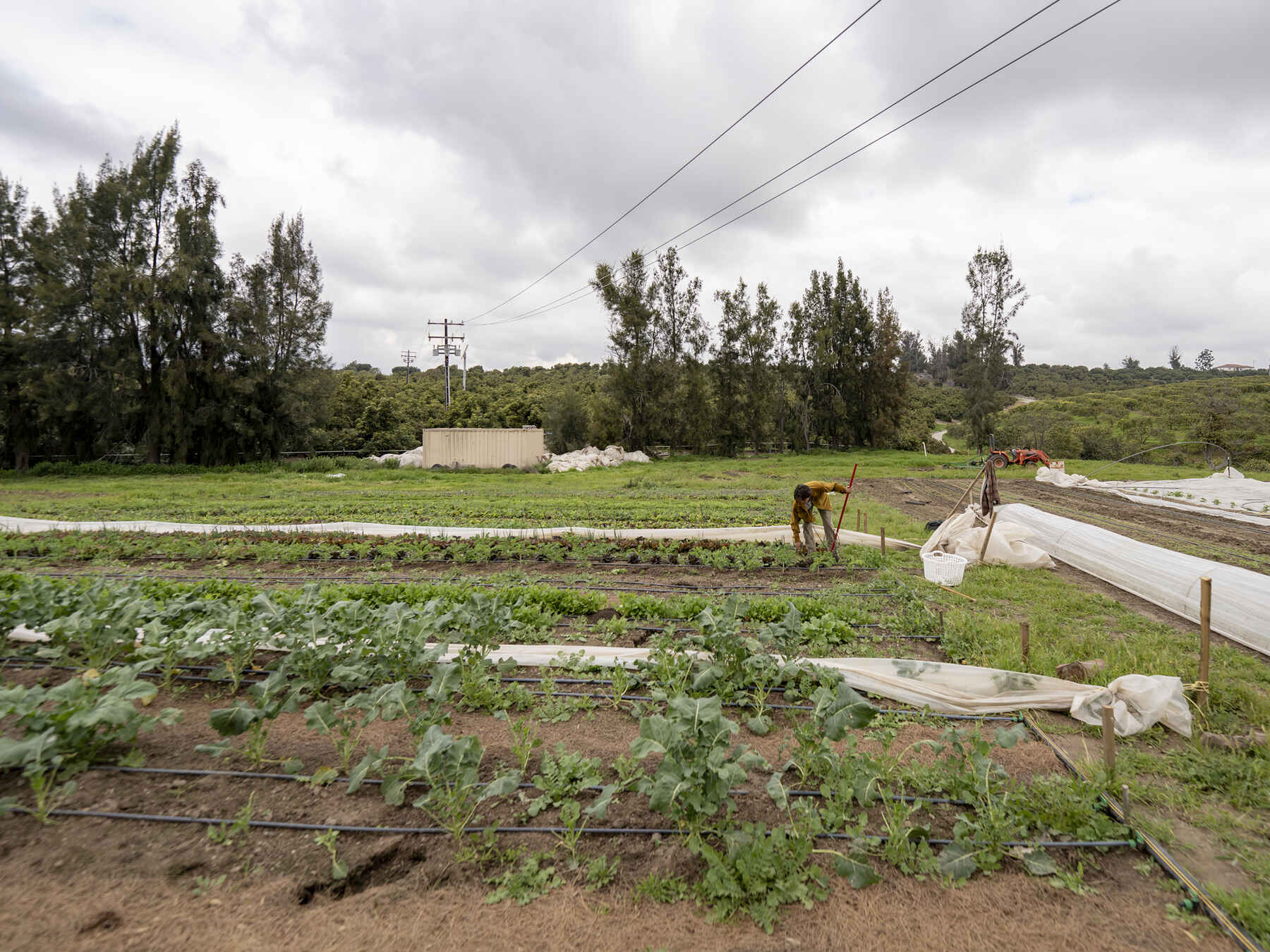
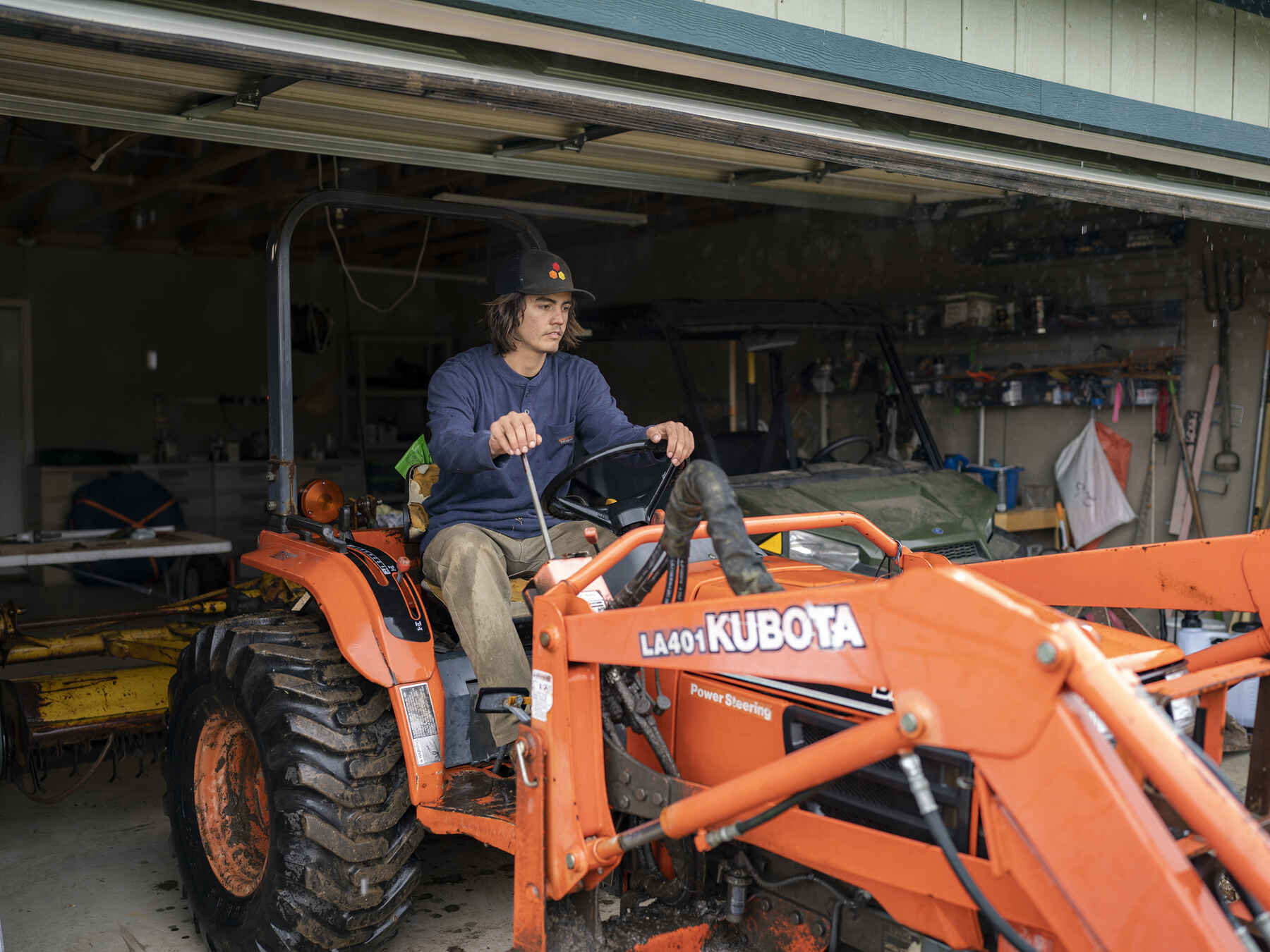
While they have found a more sustainable rhythm now, balance hasn’t always been easy. In the early days, they were juggling farmers markets, a CSA box and restaurant deliveries, all while taking care of the farm itself. Gabrielle recalls back-to-back days stretching from three or four in the morning to well after sunset. The work was nonstop and they constantly felt behind. It was simply too much for two people to handle.
“We’d hit a wall...there were days we were just surviving, not farming.”
This unsustainable work model led to a lot of hard conversations between Gabrielle and Matt. Finding a balance has been a challenge, but their trust and communication have deepened. To support the farm operation more sustainably, they split time between off-farm jobs and focus their sales outlets that allow a healthier work-life balance. The discipline and daily care he learned in those early 4-H years now shape the way he tends crops and manages the rhythms of the farm. The dream, Matt explains, is to grow the farm to where it sustains itself and both him and Gabrielle. But more importantly, they need to make it to that point with some sanity left.
Today, the couple sells produce at two Southern California farmers markets: Porter Ranch and Agoura Hills Ladyface Marketplace. They have plans to expand beyond that soon, while also supplying a handful of restaurants and continuing to explore a CSA box model.
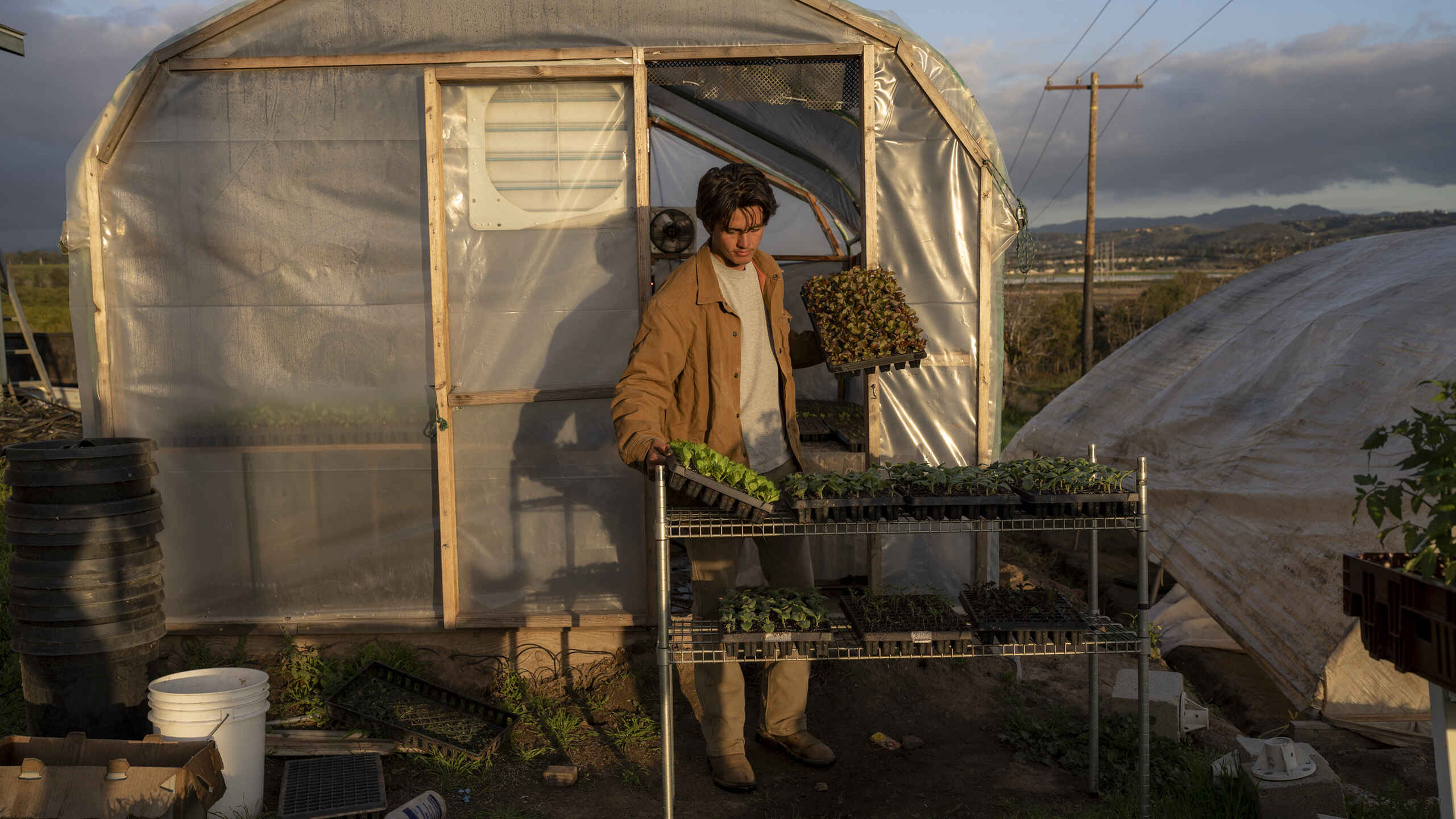
Spending time with both Matt and Gabrielle feels familiar. Like story time with grandparents on a swinging porch chair; a summertime concert with a blanket on a grassy slope; fishing from the dock of a cabin in the woods with warm morning light glimmering across the water. The two seamlessly weave stories, dancing and flowing words together in a rhythmic manner. Matt is an old soul who has a deep respect for those who came before him, always fixated on the details. He wants to know why, how and when things happened. Gabrielle, a devoted listener and empath, sits with every word spoken, looking for a way to relate more deeply to the people around her. She speaks the language of animals and sees the world the way an animal does — always on the hunt to appreciate the smallest things on every inch of ground she touches.
The two hail from Moorpark; their family roots are tied deeply to the local community. They speak of days before their time as if they had lived them. And in a way, they had. Family stories and photographs passed down give an incomparable look at the Los Posas valley.
As Red Tail Farms grows, this community-oriented approach continues to drive the two forward. Their love for the land and environment is clear. But Matt and Gabrielle are not in farming to “save the planet.” They are farmers looking to save community.
Matt tells stories of the early farmers in Moorpark with reverence. He speaks about the way they would all work together, routinely meeting to talk and lend helping hands. The earlier days of farming were more rooted in providing for an immediate and local community. On a global scale, those days might be gone, but Matt truly sees a world in which a small-scale farming community, driven by good food and community nourishment can be re-implemented in Moorpark and the Los Posas Valley.
Down the road, Matt dreams of building a local farming co-op that will help farmers elevate each other while bringing kinship back to the often lonely work of farming.
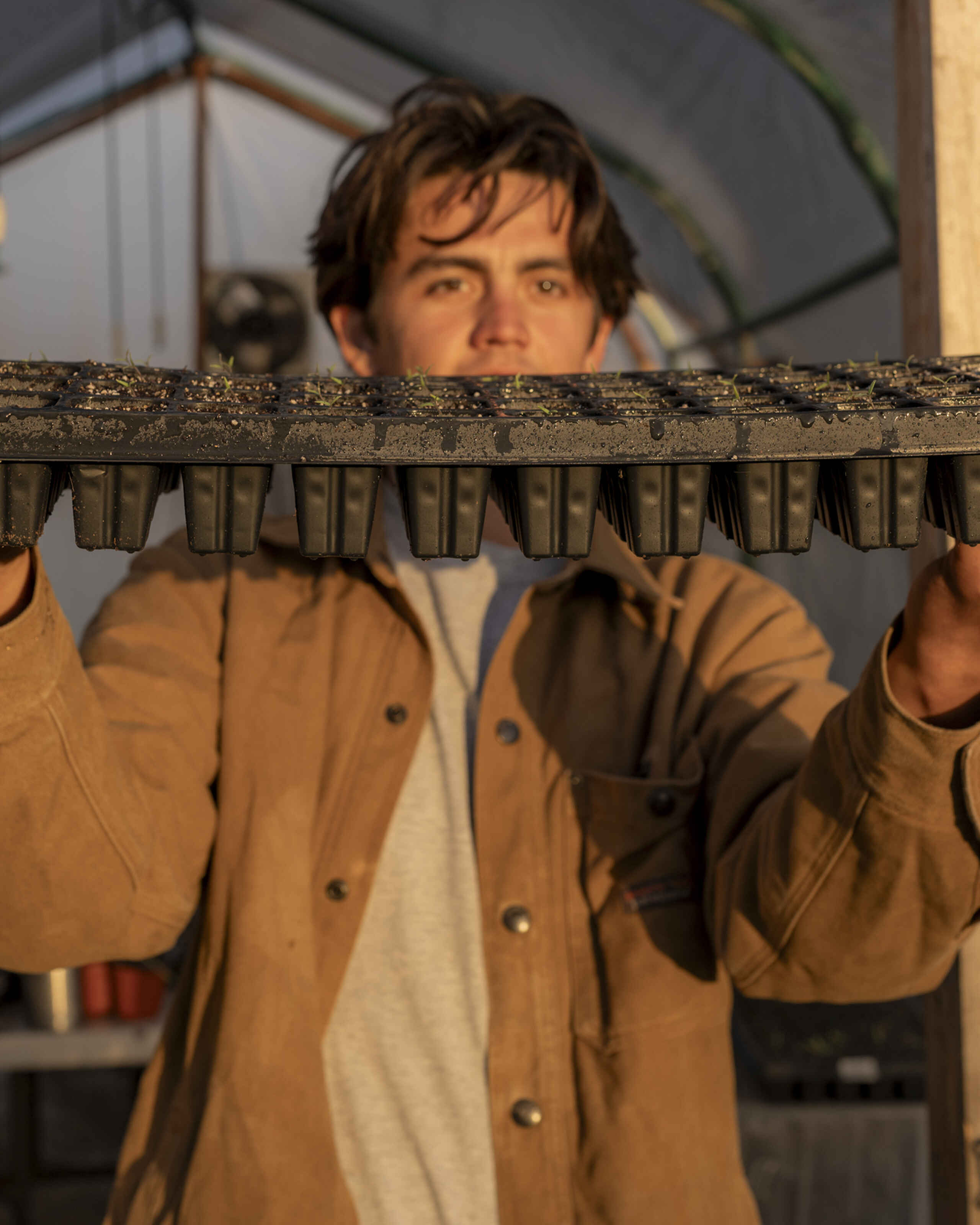
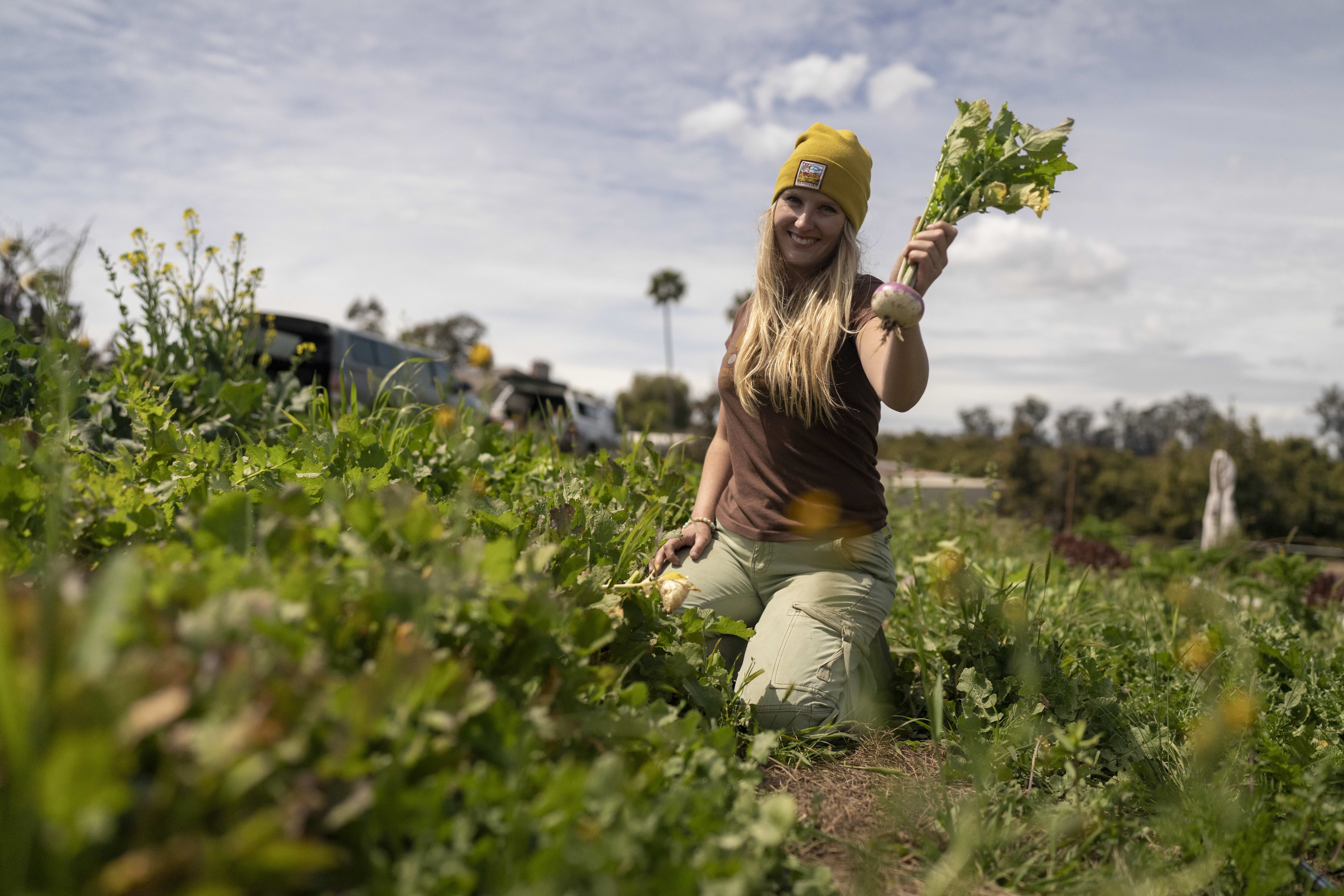
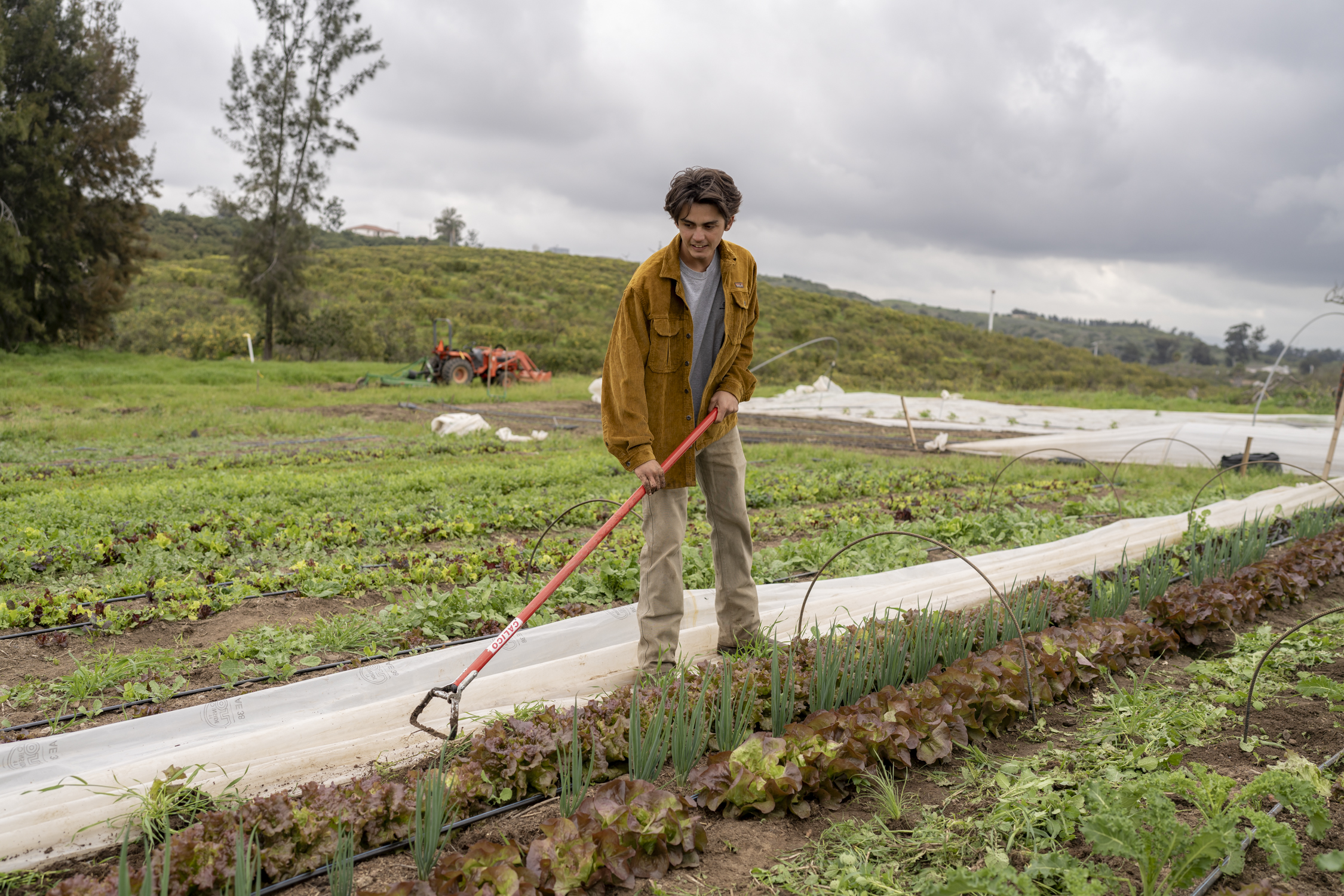
It’s a lot to manage for two people in their mid-20s, but Matt and Gabrielle juggle it all between just the two of them — harvests, irrigation, seeding, marketing…the list goes on Some days are even harder than others. A wildfire once delayed a shipment of strawberry starts. When it finally arrived, the starts were already compromised. A $3,000 investment and a season of a high-yielding crop — gone.
Somehow, though, those moments are overshadowed by the crisp early mornings spent harvesting beautiful lettuce (and other crops) that become dinner not just for Matt and Gabrielle, but for their dedicated farmers market customers, as well.
In parting, Gabrielle states,
“Buy from people that actually eat their own product. That is key.”
Red Tail Farms is young, but at this rate, it has generations of high-quality, land-regenerating food to offer its community. For Matt and Gabrielle, though, it’s the time spent outside — growing food and watching their animals run free — that they will cherish forever.
To learn more, please visit the Red Tail Farms website.
More Stories
Support our work
Stay Connected
You’ll receive our monthly Field Notes newsletter, project updates, and free resources, plus you’ll get first access to new stories.

Make a Donation
Your tax-deductible gift fuels the storytelling that shifts culture, the organizing that turns awareness into collective action, and the relationships that make long-term systems change possible.