Meet a Farmer: Nuss Farms
Meet the Nuss brothers - Tim, Tyler, and Derek - who run Nuss Farms alongside their father, Dave, a fifth-generation family farming operation in California’s San Joaquin Valley.
Farmer’s Footprint is a nonprofit initiative dedicated to restoring human and environmental health by advancing regenerative agriculture through education and storytelling.
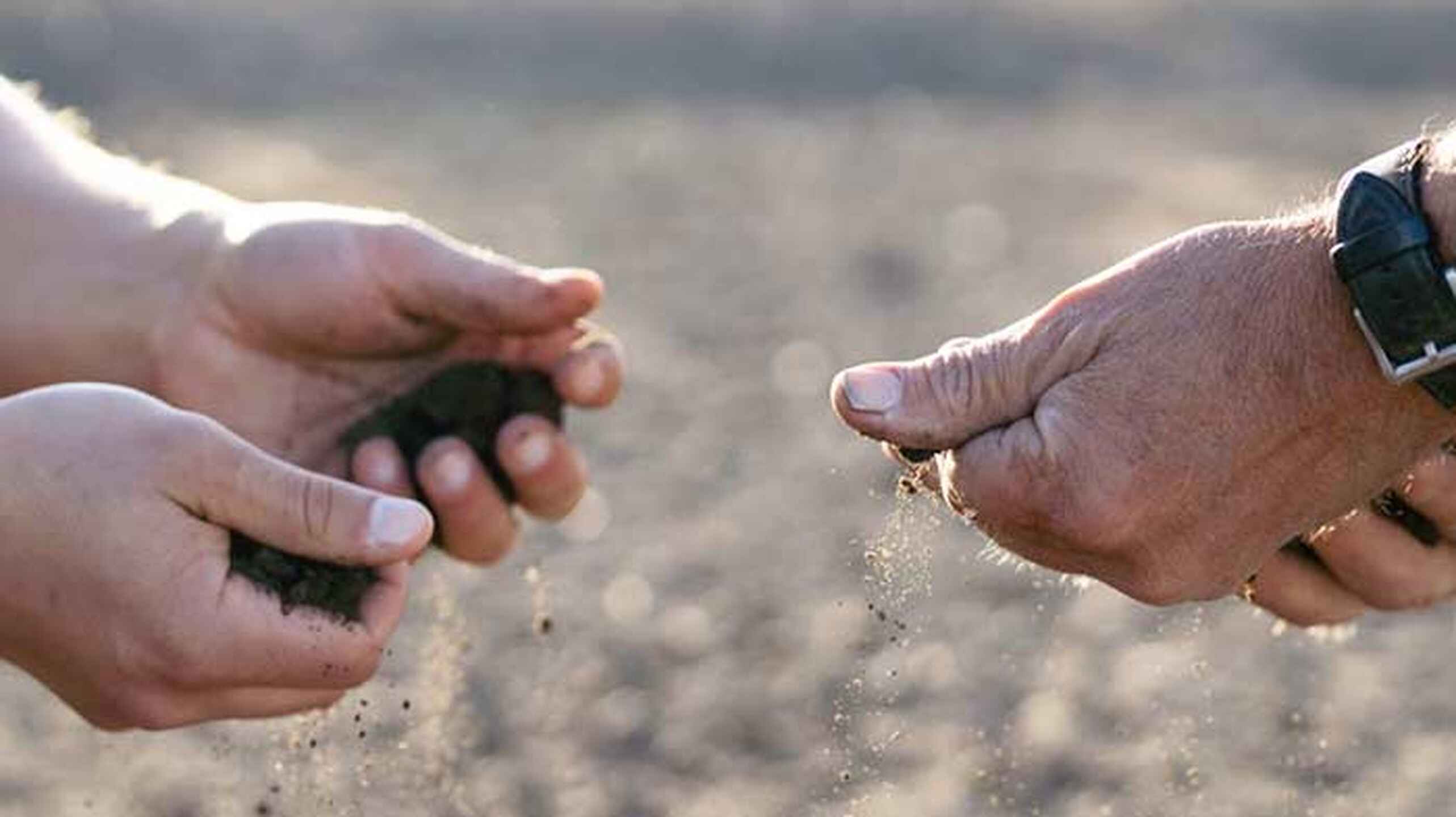
It takes courage to challenge the status quo in conventional production agriculture.
It may take even more courage to allow your sons to help significantly change the direction of your farm. That’s what Dave Nuss has started with Nuss Farms.
It is questioning the status quo that led the Nuss family to a fork in the road in late 2019. Either continue using the conventional methods that were diminishing the value of the farm or unravel the conventional philosophy and inputs to begin a new pattern to make a viable future possible. Wendell Berry may have said it best, “It may be that when we no longer know what to do, we have come to our real work and when we no longer know which way to go, we have begun our real journey.”
This is a story about taking a leap and embracing the real journey.
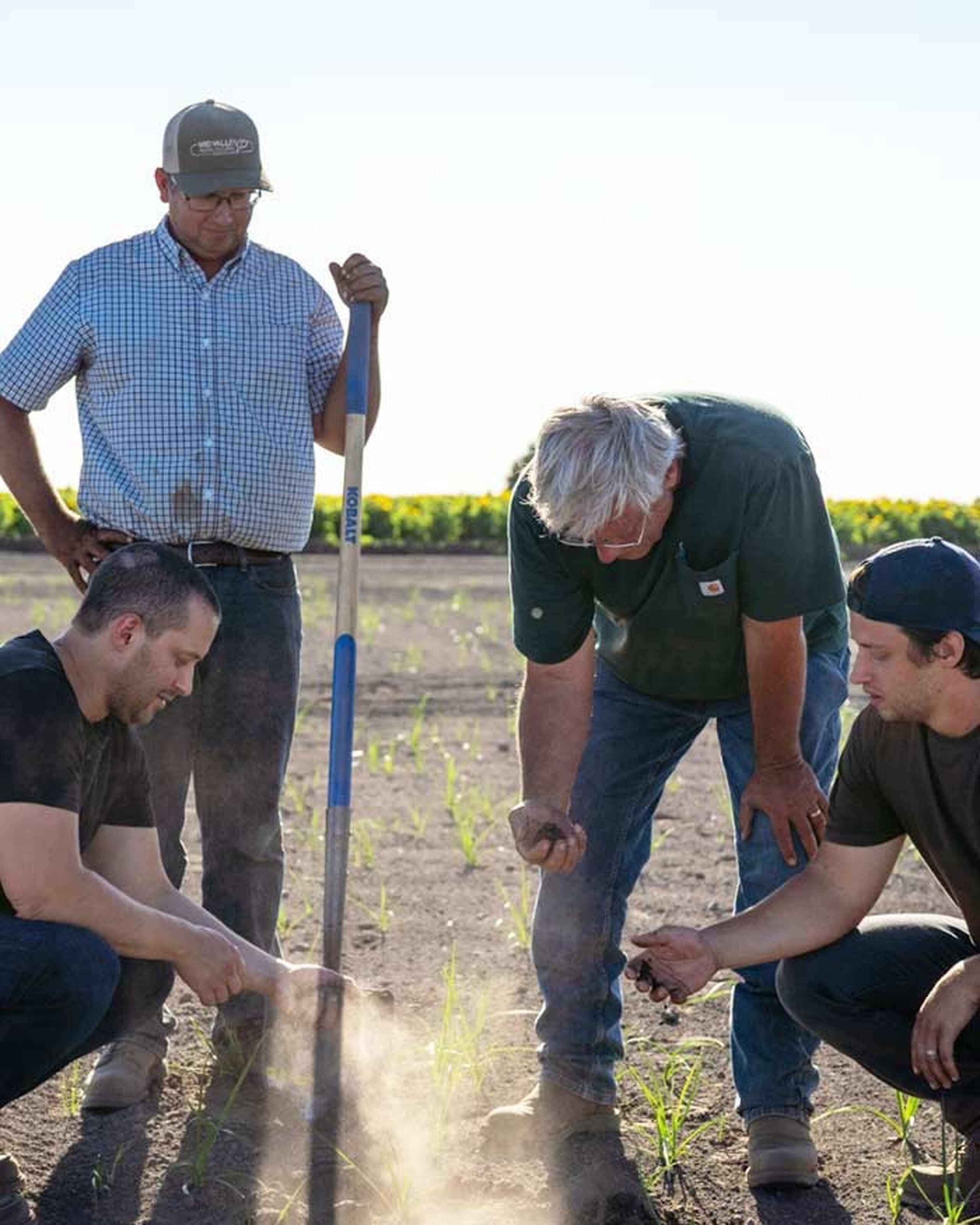
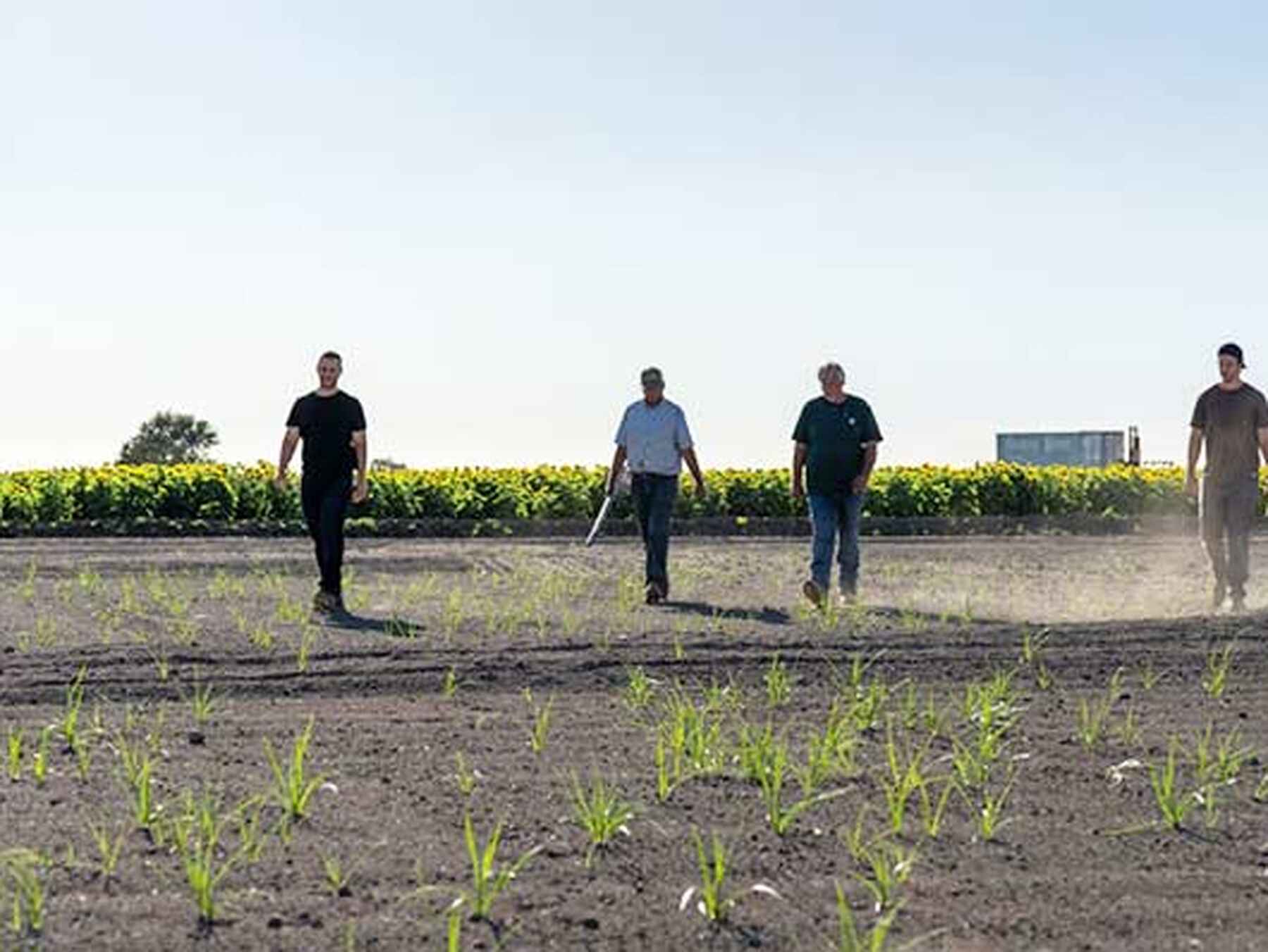
Derek works full time on the farm, hand-in-hand with their Dad and has been the foundation and driving force of operations on the farm. Both Tim and Tyler left the family farm to pursue education and careers in other industries, but every time they would come back home to the farm they could see the opportunity and necessity to create a more sustainable model that would allow the farm to thrive. Convinced that regenerative practices could help the farm thrive long-term, they brought their experience from Silicon Valley back to the Central Valley and into the field.
“We know over the next 5-10 years, it’s going to be a process and it’s going to be an evolution of how we build our soil health.”
But the vision was clear: 1,000 acres of nutrient rich, delta-watered land growing twenty crop varieties of with five generations of history and experience to support them.
Tyler recalls those first conversations with his dad about regenerative practices, “My dad is an old school farmer. We grew up valuing hard work, character, and the importance of the land and family. He’s always been that way, and has always emphasized doing the right thing. So I give him a lot of credit for being open-minded in this regard when we first started bringing up the negative impact of glyphosate and possibilities of regenerative agriculture.”
Everything came to a head in the summer of 2018 when Dave was in an accident on the farm that left him in critical condition with every rib broken. Even though he went on to make a full recovery, it became clear that there needed to be a strategy, vision, and plan for the farm moving forward. At Farmer's Footprint, we always want to know what sparks the moment of realization for farmers – the catalyst that shifted a thought pattern, and caused pause to consider something new and different, and this was it for the Nuss family.
They had an insatiable desire to carve a new path for their farm, and that a-ha moment came when they received a scholarship from Kiss the Ground to attend the Soil Health Academy with Gabe Brown, Allen Williams, and Ray Archuleta.
Tyler reflected that to their Dad’s credit, he knew they couldn’t keep operating the same way they had and needed to innovate by focusing not only on profitability but sustainability as well, “While many of his contemporaries would not even consider some of these ideas, he recognized the need to innovate the business to survive and thrive.”
And so, the transition began.
They started with the goal of building the soil and knew they couldn’t simply scrap everything they had in place, so they began taking small steps to shift their operation. Cover crops, reduced tillage, and livestock integration were the first changes.
To the surprise of his brothers and father, Tyler jumped on the tractor to plant the first cover crop seeds. His brothers often joked that he was “afraid of dirt” and rarely seen out in the field, but on this day he planted a mustard mix in the winter. Over time, he shifted cover crop selection to the experts, namely Dave, working with consultation from Ray Archuleta.
Next, they began experimenting with integrating poultry into their operation by teaming up with Pasturebird, a company that raises wholesale pasture-raised poultry.
“Similar to how we rotate garlic, tomatoes, and cucumbers, we’re inserting pasture-raised poultry into that rotation,” Tyler said. “The idea is livestock integration, but at scale. As they systematically move the chicks through mobile coops across the field, they invigorate and restore the health of the soil.”
All of these practices represented tangible steps the Nuss brothers were taking to create a new chapter in the life of their farm, not only for their generation but for the generations to follow.
“As a result of building the soil, the hope and the goal is that we can over time reduce our reliance on inputs.”
The Never-ending Pursuit of Knowledge
Tyler and Tim knew they had volumes to learn so they started a podcast, now an industry favorite, called The Modern Acre.
They wanted to develop a space where people their age, the next generation, could learn from each other and see what people were doing in the space. Every conversation highlighted a gap in how regenerative practices could be applied at scale on vegetable farms. With 1,000 acres of a wide range of primarily specialty crops — including garlic, tomatoes, cucumbers, corn, sunflowers, and wheat — the Nuss brothers began investing time and resources into regenerative agriculture, shifting their focus toward the end consumer, soil health, and environmental impact.
Amid this steep learning curve, they built a network and helped set the table for conversations that allow this generation to learn, find inspiration, and find success in the transition from conventional to regenerative.
When we asked the Nuss brothers what they would say to a farmer interested in regenerative practices but currently managing their farm conventionally, here’s what they shared…
“We were those farmers. Our transition was based on two self-serving factors: higher profitability through reduced inputs and better premiums marketed as ‘regeneratively grown.’ Those factors got us in the door to what regenerative can accomplish, but over time we have educated ourselves on the whole host of ecological, environmental, and financial advantages. Conventional farmers need to be open to change, innovation, and hearing a different perspective.”
COVID has also forced everyone in the food supply chain to rethink the way things have always been done. The pandemic has heightened the importance of every stakeholder within the food supply chain to be agile to create new ways of working.
Tyler shared, “The impact of COVID-19 has highlighted the existing problems with the food supply chain. Our crops currently support a combination of food service and retail channels and thankfully we have not seen a dramatic decline in our current agreements. That being said, we recognize the need and importance to diversify the business through more direct-to-consumer channels and local/regional distribution and are working on developing this alongside our regenerative transition.”
We will continue to follow the Nuss Farm. They are relatively early in their transition to regenerative yet they are pioneering new strategies at scale that have never been done before. The goal of Nuss Farms is to be a proving ground for scaling regenerative agriculture and producing nutrient-dense vegetables that restores the soil and planet in the process.
We will support the Nuss family and their goals until the cows come home.
Connect and learn more about the Nuss Farm: https://nussfarms.com/ or follow them on instagram
Contact Tim Nuss: tim@themodernacre.co or follow him on instagram
Contact Tyler Nuss: tyler@themodernacre.co or following him on instagram
More Stories
Support our work
Stay Connected
You’ll receive our monthly Field Notes newsletter, project updates, and free resources, plus you’ll get first access to new stories.

Make a Donation
Your tax-deductible gift fuels the storytelling that shifts culture, the organizing that turns awareness into collective action, and the relationships that make long-term systems change possible.