Nutrient Density Initiative (NDI) exists to ignite awareness and mobilize action around the connections between healthy soils, nutrient-dense food, and human health.

What is Nutrient Density?
Healthy soils shape every bite we eat. Explore what the Nutrient Density Initiative is learning about nutrient density and the links between healthy soils, crops, and people.
Have you ever bitten into a tomato fresh from the garden and thought, this tastes so much better than the ones at the grocery store? Or picked a ripe strawberry so sweet that it made every strawberry before it taste bland?
Freshness plays a role, but it isn't the whole story. How a food is grown shapes what ends up inside it, long before it ever reaches your kitchen.
This is the science of nutrient density, and it starts beneath our feet, in the living soil that nourishes plants and animals. Research shows that farming practices contribute to our foods flavor and nutritional value by shaping soil health. Farmers who build healthy soils support the microbial life that helps make nutrients more available to plants, the first step in a chain that eventually reaches your plate (Montgomery & Bikle 2021; Montgomery et al., 2022; Ren et al., 2017).
As consumers are becoming more invested in their food’s quality, researchers, farmers, and healthcare professionals are asking a shared question: what actually makes food nourishing?
What is Nutrient Density?
For decades, we've measured food largely by what it contains in the greatest amounts - prioritizing calories and macronutrients, namely carbohydrates, protein, and fat. But those measurements only tell part of the story.
Where calorie counts measure how much energy a food contains, nutrient density asks how much nutrition does it provide?
Scientists define nutrient density as the concentration of beneficial nutrients in a food relative to the amount of energy, calories, it provides. These nutrients include vitamins, minerals, essential fatty acids, and amino acids. Beyond what’s measurable, foods also contain thousands of naturally occurring bioactive compounds - known as phytochemicals - which also support human health (Montgomery & Biklé, 2021).
Two carrots can sit side by side with identical calorie counts and have completely different concentrations of vitamins, minerals, and phytochemicals (Bionutrient Food Association, 2018). And while nutrient density is measured in the lab, most people first encounter it somewhere far more familiar, in the flavor of their food around the dinner table.
Regenerative farmer Christa Barfield, Founder and CEO of FarmerJawn Agriculture, sees this relationship every day in the field. As she puts it:
"Flavor is information... It's feedback from the soil, through the plant, to the body."
As rates of chronic diseases linked to poor nutrition continue to rise worldwide, researchers are starting to question the quality of our food beyond simply the number of calories it can provide. This shift places the judgment of what makes food “good” on its capacity to nourish the animals and people who eat it, rather than how much of it we are able to grow and get on shelves.
At the Nutrient Density Initiative (NDI), nutrient density is more than a nutritional measurement, it's a research question, one that looks beyond what's in our food to understand what shapes it.
Understanding the “Nutrients” in Nutrient Density
To truly understand why scientists studying human disease have honed in on nutrient density as a possible driver, it’s important to understand the role the “nutrients” assessed in a food’s nutritional density play in human health.
Micronutrients - including vitamins minerals - essential fatty acids, phytochemicals and amino acids all play critical roles in our bodies function. Without enough of them the body's systems begin to suffer. In fact, it's possible to consume enough calories while still falling short of the vitamins and minerals needed to support long-term health. This phenomenon, often called "hidden hunger," affects billions of people worldwide and is associated with impaired immune function, poor cognitive development, and an increased risk of chronic disease (Ul-Allah, 2017; Ofoedu et al., 2021).
Together, micronutrients and phytochemicals remind us that food is far more than a source of calories. It's a complex package of nutrients and bioactive compounds that work together in ways to support human health that scientists are still uncovering (Montgomery & Biklé, 2021; Montgomery et al., 2022).
To better understand nutrient density, let's look at the five main nutrient types and the role each plays in supporting health.
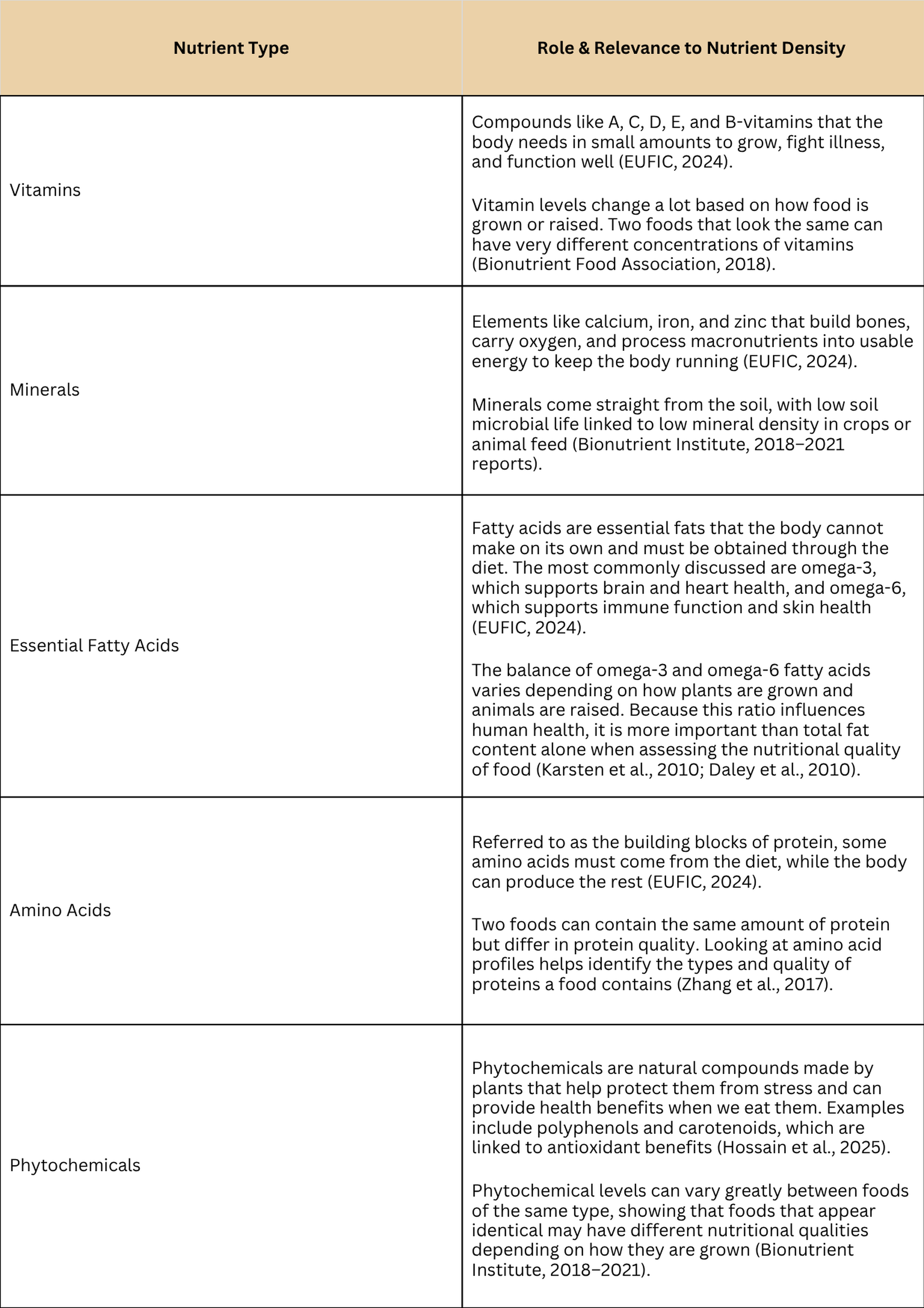
Given the critical role these nutrients play in human health, it becomes important to understand what determines how much of them a plant produces in the first place.
Nutrient Density Begins in the Soil
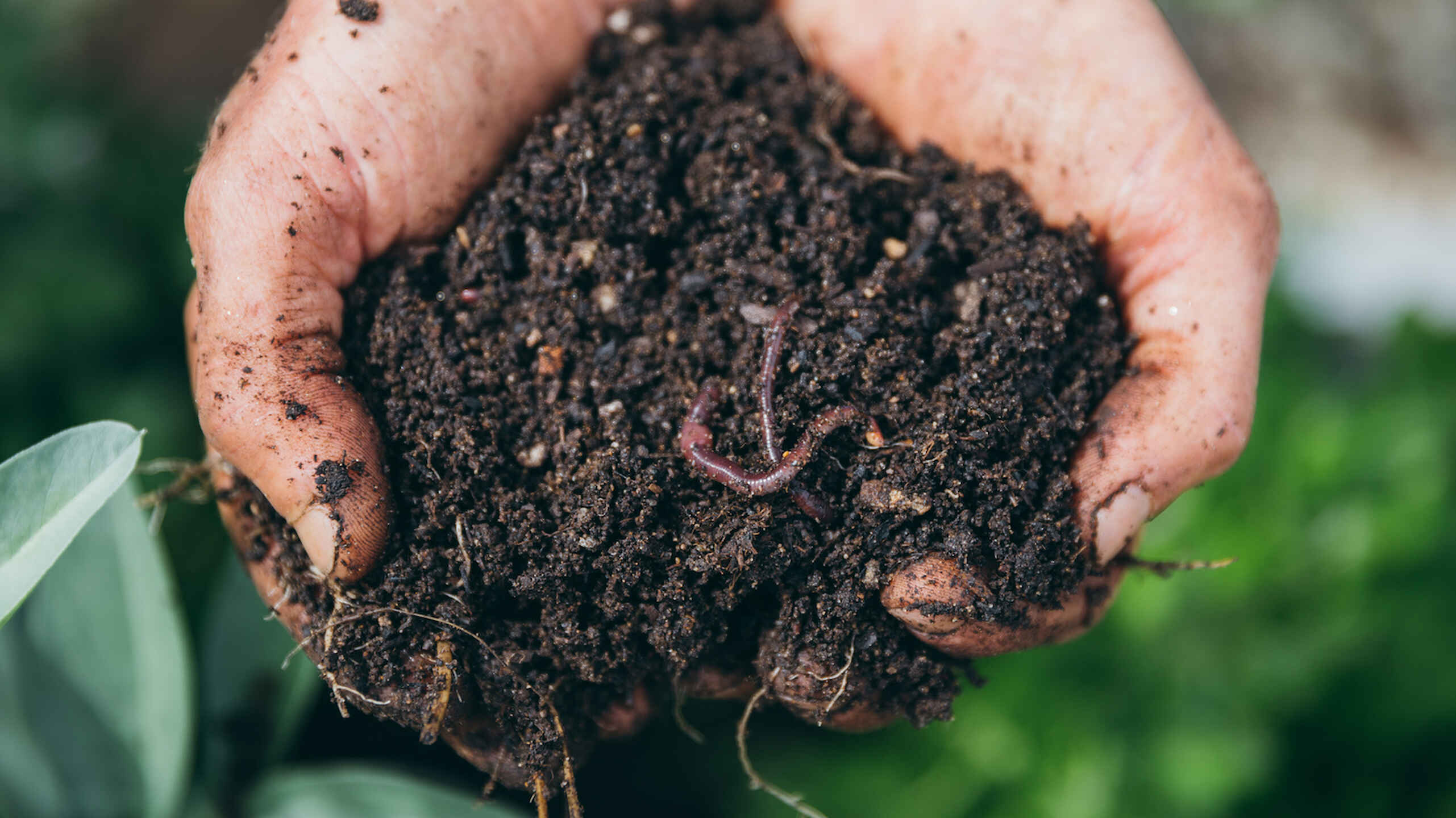
Healthy soil is a living ecosystem filled with billions of bacteria, fungi, insects, and other organisms that work together to cycle nutrients, build soil structure, regulate water, and support plant growth. Together, these organisms form what scientists call the “soil food web” (Coleman et al., 2017).
One of the most symbiotic partnerships on Earth is between plants and mycorrhizal fungi in soil. These fungi create thread-like networks, known as hyphae, that reach farther into the soil than the plant roots could on their own, helping plants access water and minerals - like phosphorus, iron, calcium, magnesium, and zinc - that may otherwise have been out of reach (Marschner, 2012, Yuan et al., 2023). In return, plants provide fungi with sugars that they produce through photosynthesis.
These minerals that fungi make available to the plants do more than support plant growth. Many act as helpers for enzymes, allowing plants to produce important compounds - like phytochemicals and flavonoids - that help protect against stress and UV damage. For example, a plant with low levels of magnesium or manganese may have reduced ability to photosynthesize, making it more vulnerable to diseases and environmental stress (Marschner, 2012; Ye et al., 2024; Lim-Hing et al., 2024).
Another example is the iconic earthworm. As they burrow underground, they loosen and aerate the soil, creating channels that help air and water move through it. The castings (worm poop!) they leave behind contain plant-available nutrients like nitrogen and phosphorus, along with beneficial microbes that support soil health. Plants take up these nutrients, helping them grow and pass them along into the food that humans and grazing animals eat (van Groenigen et al., 2019).
Even the smallest members of the soil food web are involved in this exchange. Bacteria and other microorganisms break down organic matter and recycle nutrients into forms plants can absorb (Hunt et al., 1987).
Nothing in healthy soil works alone. Each organism's activity becomes another's resource, creating an interconnected system that supports the movement of water, nutrients, and life throughout the soil. Plants depend on this living network to access many of the resources they need to grow (Bender et al., 2016; Hunt et al., 1987).
In the most simple terms - healthy soil determines what nutrients end up in our food.
Scientists increasingly recognize that the health of the soil, including the organisms living in it, its structure, and its nutrients, can all influence plant health (Belwal et al., 2026). Genetics, weather, harvest timing, storage, and crop variety also affect how much nutrition a plant contains. Together, these factors shape the nutritional quality of the food that ends up on our plates (National Academies of Sciences, Engineering, and Medicine, 2024).
Healthy soil doesn’t guarantee nutritious food, but without healthy soil, plants can never fully reach their nutritional potential.
How Farming Practices Shape Food Quality
This living soil network is fragile, and any common agricultural practices disrupt it.
Regular tillage, repeated
monocropping
Flashcard
Monoculture
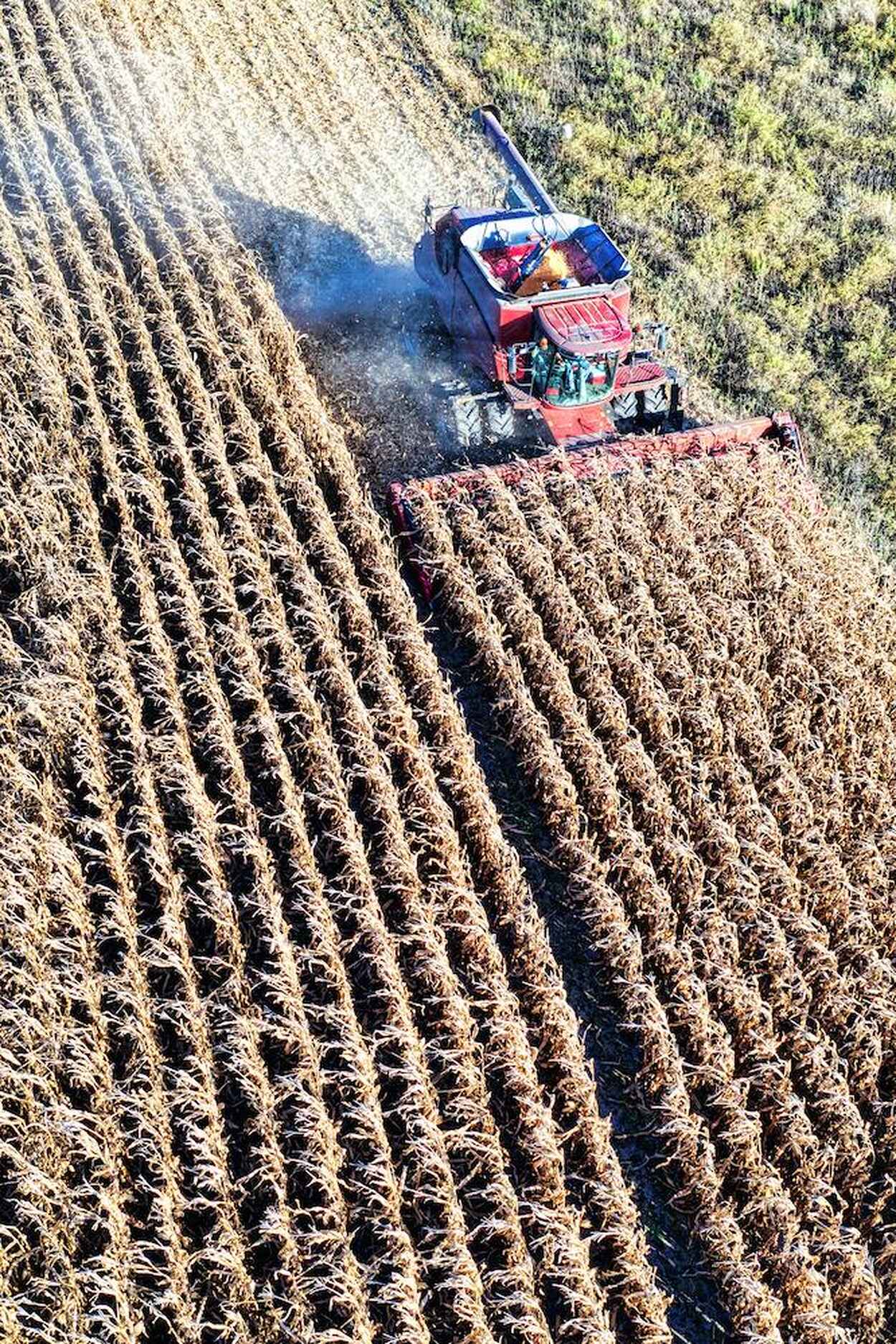
is the practice of growing a single crop species across the same agricultural land, often season after season, without the presence of other crops or plant diversity. It is a defining feature of industrial agriculture, where advances in mechanization and chemical inputs have enabled farmers to specialize in producing one crop at large scale. While it has increased efficiency, it impacts landscapes and communities by increasing reliance on chemicals, breaking down soil structure, reducing the land’s ability to store carbon, and exposing humans to harmful pesticides.
For example: All herbicides are a type of pesticide, not all pesticides are herbicides.

Picture your home organized so everything runs smoothly, then a giant picks it up and flips it upside down. That's essentially what tillage does to the community living in the soil. It shatters the fungal networks threaded through the ground, collapses the burrows and pore spaces organisms depend on, and exposes them to sudden shifts in air, moisture, and temperature. If that happened to your home, you’d have to move out or rebuild. The same applies to these soil web communities.
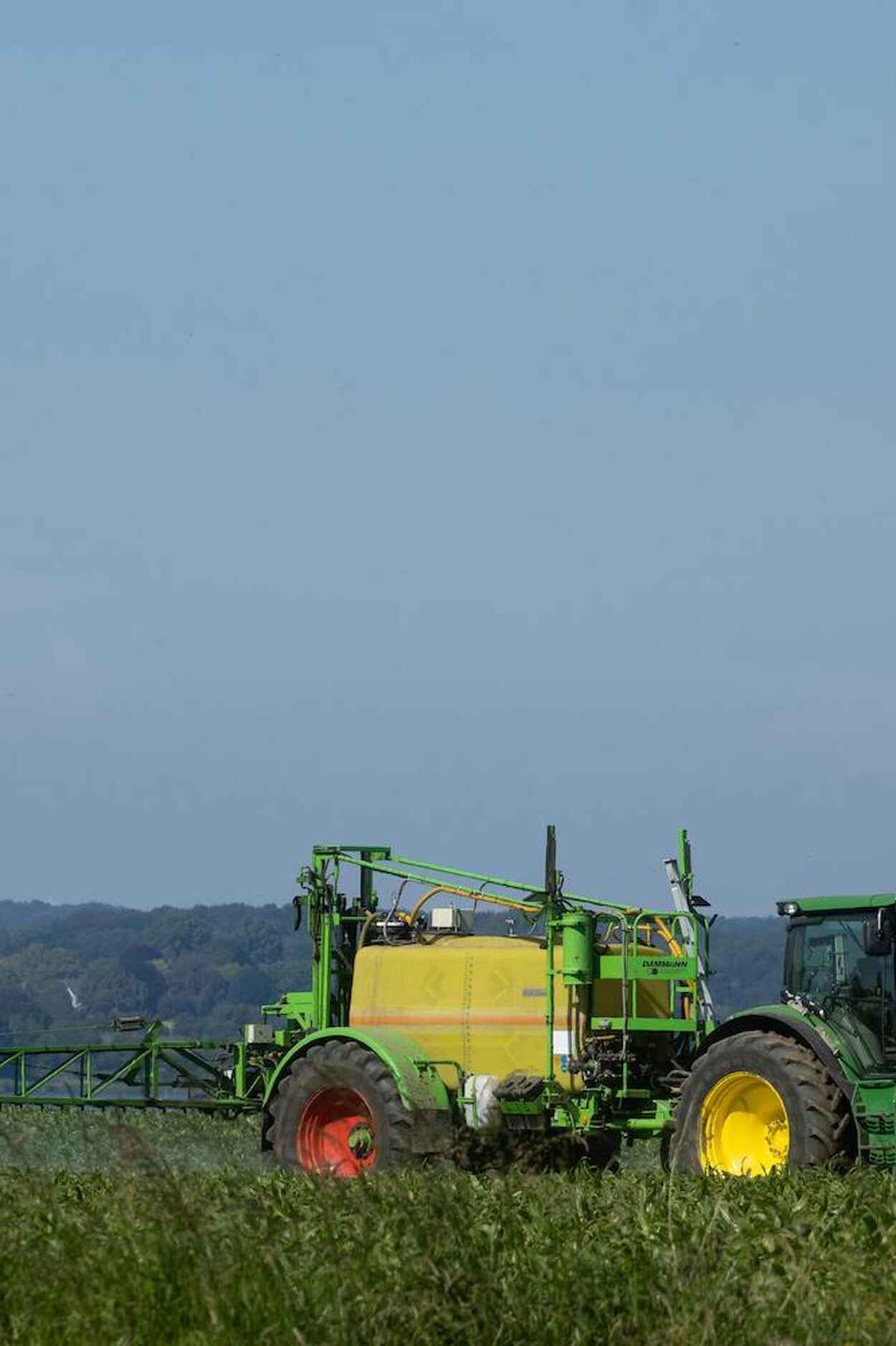
Synthetic nitrogen and pesticides compound the disturbance, killing the beneficial fungi and reshaping the microbial community that would otherwise cycle nutrients and build soil structure (Egerton-Warburton & Allen, 2000).
Regenerative farming practices prioritize bringing life back into the soil by supporting the conditions that allow soil life to thrive. Early findings suggest this may also shape the nutritional composition of crops, and the livestock products from animals who graze them.
One of the strongest examples of this came from a study focussed on wheat. Researchers compared two neighboring fields planted with the same wheat variety. One field was managed with
cover crops
Flashcard
Cover crop
a crop such as rye, barley, or legumes that is planted between growing seasons to keep the soil covered and maintain living roots in the ground between harvests. Cover crops help protect topsoil from erosion while also supporting organic matter and microbial life. When soil is left bare between harvests, it becomes more vulnerable to erosion, drought, and flooding.

When they tested the crops after harvest, the cover-cropped wheat contained 56% more zinc, 48% more calcium, and 29% more magnesium, even though both fields produced the same amount of grain. Because the amount of these minerals naturally increasing in the soil was unlikely to have changed substantially in just two years, the researchers concluded that the increase was more likely due to changes in soil biology, which helped the plants access nutrients more effectively (Montgomery et al., 2022).
This remains an active area of scientific research. While results vary depending on crop type, location, climate, genetics, and management practices, a growing body of evidence strongly supports the idea that farming systems influence our foods nutrient density in meaningful ways.

Looking Beyond the Nutrition Label
Most of us are familiar with the Nutrition Facts panel on the side of a box of pasta, a carton of milk, or a package of ground beef. It tells us how many calories, grams of protein, carbohydrates, and fat a food contains, along with a short list of vitamins and minerals.
Those labels have helped guide food choices for decades, and they remain an important tool. But they only capture what was easiest to measure at the time they were designed.
Today, science is beginning to look at food in entirely new ways.
Whole foods are far more complex than any label can capture. A single apple, tomato, or steak contains more than the handful of nutrients listed on a nutrition label. Scientists estimate that plants produce tens of thousands of naturally occurring compounds, many of which we're only beginning to understand (Lewinsohn & Gijzen, 2009).
New partnerships are making it possible to understand more of this complexity than ever before. One of NDI's research partners, Edacious, is helping build the scientific infrastructure needed to study it. Using ISO-accredited laboratory testing and advanced data analysis, Edacious measures hundreds of nutrients and bioactive compounds in foods, creating detailed nutritional profiles that go far beyond what appears on a standard food label.
Their Nutrient Density Analysis can identify hundreds, and in some cases thousands, of compounds within a single food sample, creating what some researchers describe as a much more complete nutritional fingerprint. This work helps transform nutrient density from an idea we talk about into something we can consistently measure, compare, and better understand.
Together, NDI and Edacious are beginning to apply these tools to real-world farming systems. Through the Regen Nutrition Project, we're exploring how nutrient composition differs across production systems. Every measured product adds another piece to the puzzle, replacing assumptions with evidence that can guide farming decisions toward more nutrient-dense food.
Ultimately, measuring nutrient density is about building the evidence to help farmers, researchers, and eaters alike make more informed decisions about the food they eat, and what truly nourishes us.
“Nature is variable. Understanding how that variability is caused is important.”
Choosing More Nutrient-Dense Foods
Nutrient density isn't something you can determine simply by looking at a product or relying on a single claim. There is currently no nutrient density label at the grocery store, which means the most reliable signals often come from asking questions rather than reading one.
Instead of searching for one "perfect" food, think about building a pattern. Choose a diversity of whole foods and enjoy a wide variety of fruits and vegetables. When possible, support farmers and food brands that are investing in regenerative agriculture and healthy soils and transparently share the story behind how their food is grown. At a farmers market or through a CSA, that can be as simple as asking a grower how they care for their soil.
Nutrient density isn't a destination. It's the outcome of countless interactions across a living food system.
By rewarding transparency, stewardship, and continuous improvement, consumers help create demand for agricultural systems that nourish both people and the land. In turn, this demand encourages more farmers and ranchers to adopt these practices because they know there is a market of consumers ready to buy their products.
Looking Ahead
Nutrient density is shaped from the ground up: by how living soil shapes the nutrients a plant can access, how farming practices influence that process, and how new tools are finally making it possible to measure what's really in the food we eat.
The science is still evolving, and there's always more to uncover.
Explore the ongoing research at nutrient-density.org/theresearch, and follow the Nutrient Density Initiative on LinkedIn to stay connected as this work unfolds. If you're a farmer, researcher, food company, or food systems professional interested in helping advance this work, we'd love to connect.
Reach out to the Nutrient Density Initiative team to get involved.
About the Nutrient Density Initiative
Nutrient Density Initiative (NDI) is a collaborative of farmers, researchers, healthcare professionals, food companies, and educators championing the nutritional potential of soil-building regenerative agriculture. Our purpose is to ignite awareness and mobilize action around the connections between healthy soils, nutrient-dense food, and human health.
Through research, education, and cross-sector collaboration, we work to better understand how farming practices influence food quality and to help build a more transparent, resilient, and nourishing food system. We believe the future of food lies in continuous learning, scientific integrity, and supporting the farmers and food brands leading this work.
Justine Ghai
Justine Ghai is a science communicator and nonprofit leader specializing in the intersection of agriculture and ecology. As comms lead at the Nutrient Density Initiative, she translates emerging scientific research into evidence-based stories that connect soil health, food quality, and regenerative agriculture. With a B.S. in Ecology and Environmental Biology from the University of North Carolina Asheville and an M.A. in Conservation Biology from Miami University, her work is grounded in more than a decade of experience spanning conservation, ecosystem restoration, community engagement, and strategic communications.
Raevyn Xavier
Raevyn Xavier is a food systems strategist whose work explores the connections between human health and ecological wellbeing. As program associate at the Nutrient Density Initiative, she works across regenerative agriculture, nutrition science, and community food systems to help bridge research with real-world application. She holds a B.S. in Nutrition and Dietetics with a minor in Integrative Health and an M.S. in Nutritional Science from Arizona State University and is a Certified Regenerative Agriculture Community Educator. Her work centers on building collaborative partnerships that advance healthier people, healthier ecosystems, and a more resilient food system.
Anderson, C., et al. (2017). Bacterial and fungal communities respond differently to varying tillage depth in agricultural soils. PeerJ, 5, e3930. https://doi.org/10.7717/peerj.3930
Bender, S. F., et al. (2016). An underground revolution: Biodiversity and soil ecological engineering for agricultural sustainability. Trends in Ecology & Evolution, 31(6), 440–452. https://doi.org/10.1016/j.tree.2016.02.016
Belwal, T., et al. (2026). Editorial: Impact of soil health on nutritional quality of crops and human health. Frontiers in Nutrition, 13, 1790443. https://doi.org/10.3389/fnut.2026.1790443
Bionutrient Institute. (2018). 2018 final report. https://our-sci.gitlab.io/bionutrient-institute/bi-docs/2018_report/
Coleman, D. C., et al. (2017). Fundamentals of soil ecology (3rd ed.). Academic Press.
Daley, C. A., et al. (2010). A review of fatty acid profiles and antioxidant content in grass-fed and grain-fed beef. Nutrition Journal, 9, 10. https://doi.org/10.1186/1475-2891-9-10
Drewnowski, A. (2005). Concept of a nutritious food: Toward a nutrient density score. The American Journal of Clinical Nutrition, 82(4), 721–732. https://doi.org/10.1093/ajcn/82.4.721
Egerton-Warburton, L. M., & Allen, E. B. (2000). Shifts in arbuscular mycorrhizal communities along an anthropogenic nitrogen gradient. Ecological Applications, 10(2), 484–496.
EUFIC. (2024). What is nutrient density? European Food Information Council. https://www.eufic.org/en/understanding-science/article/what-is-nutrient-density
Gombart, A. F., et al. (2020). A review of micronutrients and the immune system—Working in harmony to reduce the risk of infection. Nutrients, 12(1), 236. https://doi.org/10.3390/nu12010236
Greenberg, D., et al. (2021). A progressive nutrient profiling system to guide improvements in nutrient density of foods and beverages. Frontiers in Nutrition, 8, 774409. https://doi.org/10.3389/fnut.2021.774409
Harvard T.H. Chan School of Public Health. (n.d.). Whole grains. The Nutrition Source. https://nutritionsource.hsph.harvard.edu/what-should-you-eat/whole-grains/
Hossain, M. S., et al. (2025). Dietary phytochemicals in health and disease: Mechanisms, clinical evidence, and applications—A comprehensive review. Food Science & Nutrition, 13(3), e70101. https://doi.org/10.1002/fsn3.70101
Hunt, H. W., et al. (1987). The detrital food web in a shortgrass prairie. Biology and Fertility of Soils, 3(1–2), 57–68. https://doi.org/10.1007/BF00260580
Karsten, H. D., et al. (2010). Vitamins A, E and fatty acid composition of the eggs of caged hens and pastured hens. Renewable Agriculture and Food Systems, 25(1), 45–54. https://doi.org/10.1017/S1742170509990214
Lehmann, J., et al. (2020). The concept and future prospects of soil health. Nature Reviews Earth & Environment, 1(10), 544–553. https://doi.org/10.1038/s43017-020-0080-8
Lewinsohn, E., & Gijzen, M. (2009). Phytochemical diversity: The sounds of silent metabolism. Plant Science, 176(2), 161–169. https://doi.org/10.1016/j.plantsci.2008.09.018
Lim-Hing, S., et al. (2024). The role of manganese in tree defenses against pests and pathogens. Plant Physiology and Biochemistry, 210, Article 108641. https://doi.org/10.1016/j.plaphy.2024.108641
Marschner, P. (Ed.). (2012). Marschner's mineral nutrition of higher plants (3rd ed.). Academic Press.
Mitra, S., et al. (2022). Exploring the immune-boosting functions of vitamins and minerals as nutritional food bioactive compounds: A comprehensive review. Molecules, 27(2), 555. https://doi.org/10.3390/molecules27020555
Montgomery, D. R., & Biklé, A. (2021). Soil health and nutrient density: Beyond organic vs. conventional farming. Frontiers in Sustainable Food Systems, 5, 699147. https://doi.org/10.3389/fsufs.2021.699147
Montgomery, D. R., et al. (2022). Soil health and nutrient density: Preliminary comparison of regenerative and conventional farming. PeerJ, 10, e12848. https://doi.org/10.7717/peerj.12848
National Academies of Sciences, Engineering, and Medicine. (2024). Exploring linkages between soil health and human health. The National Academies Press. https://doi.org/10.17226/27459
Ofoedu, et al. (2021). Revisiting food-sourced vitamins for consumer diet and health needs: A perspective review, from vitamin classification, metabolic functions, absorption, utilization, to balancing nutritional requirements. PeerJ, 9, e11940. https://doi.org/10.7717/peerj.11940
Ren, F., et al. (2017). Higher antioxidant activity, total flavonols, and specific quercetin glucosides in two different onion (Allium cepa L.) varieties grown under organic production: Results from a 6-year field study. Journal of Agricultural and Food Chemistry, 65(25), 5122–5132. https://doi.org/10.1021/acs.jafc.7b01352
Tsiafouli, M. A., et al. (2015). Intensive agriculture reduces soil biodiversity across Europe. Global Change Biology, 21(2), 973–985. https://doi.org/10.1111/gcb.12752
Ul-Allah, S. (2017). Combating hidden hunger in agriculture perspective. World Review of Nutrition and Dietetics, 118, 161–166. https://doi.org/10.1159/000484511
van Groenigen, J. W., et al. (2019). How fertile are earthworm casts? A meta-analysis. Geoderma, 338, 525–535. https://doi.org/10.1016/j.geoderma.2018.11.001
Wardle, D. A. (1995). Impacts of disturbance on detritus food webs in agro-ecosystems of contrasting tillage and weed management practices. In M. Begon & A. H. Fitter (Eds.), Advances in Ecological Research (Vol. 26, pp. 105–185). Academic Press. https://doi.org/10.1016/S0065-2504(08)60065-3
Yang, Y., & Ling, W. (2025). Health benefits and future research of phytochemicals: A literature review. The Journal of Nutrition, 155(1), 87–101. https://doi.org/10.1016/j.tjnut.2024.11.007
Ye, X., et al. (2024). Photosynthetic plasticity aggravates the susceptibility of magnesium-deficient leaf to high light in rapeseed plants: The importance of Rubisco and mesophyll conductance. The Plant Journal, 117(2), 483–497. https://doi.org/10.1111/tpj.16504
Yuan, M.-L., et al. (2023). Arbuscular mycorrhizal fungi enhance active ingredients of medicinal plants: A quantitative analysis. Frontiers in Plant Science, 14, 1276918. https://doi.org/10.3389/fpls.2023.1276918
More Education Articles



Support our work

Stay Connected
You’ll receive our monthly Field Notes newsletter, project updates, and free resources, plus you’ll get first access to new stories.

Make a Donation
Your tax-deductible gift fuels the storytelling that shifts culture, the organizing that turns awareness into collective action, and the relationships that make long-term systems change possible.